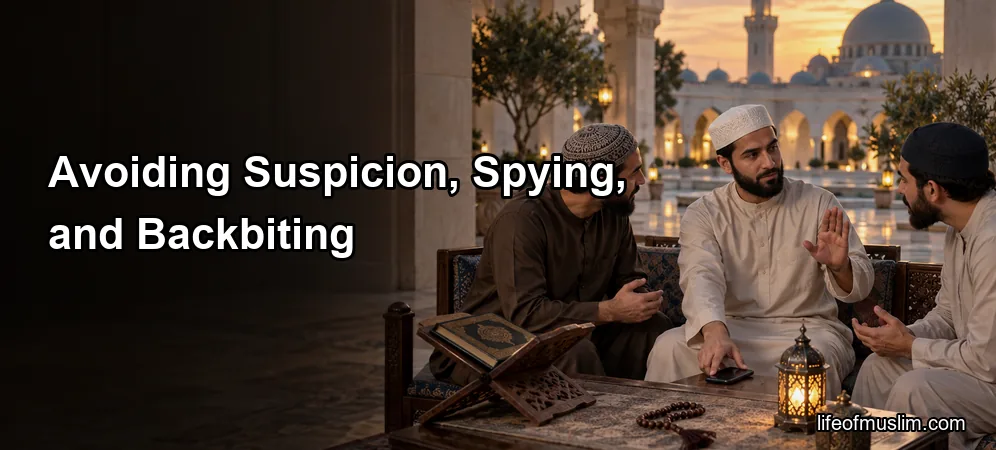
Relationships are often damaged before any open argument begins. An unsupported assumption grows into curiosity, curiosity becomes intrusion, and private conversation turns into backbiting. The Quran interrupts this chain by teaching believers to protect thoughts, privacy, and speech.
Three Connected Dangers
Allah says in Surah Al-Hujurat: “Avoid many suspicions, for indeed, some suspicions are sinful. And do not spy, nor backbite one another.” Quran 49:12 then calls believers to fear Allah and reminds them that He accepts repentance and is merciful.
Suspicion, spying, and backbiting can feed one another. A person assumes the worst, searches for private details, and then shares what was found or imagined. Stopping the process early protects both the heart and the community.
Do Not Treat Assumptions as Facts
Not every concern is baseless, and genuine responsibilities may require careful verification. But ordinary uncertainty should not become a confident accusation. Ask whether there is clear evidence, whether another reasonable explanation exists, and whether the matter truly requires your involvement.
When clarification is appropriate, ask the person directly and respectfully. Avoid building a case through hints, screenshots, or conversations with people who are not responsible for resolving the issue.
Respect Physical and Digital Privacy
Do not search another person’s phone, messages, belongings, or private space without a valid right and permission. Avoid following online activity merely to uncover faults. Access to information does not automatically make looking at it ethical.
Families should also teach privacy with balance. Protection and responsible supervision are different from uncontrolled suspicion. Explain boundaries clearly and use the least intrusive method suitable for a genuine concern.
Close the Door to Backbiting
If a conversation turns toward an absent person’s faults, do not add details or encourage the speaker. Change the subject, mention a fair perspective, or politely say that the discussion is not helpful. If advice or reporting is genuinely needed, speak only to someone able to address the matter and share no more than necessary.
Online sharing is still speech. Forwarding private recordings, mocking screenshots, or unverified claims can spread harm far beyond the original conversation.
Repair Harm and Return to Allah
The verse ends with repentance and mercy. Stop the behaviour, regret it, seek Allah’s forgiveness, and correct the harm wisely. Remove harmful posts or messages, stop repeating the claim, and seek reliable guidance about apologising when direct disclosure might create further damage.
Conclusion
Healthy relationships require disciplined thoughts, respect for privacy, and guarded speech. Refuse to turn assumptions into accusations, do not search for hidden faults, and keep absent people’s dignity safe. These choices create a more merciful home and community.
بدگمانی، جاسوسی اور غیبت سے دلوں اور تعلقات کی حفاظت
تعلقات اکثر کھلی بحث سے پہلے ہی متاثر ہو جاتے ہیں۔ بے بنیاد خیال تجسس بنتا ہے، تجسس مداخلت میں بدلتا ہے اور نجی گفتگو غیبت تک پہنچ جاتی ہے۔ قرآن مومنوں کو خیالات، رازداری اور زبان کی حفاظت سکھا کر اس سلسلے کو روکتا ہے۔
تین باہم جڑے خطرات
اللہ تعالیٰ سورۃ الحجرات میں بہت سی بدگمانیوں سے بچنے کا حکم دیتا ہے کیونکہ بعض گمان گناہ ہیں، اور جاسوسی و غیبت سے منع فرماتا ہے۔ قرآن 49:12 پھر اللہ سے ڈرنے کی تلقین کرتا اور یاد دلاتا ہے کہ وہ توبہ قبول کرنے والا، نہایت مہربان ہے۔
بدگمانی، جاسوسی اور غیبت ایک دوسرے کو بڑھا سکتی ہیں۔ انسان بدترین خیال قائم کرتا، نجی تفصیل تلاش کرتا اور پھر ملی یا تصور کی ہوئی بات پھیلا دیتا ہے۔ اس عمل کو ابتدا میں روکنا دل اور برادری دونوں کی حفاظت کرتا ہے۔
گمان کو حقیقت نہ سمجھیں
ہر تشویش بے بنیاد نہیں اور حقیقی ذمہ داری کبھی محتاط تحقیق چاہتی ہے۔ مگر عام بے یقینی کو قطعی الزام نہ بنائیں۔ پوچھیں کہ واضح دلیل ہے یا نہیں، کوئی دوسری معقول وضاحت ہو سکتی ہے یا نہیں اور کیا معاملہ واقعی آپ کی مداخلت چاہتا ہے۔
وضاحت مناسب ہو تو متعلقہ شخص سے براہ راست اور احترام سے پوچھیں۔ اشاروں، تصویری ثبوت یا ایسے لوگوں سے گفتگو کے ذریعے مقدمہ نہ بنائیں جو مسئلہ حل کرنے کے ذمہ دار نہیں۔
جسمانی اور ڈیجیٹل رازداری کا احترام کریں
درست حق اور اجازت کے بغیر کسی کا فون، پیغام، سامان یا نجی جگہ نہ دیکھیں۔ صرف عیب ڈھونڈنے کے لیے آن لائن سرگرمی کا پیچھا نہ کریں۔ معلومات تک رسائی اسے دیکھنا خود بخود اخلاقی نہیں بناتی۔
خاندان بھی توازن کے ساتھ رازداری سکھائیں۔ حفاظت اور ذمہ دار نگرانی بے قابو بدگمانی سے مختلف ہیں۔ حدود واضح کریں اور حقیقی تشویش کے لیے کم سے کم مداخلت والا مناسب طریقہ استعمال کریں۔
غیبت کا دروازہ بند کریں
گفتگو کسی غیر موجود شخص کی خامیوں کی طرف جائے تو مزید تفصیل نہ دیں اور بولنے والے کی حوصلہ افزائی نہ کریں۔ موضوع بدلیں، منصفانہ پہلو بیان کریں یا ادب سے کہیں کہ یہ گفتگو مفید نہیں۔ واقعی مشورہ یا اطلاع ضروری ہو تو صرف اس شخص سے بات کریں جو مسئلہ حل کر سکتا ہو اور ضرورت سے زیادہ نہ بتائیں۔
آن لائن شیئر کرنا بھی گفتگو ہے۔ نجی ریکارڈنگ، مذاق والے تصویری ثبوت یا غیر مصدقہ دعوے آگے بھیجنا نقصان کو اصل گفتگو سے بہت دور تک پھیلا سکتا ہے۔
نقصان درست کریں اور اللہ کی طرف لوٹیں
آیت توبہ اور رحمت پر ختم ہوتی ہے۔ عمل روکیں، نادم ہوں، اللہ سے مغفرت مانگیں اور حکمت سے نقصان درست کریں۔ نقصان دہ تحریر یا پیغام ہٹائیں، دعویٰ دہرانا بند کریں اور جب براہ راست بتانے سے مزید نقصان ہو سکتا ہو تو معافی کے درست طریقے پر معتبر رہنمائی لیں۔
خلاصہ
صحت مند تعلقات منظم خیالات، رازداری کے احترام اور محفوظ زبان چاہتے ہیں۔ گمان کو الزام نہ بنائیں، چھپے عیب نہ ڈھونڈیں اور غیر موجود لوگوں کی عزت محفوظ رکھیں۔ یہ فیصلے زیادہ مہربان گھر اور برادری بناتے ہیں۔