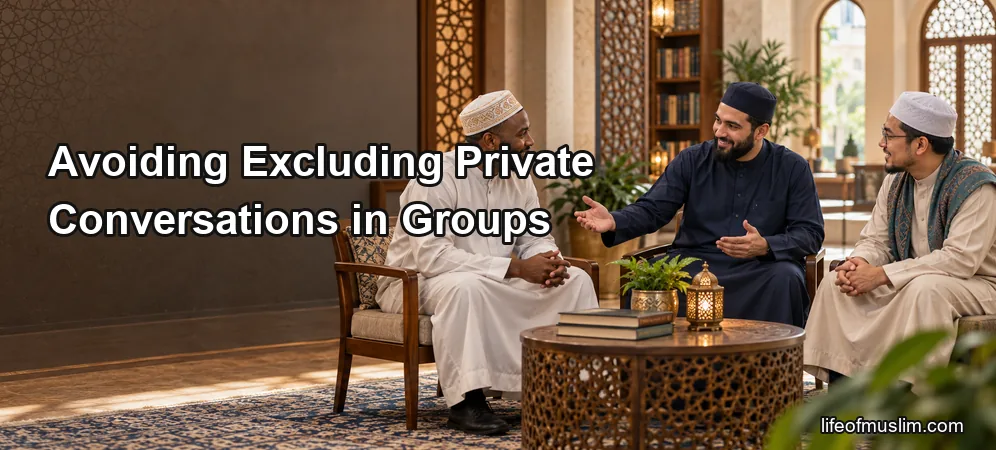
A quiet exchange between two people can unintentionally make a third person feel exposed, suspected, or unwelcome. Islamic manners consider not only what is said but also how a social arrangement affects the people present. Sahih Muslim 2184a gives direct guidance for a group of three.
Do Not Exclude the Third Person
Sahih Muslim 2184a reports that when three people are together, two should not converse privately to the exclusion of the third until they mix with other people, because the exclusion may hurt that person’s feelings. The chapter identifies the issue as private conversation without the third person’s consent.
The hadith addresses a specific situation and gives its reason: emotional harm. It teaches practical attentiveness. People may not know the subject of the private exchange, so uncertainty itself can create sadness, embarrassment, or fear.
Recognise Modern Forms of Exclusion
Exclusion may happen through whispering, switching to a language the third person cannot understand, passing private messages while sitting together, or creating a side chat during a three-person meeting. The technology changes, but the social effect can be similar.
Not every confidential matter can be discussed publicly. Privacy may be necessary for personal, legal, medical, safeguarding, or professional reasons. The solution is to arrange an appropriate private time rather than creating a secret conversation in front of the excluded person.
Include People Clearly
Use a shared language when possible, explain relevant context, and direct eye contact and questions to everyone present. If one person has been quiet, invite their view without forcing them to speak. Make seating and body language open rather than forming a closed pair.
In a meeting, state which matters concern the whole group and which require a separate confidential session. Clear structure reduces suspicion and respects both inclusion and legitimate privacy.
Ask Consent Without Pressure
If a brief private exchange is genuinely necessary, ask whether the third person is comfortable and offer a practical alternative. Consent should be free, not obtained by making the person feel unreasonable for hesitating.
Consider the power difference. A junior employee, child, guest, new community member, or dependent person may say they are comfortable while feeling unable to object. When in doubt, postpone the private exchange.
Repair an Excluding Moment
If you realise that someone was excluded, acknowledge it simply: explain that the arrangement was inconsiderate, apologise, and change the setting. Do not dismiss the response by saying the person was too sensitive.
Share any context that can be disclosed without violating another person’s confidentiality. More importantly, demonstrate inclusion through later conduct rather than demanding immediate reassurance.
Protect Privacy Without Gossip
A private conversation is not automatically responsible. Do not use confidentiality as cover for gossip, mockery, plotting, or unfair decisions. Speak only with those who need the information and only to the extent required.
When sensitive help is needed, choose an appropriate setting and trustworthy people. Protect the dignity of both the person seeking help and anyone being discussed, while taking necessary safeguarding or accountability steps.
Conclusion
Sahih Muslim 2184a teaches two people not to hold an excluding private conversation when only three are together because it may cause hurt. This guidance can shape considerate meetings, family visits, classrooms, workplaces, and digital communication. Clear inclusion, freely given consent, appropriate privacy, and prompt repair help people feel respected rather than pushed aside.
چھوٹے گروہ میں الگ خفیہ گفتگو سے لوگوں کے احساسات بچائیں
دو لوگوں کی خاموش گفتگو غیر ارادی طور پر تیسرے شخص کو مشکوک، بے آرام یا غیر مطلوب محسوس کرا سکتی ہے۔ اسلامی آداب صرف بات کے مضمون نہیں بلکہ اس بات کا بھی خیال رکھتے ہیں کہ سماجی ترتیب موجود لوگوں پر کیا اثر ڈالتی ہے۔ صحیح مسلم 2184a تین افراد کے گروہ کے لیے واضح رہنمائی دیتی ہے۔
تیسرے شخص کو الگ نہ کریں
صحیح مسلم 2184a میں ہے کہ جب تین لوگ ہوں تو دو افراد تیسرے کو چھوڑ کر باہم خفیہ گفتگو نہ کریں، یہاں تک کہ وہ دوسرے لوگوں کے ساتھ مل جائیں، کیونکہ اس سے تیسرے شخص کے احساسات کو تکلیف ہو سکتی ہے۔ باب کا عنوان تیسرے کی رضامندی کے بغیر ایسی گفتگو کی ممانعت بیان کرتا ہے۔
حدیث ایک خاص صورت اور اس کی وجہ یعنی جذباتی نقصان بیان کرتی ہے۔ یہ عملی توجہ سکھاتی ہے۔ تیسرے شخص کو موضوع معلوم نہیں ہوتا، اس لیے غیر یقینی خود اداسی، شرمندگی یا خوف پیدا کر سکتی ہے۔
اخراج کی جدید صورتیں پہچانیں
سرگوشی، ایسی زبان اختیار کرنا جو تیسرا شخص نہ سمجھے، ساتھ بیٹھے ہوئے نجی پیغام بھیجنا یا تین افراد کی ملاقات میں الگ چیٹ بنانا اخراج کی صورت ہو سکتی ہے۔ ٹیکنالوجی بدلتی ہے مگر سماجی اثر ملتا جلتا رہتا ہے۔
ہر نجی معاملہ سب کے سامنے بیان نہیں کیا جا سکتا۔ ذاتی، قانونی، طبی، حفاظتی یا پیشہ ور وجہ سے رازداری ضروری ہو سکتی ہے۔ مناسب حل الگ نجی وقت مقرر کرنا ہے، نہ کہ خارج کیے گئے شخص کے سامنے خفیہ گفتگو شروع کرنا۔
لوگوں کو واضح طور پر شامل کریں
ممکن ہو تو مشترک زبان استعمال کریں، متعلقہ پس منظر واضح کریں اور نظر و سوال سب کی طرف رکھیں۔ کوئی خاموش ہو تو اسے رائے دینے کی دعوت دیں مگر بولنے پر مجبور نہ کریں۔ نشست اور جسمانی انداز کھلا رکھیں، بند جوڑا نہ بنائیں۔
ملاقات میں واضح کریں کہ کون سے امور پورے گروہ سے متعلق ہیں اور کن کے لیے الگ خفیہ نشست ضروری ہے۔ واضح ترتیب شک کم اور شمولیت و جائز رازداری دونوں کا احترام کرتی ہے۔
دباؤ کے بغیر رضامندی پوچھیں
مختصر نجی گفتگو واقعی ضروری ہو تو پوچھیں کہ تیسرا شخص مطمئن ہے یا نہیں اور عملی متبادل دیں۔ رضامندی آزاد ہونی چاہیے، ایسا نہ ہو کہ ہچکچانے پر اسے نامناسب محسوس کرایا جائے۔
اختیار کے فرق کا خیال رکھیں۔ کم عہدے والا ملازم، بچہ، مہمان، نیا کمیونٹی رکن یا زیر کفالت فرد اعتراض نہ کر سکنے کی وجہ سے رضامندی ظاہر کر سکتا ہے۔ شک ہو تو نجی گفتگو مؤخر کریں۔
الگ کرنے والے لمحے کی اصلاح کریں
احساس ہو کہ کسی کو الگ کیا گیا تو سادہ طور پر تسلیم کریں کہ ترتیب نامناسب تھی، معذرت کریں اور ماحول بدلیں۔ یہ کہہ کر ردعمل رد نہ کریں کہ وہ شخص بہت حساس تھا۔
ایسا پس منظر بیان کریں جو کسی دوسرے کی رازداری توڑے بغیر بتایا جا سکے۔ سب سے اہم یہ ہے کہ بعد کے عمل میں شمولیت دکھائیں اور فوری تسلی کا مطالبہ نہ کریں۔
غیبت کے بغیر رازداری کی حفاظت کریں
نجی گفتگو خود بخود ذمہ دار نہیں بن جاتی۔ رازداری کو غیبت، مذاق، سازش یا غیر منصفانہ فیصلے کا پردہ نہ بنائیں۔ صرف ضرورت رکھنے والے لوگوں سے اور ضرورت کی حد تک بات کریں۔
حساس مدد درکار ہو تو مناسب جگہ اور قابل اعتماد لوگ منتخب کریں۔ مدد مانگنے والے اور زیر گفتگو شخص دونوں کی عزت بچائیں، جبکہ ضروری حفاظت اور جواب دہی کے قدم بھی اٹھائیں۔
نتیجہ
صحیح مسلم 2184a سکھاتی ہے کہ صرف تین افراد ہوں تو دو لوگ تیسرے کو چھوڑ کر نجی گفتگو نہ کریں، کیونکہ اسے تکلیف ہو سکتی ہے۔ یہ رہنمائی ملاقات، خاندانی محفل، کلاس، کام اور ڈیجیٹل رابطے کو بہتر بنا سکتی ہے۔ واضح شمولیت، آزاد رضامندی، مناسب رازداری اور فوری اصلاح لوگوں کو الگ کرنے کے بجائے احترام کا احساس دیتی ہے۔
References
Sahih Muslim — Book 39: The Book of Greetings — Chapter: The Prohibition of Two People Conversing Privately to the Exclusion of a Third Without Consent — Hadith 2184a (Book 39, Hadith 50)