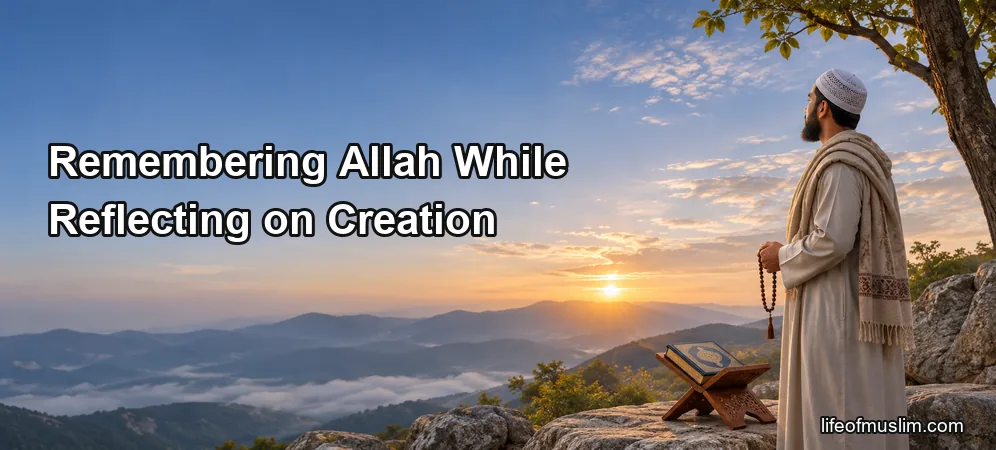
Faith is strengthened not only by receiving information, but also by noticing Allah’s signs with a remembering heart. Quran 3:190–191 joins thoughtful reflection on the heavens, earth, night, and day with remembrance, prayer, and a clear sense of purpose.
Creation Contains Signs for People of Reason
Quran 3:190 points to the creation of the heavens and the earth and the alternation of night and day as signs for people of reason. The verse invites careful attention. Familiar things should not become invisible simply because we see them repeatedly.
The changing light, ordered seasons, vast sky, living creatures, water, soil, and the limits of our own bodies can all remind us that creation is not self-made or without meaning. Reflection begins with honest observation, not exaggerated claims or invented scientific interpretations.
Remembrance and Reflection Belong Together
Quran 3:191 describes people who remember Allah while standing, sitting, and lying on their sides, and who reflect on creation. Their thought leads to worship: they recognize that Allah did not create all this without purpose, glorify Him, and ask for protection from the Fire.
Reflection without remembrance can remain only an interesting idea. Remembrance without attention can become hurried habit. Together, they help the mind notice, the heart humble itself, and the tongue turn toward sincere dua.
Bring Reflection Into Ordinary Moments
You do not need a remote mountain or a perfect sunrise. Notice the shift from darkness to morning while preparing for Fajr, the structure of a leaf during a walk, rainfall after dry weather, or the way the body rests and wakes. Pause briefly, remember Allah, and connect what you see with gratitude and responsibility.
Keep the practice simple. One attentive minute may be better than a long exercise that becomes forced. Avoid staring at the sun, entering unsafe places, driving while distracted, or neglecting responsibilities in the name of reflection.
Let Reflection Produce Responsible Action
Recognizing purpose should affect conduct. The earth is not merely scenery for consumption. Avoid waste, protect shared spaces, treat animals responsibly, and use resources without carelessness. Learning about creation through reliable study can deepen appreciation when it remains honest and does not turn uncertain theories into religious claims.
Reflection should also expose personal limits. We cannot control the passing day, our health, or every outcome. This awareness can reduce arrogance and encourage repentance, prayer, careful planning, and better use of time.
A Daily Remembrance and Reflection Routine
Choose one regular moment: after Fajr, during a safe walk, beside a window, or before sleep. Observe one part of creation without your phone for a minute. Say a familiar remembrance of Allah, consider one lesson, and make a short dua. Then identify one responsible action, such as conserving water, completing a duty, thanking Allah, or repairing harm.
Conclusion
Quran 3:190–191 teaches a faith that is awake to the world without worshipping it. Believers remember Allah in changing circumstances, reflect on His creation, recognize purpose, and turn insight into dua and responsible living. Everyday creation can become a doorway to humility when the heart looks with remembrance.
روزمرہ زندگی میں اللہ کی یاد اور تخلیق پر غور
ایمان صرف معلومات حاصل کرنے سے نہیں بلکہ یادِ الٰہی کے ساتھ اللہ کی نشانیوں کو دیکھنے سے بھی مضبوط ہوتا ہے۔ قرآن 3:190–191 آسمانوں، زمین، رات اور دن پر غور کو ذکر، دعا اور مقصد کے واضح احساس سے جوڑتا ہے۔
تخلیق میں عقل والوں کے لیے نشانیاں ہیں
قرآن 3:190 آسمانوں اور زمین کی تخلیق اور رات دن کی تبدیلی کو عقل والوں کے لیے نشانیاں قرار دیتا ہے۔ آیت توجہ سے دیکھنے کی دعوت دیتی ہے۔ مانوس چیزیں صرف بار بار نظر آنے کی وجہ سے ہماری نگاہ سے اوجھل نہیں ہونی چاہییں۔
بدلتی روشنی، منظم موسم، وسیع آسمان، جاندار، پانی، مٹی اور ہمارے جسم کی حدود یاد دلاتی ہیں کہ تخلیق خودبخود یا بے مقصد نہیں۔ غور دیانت دار مشاہدے سے شروع ہوتا ہے، مبالغہ یا گھڑی ہوئی سائنسی تشریح سے نہیں۔
ذکر اور غور ساتھ رہتے ہیں
قرآن 3:191 ان لوگوں کو بیان کرتا ہے جو کھڑے، بیٹھے اور اپنے پہلوؤں پر اللہ کو یاد کرتے اور تخلیق پر غور کرتے ہیں۔ ان کی سوچ عبادت تک پہنچتی ہے: وہ مانتے ہیں کہ اللہ نے یہ سب بے مقصد نہیں بنایا، اس کی پاکی بیان کرتے اور آگ کے عذاب سے حفاظت مانگتے ہیں۔
ذکر کے بغیر غور صرف دلچسپ خیال رہ سکتا ہے، اور توجہ کے بغیر ذکر جلدی کی عادت بن سکتا ہے۔ دونوں مل کر ذہن کو متوجہ، دل کو عاجز اور زبان کو سچی دعا کی طرف موڑتے ہیں۔
عام لمحوں میں غور کو جگہ دیں
اس کے لیے دور پہاڑ یا کامل طلوعِ آفتاب ضروری نہیں۔ فجر کی تیاری میں اندھیرے سے صبح کی تبدیلی، چہل قدمی میں پتے کی بناوٹ، خشکی کے بعد بارش یا جسم کے آرام اور بیداری کو دیکھیں۔ مختصر توقف کریں، اللہ کو یاد کریں اور مشاہدے کو شکر و ذمہ داری سے جوڑیں۔
عمل سادہ رکھیں۔ توجہ کا ایک منٹ اس طویل مشق سے بہتر ہو سکتا ہے جو بوجھ بن جائے۔ سورج کو براہِ راست نہ دیکھیں، غیر محفوظ جگہ نہ جائیں، گاڑی چلاتے ہوئے توجہ نہ ہٹائیں اور غور کے نام پر ذمہ داریاں نظرانداز نہ کریں۔
غور ذمہ دار عمل پیدا کرے
مقصد کا شعور کردار پر اثر انداز ہونا چاہیے۔ زمین صرف استعمال کی منظرگاہ نہیں۔ فضول خرچی سے بچیں، مشترکہ جگہوں کی حفاظت کریں، جانوروں سے ذمہ دارانہ سلوک کریں اور وسائل بے احتیاطی سے نہ برتیں۔ معتبر مطالعہ تخلیق کی قدر بڑھا سکتا ہے، بشرطیکہ غیر یقینی نظریات کو دینی دعویٰ نہ بنایا جائے۔
غور ہماری حدود بھی ظاہر کرتا ہے۔ ہم گزرتے دن، صحت یا ہر نتیجے کو قابو نہیں کر سکتے۔ یہ شعور تکبر کم اور توبہ، نماز، محتاط منصوبہ بندی اور وقت کے بہتر استعمال کی ترغیب دے سکتا ہے۔
روزانہ ذکر اور غور کا معمول
ایک باقاعدہ وقت منتخب کریں: فجر کے بعد، محفوظ چہل قدمی میں، کھڑکی کے پاس یا سونے سے پہلے۔ فون کے بغیر ایک منٹ تخلیق کے کسی حصے کو دیکھیں۔ اللہ کا کوئی مانوس ذکر کریں، ایک سبق سوچیں اور مختصر دعا کریں۔ پھر پانی بچانے، ذمہ داری پوری کرنے، شکر ادا کرنے یا نقصان درست کرنے جیسا ایک عملی قدم منتخب کریں۔
نتیجہ
قرآن 3:190–191 ایسے ایمان کی تعلیم دیتا ہے جو دنیا کو دیکھتا ہے مگر اسے معبود نہیں بناتا۔ مومن مختلف حالتوں میں اللہ کو یاد کرتے، اس کی تخلیق پر غور کرتے، مقصد پہچانتے اور سمجھ کو دعا و ذمہ دار زندگی میں بدلتے ہیں۔ یاد کرنے والا دل روزمرہ تخلیق کو عاجزی کا دروازہ بنا سکتا ہے۔
References
Quran — Surah Ali ‘Imran, Ayahs 190–191 (3:190–191)