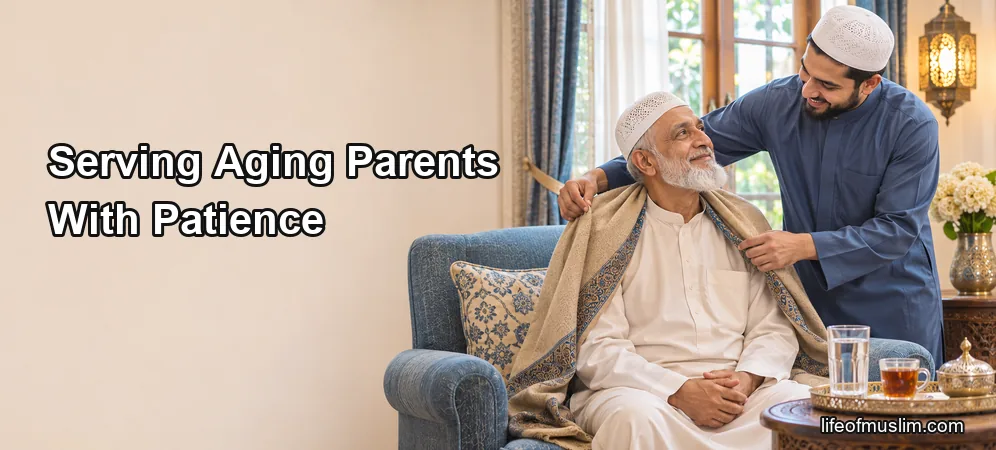
When parents reach old age, familiar family roles often change. They may need more time, transport, help with appointments, financial support, or simply patient company. Sahih Muslim 2551a presents this period as a serious opportunity that must not be neglected.
A Strong Warning About a Precious Opportunity
Abu Huraira reported that the Prophet Muhammad ﷺ warned about the person who lives to see one or both parents reach old age yet fails to enter Paradise. The severe wording shows that their later years are not an inconvenience to escape, but an important field of duty and reward.
The hadith does not promise that care will always be easy. Aging can bring reduced mobility, repeated questions, grief, memory changes, or complex needs. The lesson is to recognize the opportunity and respond with sincere effort rather than indifference.
Begin by Listening to What Parents Actually Need
Respectful care does not assume that an older parent has lost all choice. Ask what help is wanted and what routines matter to them. Include them in decisions about their home, health, finances, visits, and daily schedule whenever they can decide.
Speak clearly without treating them like children. Allow extra time for an answer. If hearing, vision, language, or memory makes communication difficult, adjust the method while preserving dignity.
Turn Good Intention Into Reliable Support
Practical care may include groceries, transport, safe housing, bills, medication reminders, meals, technology help, or regular companionship. Agree on responsibilities among family members so one person is not silently overwhelmed and important tasks are not forgotten.
Use a shared schedule when appropriate, keep essential information secure, and review whether arrangements still work. Financial help should protect the parent’s property and consent. Never pressure an older parent to sign documents, surrender money, or hide transactions.
Patience Does Not Mean Ignoring Safety
Fatigue can make caregivers impatient. Pause before responding harshly, arrange rest, and ask trustworthy relatives for help. At the same time, patience does not mean managing serious medical, cognitive, or safety concerns alone. Seek qualified healthcare, legal, or social support when needed.
If abuse, neglect, exploitation, or immediate danger is present, protect the parent and contact appropriate local services. Family privacy must not become a cover for harm.
Care From a Distance Can Still Be Consistent
Not every child lives nearby. Regular calls, reliable financial support, coordinated appointments, trusted local contacts, and planned visits can still show dependable care. Focus on consistency rather than dramatic gestures followed by long absence.
When family relationships are strained, maintain wise boundaries while seeking safe ways to fulfil obligations. A qualified scholar or counsellor can help with difficult circumstances; no one should be told to remain in immediate danger.
A Practical Family Care Review
This week, ask your parent which task would make daily life easier. Check one practical area—transport, food, health appointments, bills, social contact, or home safety—and agree on a specific next step. If parents have passed away, honour them through sincere dua and lawful good deeds while maintaining family ties.
Conclusion
Sahih Muslim 2551a turns aging parents from a background concern into a central moral responsibility. Patient speech, protected dignity, reliable help, and wise coordination make care real. The opportunity is precious: serve with humility while parents are present, and do not postpone kindness until it can no longer be given.
بوڑھے والدین کی صبر، احترام اور عملی دیکھ بھال کے ساتھ خدمت
جب والدین بڑھاپے کو پہنچتے ہیں تو خاندانی کردار بدل سکتے ہیں۔ انہیں زیادہ وقت، آمدورفت، ملاقاتوں میں مدد، مالی تعاون یا صبر والی صحبت درکار ہو سکتی ہے۔ صحیح مسلم 2551a اس دور کو ایک سنجیدہ موقع قرار دیتی ہے جسے ضائع نہیں کرنا چاہیے۔
قیمتی موقع کے بارے میں سخت تنبیہ
حضرت ابو ہریرہ رضی اللہ عنہ سے روایت ہے کہ نبی محمد ﷺ نے اس شخص کے بارے میں سخت تنبیہ فرمائی جو ایک یا دونوں والدین کو بڑھاپے میں پائے مگر جنت میں داخل نہ ہو۔ اس سخت انداز سے واضح ہوتا ہے کہ ان کے آخری سالوں کو بوجھ نہیں بلکہ ذمہ داری اور اجر کا اہم میدان سمجھنا چاہیے۔
حدیث یہ وعدہ نہیں کرتی کہ خدمت ہمیشہ آسان ہوگی۔ بڑھاپا کمزور حرکت، بار بار سوال، غم، یادداشت کی تبدیلی یا پیچیدہ ضرورتیں لا سکتا ہے۔ سبق یہ ہے کہ موقع پہچان کر بے توجہی کے بجائے مخلص کوشش کی جائے۔
والدین کی حقیقی ضرورت سننے سے آغاز کریں
بااحترام دیکھ بھال یہ فرض نہیں کرتی کہ عمر رسیدہ والدین کا اختیار ختم ہوگیا۔ پوچھیں کہ کون سی مدد مطلوب ہے اور کون سے معمول اہم ہیں۔ جب وہ فیصلہ کر سکتے ہوں تو گھر، صحت، مالیات، ملاقاتوں اور روزانہ نظام کے فیصلوں میں انہیں شامل رکھیں۔
واضح بات کریں مگر بچوں جیسا سلوک نہ کریں۔ جواب کے لیے زیادہ وقت دیں۔ سماعت، نظر، زبان یا یادداشت مشکل بنائے تو عزت محفوظ رکھتے ہوئے رابطے کا طریقہ بدلیں۔
اچھی نیت کو قابلِ اعتماد مدد بنائیں
عملی خدمت میں سودا سلف، آمدورفت، محفوظ رہائش، بل، دوا کی یاددہانی، کھانا، ٹیکنالوجی میں مدد یا باقاعدہ صحبت شامل ہو سکتی ہے۔ گھر والوں میں ذمہ داریاں واضح کریں تاکہ ایک شخص خاموشی سے نہ تھکے اور اہم کام نہ بھولیں۔
مناسب ہو تو مشترکہ شیڈول رکھیں، ضروری معلومات محفوظ کریں اور انتظام کا جائزہ لیتے رہیں۔ مالی مدد والدین کی ملکیت اور رضامندی کی حفاظت کرے۔ کسی عمر رسیدہ والد یا والدہ کو دستاویز پر دستخط، رقم چھوڑنے یا لین دین چھپانے پر مجبور نہ کریں۔
صبر کا مطلب حفاظت نظرانداز کرنا نہیں
تھکن خدمت کرنے والے کو بے صبر بنا سکتی ہے۔ سخت جواب سے پہلے توقف کریں، آرام کا انتظام کریں اور معتبر رشتہ داروں سے مدد لیں۔ لیکن صبر کا مطلب سنگین طبی، ذہنی یا حفاظتی مسئلہ تنہا سنبھالنا نہیں۔ ضرورت پر مستند طبی، قانونی یا سماجی مدد لیں۔
اگر بدسلوکی، غفلت، استحصال یا فوری خطرہ ہو تو والدین کی حفاظت کریں اور مناسب مقامی خدمات سے رابطہ کریں۔ خاندانی رازداری نقصان چھپانے کا ذریعہ نہیں بننی چاہیے۔
دور رہ کر بھی خدمت مسلسل ہو سکتی ہے
ہر اولاد قریب نہیں رہتی۔ باقاعدہ فون، قابلِ اعتماد مالی مدد، ملاقاتوں کا انتظام، معتبر مقامی رابطہ اور منصوبہ شدہ دورے مسلسل خدمت دکھا سکتے ہیں۔ بڑے مگر عارضی اقدام کے بجائے تسلسل پر توجہ دیں۔
تعلقات کشیدہ ہوں تو محفوظ طریقے سے ذمہ داری پوری کرتے ہوئے حکیمانہ حدود رکھیں۔ مشکل حالات میں مستند عالم یا مشیر مدد کر سکتا ہے؛ کسی کو فوری خطرے میں رہنے کا مشورہ نہیں دینا چاہیے۔
خاندانی دیکھ بھال کا عملی جائزہ
اس ہفتے والدین سے پوچھیں کہ کون سا کام روزانہ زندگی آسان بنائے گا۔ آمدورفت، کھانا، طبی ملاقات، بل، سماجی رابطہ یا گھر کی حفاظت میں سے ایک شعبہ دیکھیں اور واضح اگلا قدم طے کریں۔ اگر والدین وفات پا چکے ہوں تو سچی دعا اور جائز نیک اعمال کے ذریعے انہیں یاد رکھیں اور خاندانی تعلقات قائم رکھیں۔
نتیجہ
صحیح مسلم 2551a بوڑھے والدین کو پس منظر کے مسئلے کے بجائے مرکزی اخلاقی ذمہ داری بناتی ہے۔ صبر والی گفتگو، محفوظ عزت، قابلِ اعتماد مدد اور حکیمانہ تنظیم خدمت کو حقیقی بناتے ہیں۔ یہ قیمتی موقع ہے: والدین کی موجودگی میں عاجزی سے خدمت کریں اور محبت کو اس وقت تک مؤخر نہ کریں جب وہ دی نہ جا سکے۔
References
Sahih Muslim — Book 45: The Book of Virtue, Enjoining Good Manners, and Joining of the Ties of Kinship — Chapter 3: The Disgrace of One Whose Parents, One or Both of Them, Reach Old Age During His Lifetime, and He Does Not Enter Paradise — Hadith 2551a (Book 45, Hadith 10)