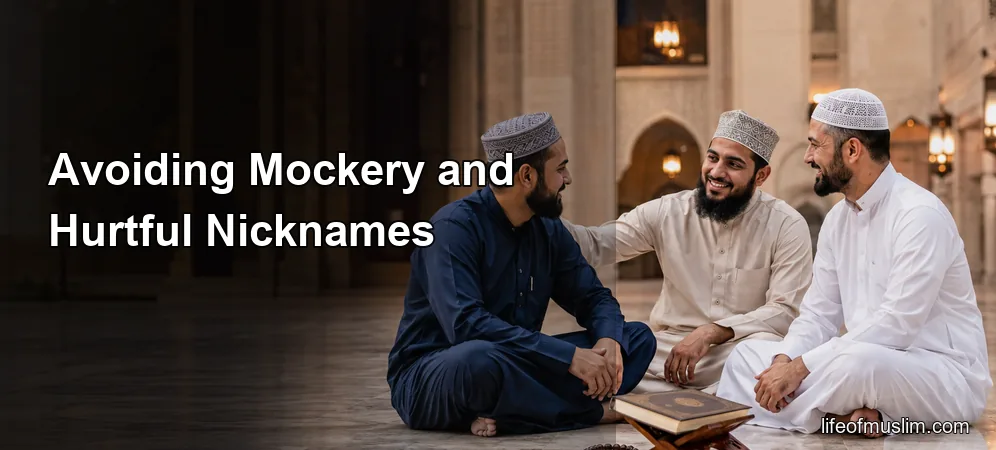
Words that appear small to one person can leave a lasting wound in another. Mockery, insulting remarks, and offensive nicknames weaken trust and turn ordinary gatherings into places of embarrassment. Islam protects personal dignity by teaching believers to restrain the tongue, respect one another, and repent when harm has been caused.
Allah Forbids Ridicule and Offensive Names
In Surah Al-Hujurat, Allah tells believing men and women not to ridicule others because those being mocked may be better than those mocking them. The verse also says: “Do not defame one another, nor call each other by offensive nicknames.” It closes with a warning to repent from such wrongdoing.
This guidance removes the false idea that humour becomes harmless simply because people laugh. A joke that humiliates someone, exposes a weakness, or attaches an unwanted label can still be wrong even when the speaker claims there was no bad intention.
Respect Is Not Based on Appearance or Status
People are often mocked because of their appearance, accent, work, education, age, family background, or a mistake from the past. The Quran reminds the believer that human judgement is limited. The person treated as inferior may possess qualities that are better in the sight of Allah.
Respect therefore should not depend on popularity or social position. A believer guards the dignity of the quiet person, the newcomer, the child, the elderly person, and anyone who may find it difficult to defend themselves.
Notice When a Nickname Causes Harm
Some familiar names express affection and are welcomed. The problem is a name that the person dislikes because it insults, exposes, or repeatedly reminds them of something painful. If someone asks that a label not be used, kindness requires listening rather than defending the joke.
A nickname may also become harmful when it spreads through school, work, family chats, or social media. Repetition can deepen embarrassment and make the person feel trapped by a description that does not represent their full character.
Choose Humour That Preserves Dignity
Healthy humour brings warmth without making another person the target. Before speaking, ask whether the same words would feel acceptable if they were said about you in front of the same people. Consider the listener’s feelings, the setting, and whether private information is being exposed.
When a gathering begins to ridicule someone, a Muslim can change the subject, decline to repeat the comment, or remind others gently that the person deserves respect. Silence should not become quiet approval when a simple, wise response could stop the harm.
Correct Mistakes Without Humiliation
Protecting dignity does not mean ignoring harmful behaviour. Advice and correction may be necessary, but they should address the action rather than attack the person’s worth. Private counsel is often more effective than public embarrassment.
Use accurate words, avoid exaggeration, and leave room for improvement. A person is more likely to accept correction when they understand the problem and are not forced to defend themselves against insults.
Repair the Harm and Repent
If you mocked someone or used an offensive name, stop repeating it and turn to Allah in repentance. Where appropriate, apologise clearly without blaming the hurt person for being sensitive. Remove harmful posts or messages when possible and discourage others from continuing the label.
An apology becomes meaningful when behaviour changes. Use the person’s preferred name, speak respectfully about them when they are absent, and replace the old habit with words that are truthful and kind.
Build Respectful Homes and Communities
Parents and teachers can correct mocking early without humiliating the child who made the mistake. Families can agree not to turn physical features, learning difficulties, or past failures into entertainment. Online, believers should remember that a comment can travel far beyond its intended audience and remain visible for years.
A respectful environment does not remove joy. It creates safer joy—one in which people can laugh together without fearing that they will become the next target.
Conclusion
Avoiding mockery and hurtful nicknames is part of protecting the honour Allah has given people. By choosing respectful humour, correcting privately, listening when someone is hurt, and repenting for harmful words, Muslims can build relationships marked by dignity, mercy, and trust.
تمسخر اور تکلیف دہ القاب سے بچ کر انسانی عزت کی حفاظت
جو الفاظ ایک شخص کو معمولی لگتے ہیں وہ دوسرے کے دل پر دیرپا زخم چھوڑ سکتے ہیں۔ تمسخر، توہین آمیز باتیں اور ناپسندیدہ القاب اعتماد کو کمزور کرتے اور عام مجلس کو شرمندگی کی جگہ بنا دیتے ہیں۔ اسلام زبان کی حفاظت، باہمی احترام اور نقصان پہنچنے پر توبہ کی تعلیم دے کر انسان کی عزت محفوظ کرتا ہے۔
اللہ نے تمسخر اور برے القاب سے منع فرمایا
سورۃ الحجرات میں اللہ تعالیٰ مومن مردوں اور عورتوں کو دوسروں کا مذاق اڑانے سے منع فرماتا ہے، کیونکہ جنہیں حقیر سمجھا جا رہا ہو وہ مذاق اڑانے والوں سے بہتر ہو سکتے ہیں۔ آیت ایک دوسرے کو عیب لگانے اور ناپسندیدہ القاب سے پکارنے سے بھی منع کرتی ہے، اور اس غلطی سے توبہ کی تاکید کرتی ہے۔
یہ رہنمائی اس غلط خیال کو دور کرتی ہے کہ لوگوں کے ہنسنے سے ہر مذاق بے ضرر ہو جاتا ہے۔ ایسا مذاق جو کسی کو ذلیل کرے، اس کی کمزوری ظاہر کرے یا اس پر ناپسندیدہ نام چسپاں کرے، غلط ہو سکتا ہے چاہے بولنے والا یہ کہے کہ اس کی نیت بری نہیں تھی۔
احترام ظاہری شکل یا مرتبے پر منحصر نہیں
لوگوں کا مذاق اکثر شکل، لہجے، کام، تعلیم، عمر، خاندانی پس منظر یا پرانی غلطی کی وجہ سے اڑایا جاتا ہے۔ قرآن مومن کو یاد دلاتا ہے کہ انسانی فیصلہ محدود ہے۔ جس شخص کو کمتر سمجھا جا رہا ہو، اس میں ایسی خوبیاں ہو سکتی ہیں جو اللہ کے نزدیک بہتر ہوں۔
اس لیے احترام مقبولیت یا معاشرتی مقام سے وابستہ نہیں ہونا چاہیے۔ مومن خاموش شخص، نئے آنے والے، بچے، بزرگ اور ہر ایسے فرد کی عزت کی حفاظت کرتا ہے جس کے لیے اپنا دفاع کرنا مشکل ہو۔
سمجھیں کہ لقب کب تکلیف دیتا ہے
کچھ مانوس نام محبت ظاہر کرتے ہیں اور خوشی سے قبول کیے جاتے ہیں۔ مسئلہ وہ نام ہے جسے کوئی شخص اس لیے ناپسند کرے کہ وہ توہین کرتا، راز ظاہر کرتا یا کسی تکلیف دہ بات کی بار بار یاد دلاتا ہے۔ اگر کوئی کہے کہ یہ نام استعمال نہ کیا جائے تو نرمی کا تقاضا ہے کہ اس کی بات سنی جائے، نہ کہ مذاق کا دفاع کیا جائے۔
کوئی لقب اس وقت بھی زیادہ نقصان دہ ہو جاتا ہے جب وہ مدرسے، کام، خاندان کے پیغامات یا سوشل میڈیا میں پھیل جائے۔ بار بار دہرانا شرمندگی بڑھا سکتا ہے اور انسان کو ایسی پہچان میں قید محسوس کرا سکتا ہے جو اس کے پورے کردار کی نمائندگی نہیں کرتی۔
ایسا مزاح اختیار کریں جو عزت محفوظ رکھے
اچھا مزاح کسی دوسرے کو نشانہ بنائے بغیر خوشی پیدا کرتا ہے۔ بولنے سے پہلے سوچیں کہ اگر یہی بات انہی لوگوں کے سامنے آپ کے بارے میں کہی جاتی تو کیا آپ اسے مناسب سمجھتے۔ سننے والے کے احساسات، موقع اور نجی معلومات کے ظاہر ہونے کا امکان ضرور دیکھیں۔
جب کسی مجلس میں کسی کا مذاق شروع ہو تو مسلمان موضوع بدل سکتا ہے، وہ بات دہرانے سے انکار کر سکتا ہے یا نرمی سے یاد دلا سکتا ہے کہ اس شخص کا احترام ضروری ہے۔ جہاں ایک سادہ اور دانا بات نقصان روک سکتی ہو وہاں خاموشی غیر محسوس تائید نہ بنے۔
غلطی کی اصلاح کریں، تذلیل نہ کریں
عزت کی حفاظت کا مطلب نقصان دہ عمل کو نظر انداز کرنا نہیں ہے۔ نصیحت اور اصلاح ضروری ہو سکتی ہے، مگر گفتگو عمل کے بارے میں ہو، انسان کی قدر پر حملہ نہ ہو۔ تنہائی میں نصیحت اکثر سب کے سامنے شرمندہ کرنے سے زیادہ مؤثر ہوتی ہے۔
درست الفاظ استعمال کریں، مبالغہ سے بچیں اور بہتری کی گنجائش رکھیں۔ جب انسان مسئلہ سمجھ سکے اور اسے توہین کے جواب میں اپنا دفاع نہ کرنا پڑے تو اصلاح قبول کرنا آسان ہوتا ہے۔
نقصان کی تلافی اور توبہ کریں
اگر آپ نے کسی کا مذاق اڑایا یا برا لقب استعمال کیا تو اسے دہرانا چھوڑ دیں اور اللہ کے حضور توبہ کریں۔ مناسب موقع پر واضح معذرت کریں اور تکلیف پانے والے کو حساس ہونے کا الزام نہ دیں۔ جہاں ممکن ہو نقصان دہ پوسٹ یا پیغام ہٹا دیں اور دوسروں کو بھی وہ لقب جاری رکھنے سے روکیں۔
معذرت اس وقت بامعنی بنتی ہے جب رویہ بدل جائے۔ اس شخص کا پسندیدہ نام استعمال کریں، اس کی غیر موجودگی میں بھی احترام سے بات کریں اور پرانی عادت کو سچے اور مہربان الفاظ سے بدل دیں۔
گھر اور معاشرے میں احترام پیدا کریں
والدین اور اساتذہ مذاق کی عادت کو ابتدا ہی میں درست کر سکتے ہیں، مگر غلطی کرنے والے بچے کو ذلیل کیے بغیر۔ خاندان یہ طے کر سکتے ہیں کہ جسمانی خصوصیات، سیکھنے کی مشکلات یا پرانی ناکامیوں کو تفریح نہیں بنایا جائے گا۔ آن لائن دنیا میں یاد رکھیں کہ ایک تبصرہ اپنے مطلوب سامعین سے بہت دور تک پہنچ سکتا اور برسوں موجود رہ سکتا ہے۔
احترام والا ماحول خوشی ختم نہیں کرتا۔ وہ زیادہ محفوظ خوشی پیدا کرتا ہے جس میں لوگ اس خوف کے بغیر ساتھ ہنس سکتے ہیں کہ اگلا نشانہ وہ بنیں گے۔
خلاصہ
تمسخر اور تکلیف دہ القاب سے بچنا اس عزت کی حفاظت کا حصہ ہے جو اللہ نے انسانوں کو دی ہے۔ باوقار مزاح، تنہائی میں اصلاح، کسی کے دل دکھنے پر اس کی بات سننے، اور نقصان دہ الفاظ سے توبہ کے ذریعے مسلمان عزت، رحمت اور اعتماد والے تعلقات بنا سکتے ہیں۔