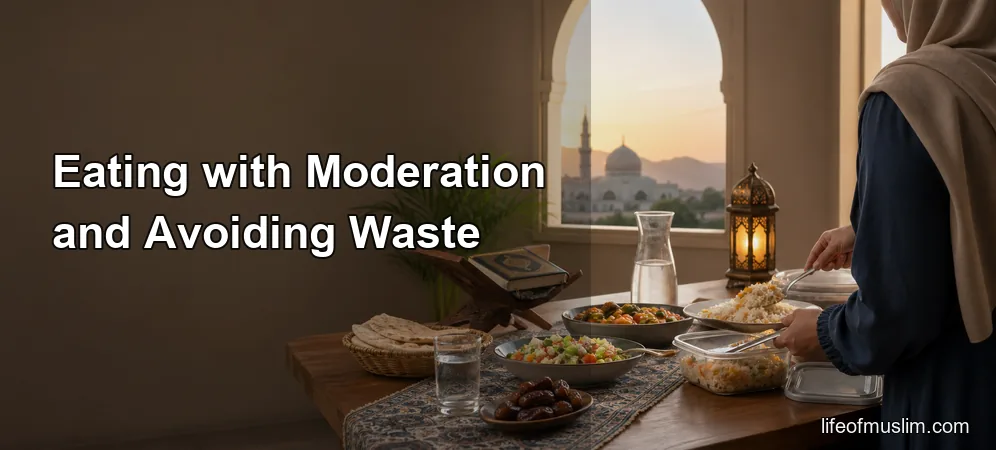
Food is a daily blessing, but rushed shopping, oversized portions, and forgotten leftovers can turn provision into waste. Islamic guidance joins permission to eat and drink with a clear instruction against excess, encouraging gratitude and practical responsibility.
Eat and Drink without Waste
Allah says: “Eat and drink, but do not waste.” (Quran 7:31)
This guidance avoids two extremes. It does not forbid enjoying lawful food, and it does not approve careless excess. Moderation means using blessings responsibly according to genuine needs and circumstances.
Plan before Buying
Check the cupboard, refrigerator, and freezer before shopping. Plan a few realistic meals, note what must be used soon, and buy quantities the household can finish. Large offers do not save money if the food is later discarded.
Keep a simple list and distinguish necessities from impulse purchases. When hosting, estimate attendance instead of preparing for an imagined crowd.
Serve Sensible Portions
Begin with a portion that can be finished and take more if still needed. Use serving dishes that allow people to choose rather than filling every plate in advance. Encourage children gently and do not shame them about appetite or body size.
Individual needs differ by age, health, activity, and other circumstances. Someone with medical or dietary concerns should follow appropriate qualified advice rather than copying another person’s portions.
Store Leftovers Safely
Put usable food into clean, covered containers and label it with the date. Refrigerate or freeze it according to reliable food-safety guidance, place older items where they will be noticed, and plan the next meal around them.
Do not serve spoiled food merely to avoid waste. When safety is uncertain, follow local food-safety advice. Responsible use includes protecting people from harm.
Share Surplus Responsibly
If safe untouched food remains, offer it promptly to relatives, neighbours, guests, or an authorised community programme that can receive it properly. Confirm collection times, packaging rules, and temperature requirements before donating.
Sharing should protect dignity. Do not give others food that you would consider unsafe or unsuitable for your own household.
Make Gatherings Generous without Excess
Hospitality is shown through warmth and attention, not the number of dishes. Choose a manageable menu, serve in stages, and keep reserve food covered until needed. At community events, assign people to portioning, storage, and distribution before the meal begins.
Build a Household Habit
Review food before each shopping trip, create a regular leftovers meal, and measure frequently wasted ingredients more carefully. Teach children to take what they can finish and to value the work and resources behind every meal.
Conclusion
Eating with moderation is an expression of gratitude and responsible care. Plan purchases, serve sensible portions, store food safely, and share suitable surplus. Small habits can reduce waste while allowing households to enjoy Allah’s provision without excess.
اعتدال سے کھانا اور فضول خرچی سے بچنا
کھانا روزانہ کی نعمت ہے، لیکن جلدی خریداری، بہت بڑے حصے اور بھولا ہوا بچا کھانا رزق کو ضائع کر سکتا ہے۔ اسلامی رہنمائی کھانے پینے کی اجازت کے ساتھ زیادتی سے واضح ممانعت جوڑتی اور شکر اور عملی ذمہ داری کی ترغیب دیتی ہے۔
کھائیں پیئیں لیکن ضائع نہ کریں
اللہ تعالیٰ کا مفہوم ہے: کھاؤ اور پیو لیکن فضول خرچی نہ کرو۔ (القرآن 7:31)
یہ رہنمائی دو انتہاؤں سے بچاتی ہے۔ یہ حلال کھانے سے لطف اٹھانے کو منع نہیں کرتی اور لاپرواہ زیادتی کو درست نہیں کہتی۔ اعتدال کا مطلب حقیقی ضرورت اور حالات کے مطابق نعمت کو ذمہ داری سے استعمال کرنا ہے۔
خریداری سے پہلے منصوبہ بنائیں
خریداری سے پہلے الماری، فریج اور فریزر دیکھیں۔ چند حقیقت پسندانہ کھانوں کا منصوبہ بنائیں، جلد استعمال ہونے والی چیز لکھیں اور اتنی مقدار لیں جو گھر والے مکمل کر سکیں۔ بڑی رعایت بچت نہیں اگر کھانا بعد میں پھینک دیا جائے۔
سادہ فہرست بنائیں اور ضرورت کو اچانک خواہش سے الگ رکھیں۔ مہمان بلاتے وقت فرضی ہجوم کے بجائے متوقع تعداد کے مطابق تیاری کریں۔
مناسب مقدار پیش کریں
اتنی مقدار سے شروع کریں جو ختم ہو سکے اور ضرورت ہو تو مزید لیں۔ ہر پلیٹ پہلے سے بھرنے کے بجائے ایسی ڈش استعمال کریں جس سے لوگ اپنی مقدار لے سکیں۔ بچوں کو نرمی سے سمجھائیں اور بھوک یا جسمانی ساخت پر شرمندہ نہ کریں۔
عمر، صحت، سرگرمی اور دوسرے حالات کے مطابق ضرورت مختلف ہوتی ہے۔ طبی یا غذائی مسئلہ رکھنے والا شخص دوسرے کی مقدار نقل کرنے کے بجائے مناسب مستند مشورے پر عمل کرے۔
بچا کھانا محفوظ طریقے سے رکھیں
قابل استعمال کھانا صاف ڈھکے ہوئے ڈبے میں رکھیں اور تاریخ لکھیں۔ قابل اعتماد غذائی حفاظتی رہنمائی کے مطابق ٹھنڈا یا منجمد کریں، پرانی چیز سامنے رکھیں اور اگلا کھانا اس کے مطابق بنائیں۔
صرف ضیاع سے بچنے کے لیے خراب کھانا پیش نہ کریں۔ حفاظت مشکوک ہو تو مقامی غذائی حفاظتی ہدایت پر عمل کریں۔ ذمہ دار استعمال میں لوگوں کو نقصان سے بچانا بھی شامل ہے۔
اضافی کھانا ذمہ داری سے بانٹیں
محفوظ اور نہ چھوا ہوا کھانا بچے تو جلد رشتہ دار، پڑوسی، مہمان یا مجاز معاشرتی ادارے کو دیں جو اسے درست طریقے سے لے سکے۔ عطیہ سے پہلے وصولی کا وقت، پیکنگ اور درجہ حرارت کی شرط معلوم کریں۔
بانٹنے میں عزت محفوظ ہونی چاہیے۔ دوسروں کو ایسا کھانا نہ دیں جسے اپنے گھر کے لیے غیر محفوظ یا نامناسب سمجھتے ہوں۔
دعوت میں سخاوت رکھیں لیکن زیادتی نہیں
مہمان نوازی گرم جوشی اور توجہ سے ظاہر ہوتی ہے، پکوانوں کی تعداد سے نہیں۔ قابل انتظام کھانے چنیں، مرحلہ وار پیش کریں اور اضافی کھانا ضرورت تک ڈھکا رکھیں۔ معاشرتی تقریب میں پہلے ہی مقدار، ذخیرہ اور تقسیم کے ذمہ دار طے کریں۔
گھر کی عادت بنائیں
ہر خریداری سے پہلے کھانے کا جائزہ لیں، بچی ہوئی چیزوں کے لیے باقاعدہ کھانا مقرر کریں اور بار بار ضائع ہونے والے اجزا احتیاط سے ناپیں۔ بچوں کو اتنا لینے کی تعلیم دیں جتنا ختم کر سکیں اور ہر کھانے کے پیچھے محنت اور وسائل کی قدر سکھائیں۔
خلاصہ
اعتدال سے کھانا شکر اور ذمہ دارانہ نگہداشت کا اظہار ہے۔ خریداری کا منصوبہ بنائیں، مناسب مقدار پیش کریں، کھانا محفوظ رکھیں اور موزوں اضافی حصہ بانٹیں۔ چھوٹی عادتیں ضیاع کم اور گھر کو اللہ کے رزق سے زیادتی کے بغیر فائدہ اٹھانے میں مدد دیتی ہیں۔