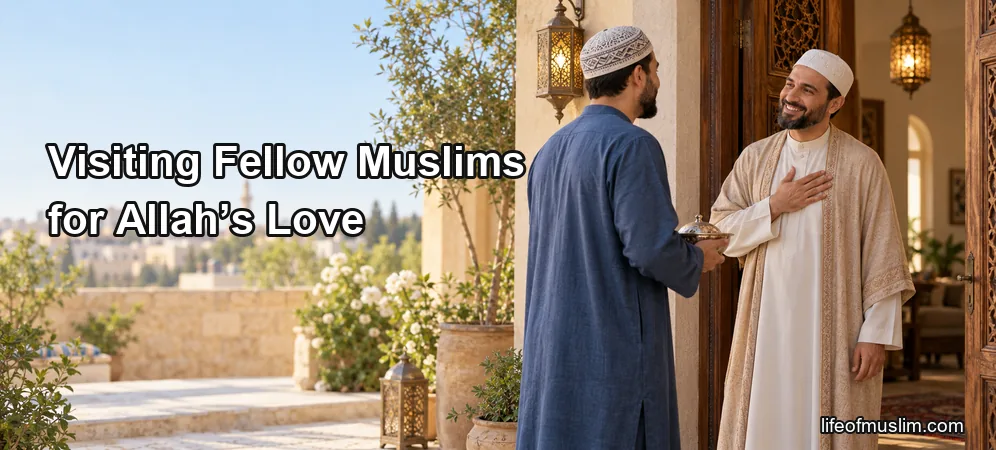
Some relationships are maintained mainly for advantage, status, or repayment. Sahih Muslim 2567a presents a purer motive: a person travelled to visit a fellow Muslim simply because he loved him for Allah’s sake. The hadith teaches sincere affection expressed through deliberate, unselfish care.
A Visit With No Favour to Collect
Abu Huraira reported that the Prophet Muhammad ﷺ described a man travelling to visit his brother in another town. An angel asked whether the visitor expected some favour in return. He answered that he went only because he loved his brother for Allah’s sake. The angel informed him that Allah loved him as he loved his brother for Allah.
The visit was purposeful, yet it was not a transaction. The traveller was not collecting a debt, cultivating influence, or seeking praise. His journey gave sincere affection a practical form.
Love for Allah Seeks What Is Good
Loving someone for Allah’s sake means valuing faith, goodness, and the person’s well-being. It encourages honest dua, respectful encouragement, and presence during ordinary days—not only when help, access, or recognition is needed.
This love should remain within Islamic manners. It does not justify intrusion, secrecy that harms a family, unhealthy dependence, or approving wrongdoing. Sincere friends can advise gently, respect boundaries, and help one another return to what is right.
Make Visits Thoughtful Rather Than Burdensome
Good intention should be joined with good etiquette. Ask whether the time is suitable, avoid arriving unexpectedly when that may cause difficulty, and keep the visit proportionate to the host’s circumstances. A short, considerate visit can carry more warmth than a long visit that exhausts a household.
Protect privacy. Do not inspect the home, photograph people without permission, or repeat private conversation afterward. If food or hospitality is offered, receive it graciously without demanding special treatment.
Do Not Measure Friendship Only by Return
A sincere visit should not become a hidden test: “I visited, so now they owe me.” People differ in health, finances, family duties, transport, and social capacity. Do not rush to interpret a delayed reply or an unreturned invitation as rejection.
At the same time, sincerity does not require ignoring repeated harm. Wise boundaries, safer meeting places, shorter contact, or trustworthy mediation may be necessary. Love for Allah is compatible with justice, safety, and clear limits.
Include People Who Are Easily Forgotten
Consider fellow Muslims who may receive few visitors: someone new to the community, an older person living alone, a student away from family, a person with limited mobility, or a friend quietly carrying a burden. Ask what form of contact is comfortable. A home visit, mosque meeting, walk, phone call, or video conversation may each be appropriate.
Visits between men and women should observe Islamic boundaries, family responsibilities, privacy, and local safety considerations. The principle is sincere connection, not creating discomfort or suspicion.
A Simple Practice for This Week
Choose one fellow Muslim whom you have not contacted recently. Send a brief message with no request attached. If a visit is welcome, agree on a suitable time and keep it easy for the host. Make dua for the person before you go, listen with attention, and leave without expecting a favour or public thanks.
Conclusion
Sahih Muslim 2567a shows that sincere affection can turn a journey into an act loved by Allah. Visiting for Allah’s sake means showing up without using the relationship for personal gain. With consent, privacy, balanced expectations, and sound boundaries, ordinary contact can strengthen brotherhood and remind hearts of faith.
ذاتی فائدے کے بغیر اللہ کی محبت کے لیے مسلمانوں سے ملاقات
کچھ تعلقات زیادہ تر فائدے، حیثیت یا بدلے کے لیے قائم رکھے جاتے ہیں۔ صحیح مسلم 2567a ایک پاکیزہ تر نیت پیش کرتی ہے: ایک شخص صرف اللہ کے لیے محبت کی وجہ سے دوسرے مسلمان سے ملنے سفر کرتا ہے۔ یہ حدیث سچی محبت کو ارادی اور بے غرض دیکھ بھال کے ذریعے ظاہر کرنا سکھاتی ہے۔
ایسی ملاقات جس میں کوئی بدلہ مطلوب نہ ہو
حضرت ابو ہریرہ رضی اللہ عنہ سے روایت ہے کہ نبی محمد ﷺ نے ایک ایسے شخص کا ذکر فرمایا جو دوسرے شہر میں اپنے بھائی سے ملنے جا رہا تھا۔ ایک فرشتے نے پوچھا کہ کیا وہ کسی احسان کا بدلہ لینے جا رہا ہے۔ اس نے جواب دیا کہ وہ صرف اللہ کے لیے اپنے بھائی سے محبت کرتا ہے۔ فرشتے نے بتایا کہ اللہ بھی اس سے محبت کرتا ہے جیسے وہ اللہ کے لیے اپنے بھائی سے محبت کرتا ہے۔
یہ سفر بامقصد تھا، مگر لین دین نہیں تھا۔ مسافر قرض وصول کرنے، اثر و رسوخ بڑھانے یا تعریف لینے نہیں جا رہا تھا۔ اس کے سفر نے سچی محبت کو عملی صورت دی۔
اللہ کے لیے محبت خیر چاہتی ہے
اللہ کے لیے کسی سے محبت کا مطلب ایمان، نیکی اور اس شخص کی بھلائی کی قدر کرنا ہے۔ یہ سچی دعا، بااحترام حوصلہ افزائی اور معمول کے دنوں میں ساتھ رہنے کی ترغیب دیتی ہے، صرف اس وقت نہیں جب مدد، رسائی یا پہچان مطلوب ہو۔
یہ محبت اسلامی آداب کے اندر رہنی چاہیے۔ یہ مداخلت، خاندان کو نقصان دینے والی رازداری، غیر صحت مند انحصار یا غلطی کی تائید کا جواز نہیں۔ مخلص دوست نرمی سے نصیحت، حدود کا احترام اور درست راستے کی طرف واپسی میں مدد کر سکتے ہیں۔
ملاقات کو بوجھ کے بجائے خیال رکھنے والی بنائیں
اچھی نیت کے ساتھ اچھا ادب بھی ضروری ہے۔ پوچھیں کہ وقت مناسب ہے یا نہیں، ایسی اچانک آمد سے بچیں جو مشکل پیدا کرے، اور ملاقات کو میزبان کے حالات کے مطابق رکھیں۔ مختصر اور باخیال ملاقات اس طویل ملاقات سے زیادہ محبت رکھ سکتی ہے جو گھر والوں کو تھکا دے۔
رازداری کی حفاظت کریں۔ گھر کی چھان بین، اجازت کے بغیر تصاویر یا بعد میں نجی گفتگو دہرانے سے بچیں۔ کھانا یا مہمان نوازی پیش ہو تو خصوصی سلوک کا مطالبہ کیے بغیر خوش دلی سے قبول کریں۔
دوستی کو صرف بدلے سے نہ ناپیں
مخلص ملاقات کو پوشیدہ امتحان نہ بنائیں کہ میں آیا تھا، اب وہ میرا مقروض ہے۔ لوگوں کی صحت، مالی حالت، خاندانی ذمہ داریاں، آمدورفت اور سماجی صلاحیت مختلف ہوتی ہے۔ تاخیر سے جواب یا دعوت واپس نہ آنے کو فوراً رد کرنا نہ سمجھیں۔
اس کے ساتھ اخلاص کا مطلب بار بار کے نقصان کو نظرانداز کرنا نہیں۔ حکیمانہ حدود، محفوظ جگہ، مختصر رابطہ یا معتبر ثالثی ضروری ہو سکتی ہے۔ اللہ کے لیے محبت عدل، حفاظت اور واضح حدود کے ساتھ مطابقت رکھتی ہے۔
ان لوگوں کو شامل کریں جو آسانی سے بھول دیے جاتے ہیں
ایسے مسلمانوں کے بارے میں سوچیں جن کے پاس کم لوگ آتے ہیں: کمیونٹی میں نیا شخص، تنہا رہنے والا بزرگ، خاندان سے دور طالب علم، محدود نقل و حرکت والا فرد یا خاموشی سے بوجھ اٹھانے والا دوست۔ پوچھیں کہ کون سا رابطہ آرام دہ ہے۔ گھر کی ملاقات، مسجد میں ملنا، چہل قدمی، فون یا ویڈیو گفتگو مناسب ہو سکتی ہے۔
مردوں اور عورتوں کے درمیان ملاقات میں اسلامی حدود، خاندانی ذمہ داریوں، رازداری اور مقامی حفاظتی حالات کا لحاظ ضروری ہے۔ مقصد مخلص تعلق ہے، بے آرامی یا بدگمانی پیدا کرنا نہیں۔
اس ہفتے کا سادہ عمل
ایسے ایک مسلمان کو منتخب کریں جس سے کچھ عرصے سے رابطہ نہیں ہوا۔ کسی درخواست کے بغیر مختصر پیغام بھیجیں۔ ملاقات خوش آئند ہو تو مناسب وقت طے کریں اور میزبان کے لیے اسے آسان رکھیں۔ جانے سے پہلے اس کے لیے دعا کریں، توجہ سے سنیں اور بدلے یا عوامی شکریے کی توقع کے بغیر واپس آئیں۔
نتیجہ
صحیح مسلم 2567a دکھاتی ہے کہ سچی محبت سفر کو اللہ کے محبوب عمل میں بدل سکتی ہے۔ اللہ کے لیے ملنے کا مطلب ذاتی فائدے کے لیے تعلق استعمال کیے بغیر حاضر ہونا ہے۔ اجازت، رازداری، متوازن توقعات اور درست حدود کے ساتھ معمول کا رابطہ اخوت مضبوط اور دلوں کو ایمان کی یاد دلا سکتا ہے۔
References
Sahih Muslim — Book 45: The Book of Virtue, Enjoining Good Manners, and Joining of the Ties of Kinship — Chapter 12: The Virtue of Love for the Sake of Allah — Hadith 2567a (Book 45, Hadith 47)