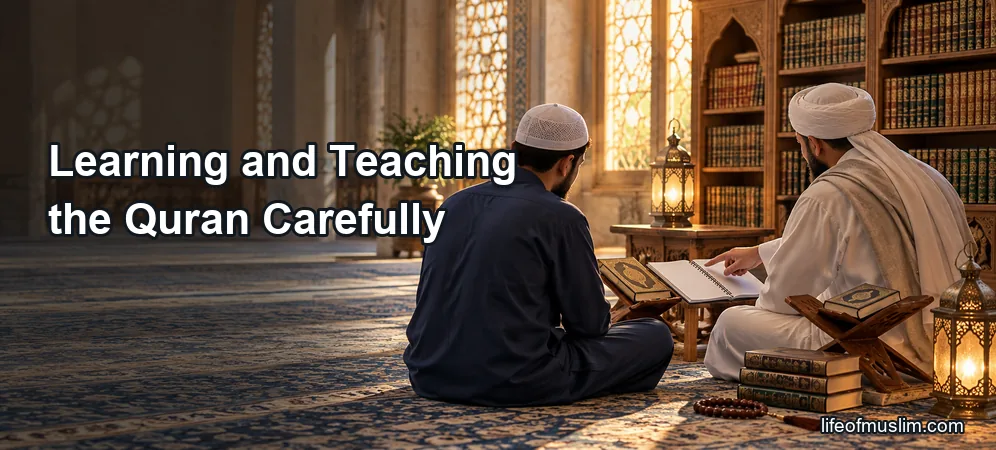
Learning the Quran is a lifelong honour, and teaching it is a serious trust. In Sahih al-Bukhari 5027, the Prophet Muhammad ﷺ says that the best among Muslims are those who learn the Quran and teach it. The hadith joins receiving guidance with sharing it responsibly.
Remain a Learner
The hadith begins with learning. Before teaching others, build a sound foundation with a qualified and trustworthy teacher. Work on accurate letters, recitation, memorisation, and meaning at a pace that can be sustained.
Do not let embarrassment prevent a new beginning. Adults and children may start from different levels. Honest correction is part of learning, not evidence that a student does not belong.
Practise Carefully and Consistently
A short daily session is often more useful than an intense plan that quickly ends. Choose a manageable passage, listen attentively to reliable recitation, repeat with care, and review earlier learning before adding more.
Record difficult sounds or rules in a notebook. Ask the teacher to demonstrate them again, and avoid rushing merely to complete pages. Accuracy and understanding deserve patient time.
Teach Only What You Know Reliably
Teaching the Quran does not require pretending to know everything. Share what has been learned accurately, identify the limits of your knowledge, and refer difficult questions to qualified teachers or scholars.
Check verses, translations, and references before forwarding them. A beautiful design or confident speaker does not prove accuracy. If a mistake is discovered, correct it clearly rather than quietly leaving others with wrong information.
Make Teaching Patient and Accessible
Students differ in language, age, confidence, ability, and available time. Explain one step at a time, allow questions, repeat without ridicule, and give correction privately when possible. Praise sincere effort without giving false assurance about accuracy.
Use accessible materials and reasonable schedules. When teaching children, keep sessions suitable for their development and communicate respectfully with caregivers. Never use humiliation or fear as a shortcut to learning.
Join Recitation With Understanding
Correct recitation matters, and believers should also seek reliable understanding. Read a trustworthy translation, learn the context from recognised scholarship, and avoid building rulings from isolated words without knowledge.
Choose one clear lesson to practise: truthfulness, prayer, gratitude, justice, or another verified instruction. Learning becomes more complete when the Quran shapes conduct.
Protect Sincerity
Public recitation, teaching, certificates, and praise can test intention. Renew the aim of seeking Allah’s pleasure and benefiting people. Keep some study private, respect other learners, and do not turn knowledge into a reason for superiority.
Conclusion
Sahih al-Bukhari 5027 honours those who learn the Quran and teach it. Remain a careful student, practise consistently, teach within reliable knowledge, correct with patience, seek sound understanding, and protect sincerity. Responsible learning and gentle teaching help Quranic guidance move from one heart and generation to another.
صبر اور عاجزی کے ساتھ قرآن کو احتیاط سے سیکھنا اور سکھانا
قرآن سیکھنا زندگی بھر کا اعزاز اور اسے سکھانا ایک سنجیدہ امانت ہے۔ صحیح بخاری 5027 میں نبی محمد ﷺ نے فرمایا کہ مسلمانوں میں بہترین وہ ہیں جو قرآن سیکھیں اور سکھائیں۔ یہ حدیث ہدایت حاصل کرنے کو ذمہ داری کے ساتھ آگے پہنچانے سے جوڑتی ہے۔
سیکھنے والے بنے رہیں
حدیث سیکھنے سے آغاز کرتی ہے۔ دوسروں کو سکھانے سے پہلے قابل اور معتبر استاد کے ساتھ مضبوط بنیاد بنائیں۔ حروف کی درست ادائیگی، تلاوت، حفظ اور مفہوم پر ایسی رفتار سے کام کریں جسے برقرار رکھا جا سکے۔
شرمندگی کو نئی شروعات سے نہ روکنے دیں۔ بالغ اور بچے مختلف سطح سے آغاز کر سکتے ہیں۔ دیانت دار اصلاح سیکھنے کا حصہ ہے، اس بات کی دلیل نہیں کہ طالب علم یہاں مناسب نہیں۔
احتیاط اور تسلسل سے مشق کریں
روزانہ مختصر سبق اکثر ایسے شدید منصوبے سے زیادہ مفید ہوتا ہے جو جلد ختم ہو جائے۔ قابل انتظام حصہ چنیں، معتبر تلاوت توجہ سے سنیں، احتیاط سے دہرائیں اور نیا سبق بڑھانے سے پہلے پچھلا علم یاد کریں۔
مشکل آوازیں یا قواعد نوٹ بک میں لکھیں۔ استاد سے دوبارہ مثال مانگیں اور صرف صفحات مکمل کرنے کے لیے جلدی نہ کریں۔ درستگی اور سمجھ صبر کے ساتھ وقت کی مستحق ہیں۔
صرف وہی سکھائیں جو معتبر طور پر جانتے ہوں
قرآن سکھانے کے لیے ہر چیز جاننے کا دکھاوا ضروری نہیں۔ جو کچھ درست سیکھا ہے اسے بانٹیں، اپنے علم کی حد پہچانیں اور مشکل سوال قابل استاد یا عالم کے پاس لے جائیں۔
آیات، تراجم اور حوالوں کو آگے بھیجنے سے پہلے جانچیں۔ خوبصورت ڈیزائن یا پراعتماد مقرر درستگی کی دلیل نہیں۔ غلطی معلوم ہو تو اسے واضح طور پر درست کریں، دوسروں کو غلط معلومات کے ساتھ خاموشی سے نہ چھوڑیں۔
تعلیم کو صبر والا اور قابل رسائی بنائیں
طلبہ زبان، عمر، اعتماد، صلاحیت اور دستیاب وقت میں مختلف ہوتے ہیں۔ ایک وقت میں ایک قدم سمجھائیں، سوال کی اجازت دیں، مذاق کے بغیر دہرائیں اور ممکن ہو تو تنہائی میں اصلاح کریں۔ درستگی کے بارے میں جھوٹی تسلی دیے بغیر مخلص کوشش کی تعریف کریں۔
قابل رسائی مواد اور مناسب اوقات اختیار کریں۔ بچوں کو پڑھاتے وقت سبق ان کی نشوونما کے مطابق رکھیں اور نگہداشت کرنے والوں سے احترام کے ساتھ رابطہ کریں۔ ذلت یا خوف کو سیکھنے کا مختصر راستہ نہ بنائیں۔
تلاوت کو سمجھ کے ساتھ جوڑیں
درست تلاوت اہم ہے اور مومن کو معتبر سمجھ بھی حاصل کرنی چاہیے۔ قابل اعتماد ترجمہ پڑھیں، معروف اہل علم سے سیاق سیکھیں اور علم کے بغیر الگ الفاظ سے احکام نہ بنائیں۔
عمل کے لیے ایک واضح سبق چنیں: سچائی، نماز، شکر، انصاف یا کوئی دوسری ثابت شدہ ہدایت۔ سیکھنا اس وقت زیادہ مکمل ہوتا ہے جب قرآن کردار کو تشکیل دے۔
اخلاص کی حفاظت کریں
عوامی تلاوت، تدریس، اسناد اور تعریف نیت کو آزما سکتی ہیں۔ اللہ کی رضا اور لوگوں کو فائدہ دینے کا مقصد تازہ کریں۔ کچھ مطالعہ پوشیدہ رکھیں، دوسرے طلبہ کا احترام کریں اور علم کو برتری کی وجہ نہ بنائیں۔
خلاصہ
صحیح بخاری 5027 قرآن سیکھنے اور سکھانے والوں کو فضیلت دیتی ہے۔ محتاط طالب علم رہیں، مستقل مشق کریں، معتبر علم کی حد میں سکھائیں، صبر سے اصلاح کریں، صحیح سمجھ حاصل کریں اور اخلاص کی حفاظت کریں۔ ذمہ دار سیکھنا اور نرم تعلیم قرآنی ہدایت کو ایک دل اور نسل سے دوسری تک پہنچاتے ہیں۔
References
Sahih al-Bukhari — Virtues of the Quran, Chapter: The Best Among You Are Those Who Learn the Quran and Teach It, Hadith 5027; Book 66, Hadith 49