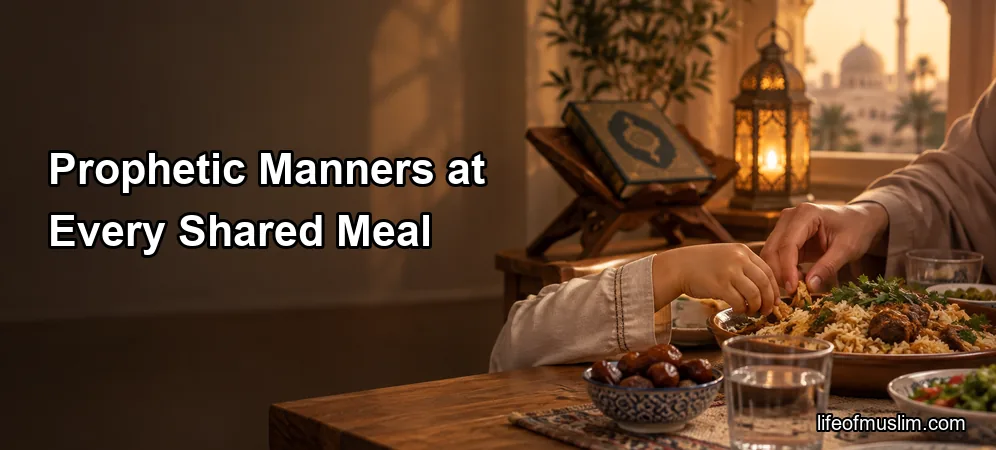
Shared meals give families a natural opportunity to teach faith through small, repeatable actions. Children may not remember a long lecture, but they can learn to mention Allah’s name, use the right hand, and take food from what is nearest. When adults model these manners patiently, an ordinary meal becomes a gentle lesson in worship and consideration.
A Clear Prophetic Lesson for a Child
Umar bin Abi Salama reported that the Prophet Muhammad ﷺ said to him: “O boy! Mention the Name of Allah and eat with your right hand, and eat of the dish what is nearer to you.” (Sahih al-Bukhari 5376)
The instruction is brief, practical, and suited to a young learner. It connects eating with remembrance of Allah, teaches a specific physical manner, and protects the comfort of everyone sharing the dish.
Begin by Mentioning Allah’s Name
Before eating, pause and say “Bismillah.” Adults can make this easy by waiting a moment before the first bite and saying it calmly themselves. A regular family pause helps children associate food with gratitude instead of hurry or distraction.
If a child forgets, offer a quiet reminder rather than public embarrassment. The aim is to build a lasting habit and a thankful heart. Repeated kindness usually teaches more effectively than irritation.
Teach Eating with the Right Hand
Young children often need repeated, gentle guidance. Place a suitable utensil where the right hand can reach it, demonstrate the action, and praise sincere effort. If a child has a genuine physical difficulty, respond with compassion and do not turn the meal into a source of shame.
Adults should also practise what they teach. A visible example gives the instruction consistency and helps children understand that Prophetic manners are for the whole family.
Take Food from What Is Nearest
When people share a dish, reaching across it can inconvenience others and disturb the meal. Teach children to begin with the portion in front of them. This simple manner develops awareness of personal boundaries, patience, and respect for companions.
Serve shared food in a way that makes the lesson practical. Keep dishes within reach, provide smaller serving bowls when needed, and help younger children before frustration begins.
Correct with Warmth and Consistency
The hadith shows direct teaching without a complicated speech. Parents and caregivers can give one clear reminder at a time. Avoid sarcasm, comparisons, or repeated criticism during the meal. A calm correction protects dignity while keeping the lesson clear.
Choose consistency over perfection. A child may forget today and remember tomorrow. Continue modelling the same manners, acknowledge progress, and keep the atmosphere peaceful.
Make Every Meal a Small School of Character
Mealtime manners extend beyond the three instructions in this hadith. Families can also avoid waste, thank the person who prepared the food, share fairly, and include others in conversation. These supporting habits should be taught as good conduct without adding words to the hadith itself.
A short routine can help: pause, say “Bismillah,” use the right hand, and begin with what is nearest. With repetition, children learn that Sunnah is lived through ordinary actions.
Conclusion
Sahih al-Bukhari 5376 offers a memorable foundation for teaching children at the table. Mention Allah’s name, eat with the right hand, and take from what is nearest. Teach these manners with patience, practise them visibly, and allow shared meals to nurture remembrance, respect, and good character.
بچوں کو ہر مشترکہ کھانے میں آسان نبوی آداب سکھانا
مشترکہ کھانا خاندان کو چھوٹے اور بار بار دہرائے جانے والے اعمال کے ذریعے دین سکھانے کا فطری موقع دیتا ہے۔ بچے شاید طویل نصیحت یاد نہ رکھیں، لیکن وہ اللہ کا نام لینا، دائیں ہاتھ سے کھانا اور اپنے سامنے سے لینا سیکھ سکتے ہیں۔ جب بڑے صبر کے ساتھ یہ آداب خود اپناتے ہیں تو عام کھانا عبادت اور دوسروں کے خیال کا نرم سبق بن جاتا ہے۔
ایک بچے کے لیے واضح نبوی تعلیم
حضرت عمر بن ابی سلمہ رضی اللہ عنہ سے روایت ہے کہ نبی محمد ﷺ نے ان سے فرمایا: اے لڑکے! اللہ کا نام لو، دائیں ہاتھ سے کھاؤ اور اپنے سامنے سے کھاؤ۔ (صحیح البخاری 5376)
یہ ہدایت مختصر، عملی اور کم عمر سیکھنے والے کے لیے موزوں ہے۔ یہ کھانے کو اللہ کی یاد سے جوڑتی ہے، ایک واضح عملی ادب سکھاتی ہے اور مشترکہ برتن سے کھانے والوں کے آرام کا خیال رکھتی ہے۔
اللہ کا نام لے کر آغاز کریں
کھانے سے پہلے رک کر بسم اللہ کہیں۔ بڑے پہلے لقمے سے پہلے ایک لمحہ انتظار کرکے اور خود آہستگی سے کہہ کر اسے آسان بنا سکتے ہیں۔ خاندان کا باقاعدہ مختصر توقف بچوں کو کھانے کو جلدی یا غفلت کے بجائے شکر سے جوڑنا سکھاتا ہے۔
بچہ بھول جائے تو سب کے سامنے شرمندہ کرنے کے بجائے خاموشی سے یاد دلائیں۔ مقصد پائیدار عادت اور شکر گزار دل بنانا ہے۔ بار بار کی نرمی عموماً جھنجھلاہٹ سے زیادہ مؤثر تعلیم دیتی ہے۔
دائیں ہاتھ سے کھانا سکھائیں
چھوٹے بچوں کو اکثر نرم اور مسلسل رہنمائی کی ضرورت ہوتی ہے۔ مناسب چمچ دائیں ہاتھ کی پہنچ میں رکھیں، عمل کرکے دکھائیں اور سچی کوشش کی حوصلہ افزائی کریں۔ اگر بچے کو کوئی حقیقی جسمانی مشکل ہو تو شفقت سے پیش آئیں اور کھانے کو شرمندگی کا سبب نہ بنائیں۔
بڑوں کو بھی وہی عمل کرنا چاہیے جو وہ سکھاتے ہیں۔ سامنے موجود اچھی مثال ہدایت میں مضبوطی پیدا کرتی اور بچوں کو سمجھاتی ہے کہ نبوی آداب پورے خاندان کے لیے ہیں۔
اپنے سامنے سے کھانا لیں
مشترکہ برتن میں دور تک ہاتھ بڑھانا دوسروں کے لیے تکلیف اور کھانے میں خلل کا باعث بن سکتا ہے۔ بچوں کو اپنے سامنے موجود حصے سے آغاز سکھائیں۔ یہ سادہ ادب ذاتی حدود، صبر اور ساتھیوں کے احترام کا شعور پیدا کرتا ہے۔
مشترکہ کھانا اس طرح پیش کریں کہ سبق پر عمل آسان ہو۔ برتن مناسب فاصلے پر رکھیں، ضرورت ہو تو چھوٹے پیالے دیں اور کم عمر بچے کی جھنجھلاہٹ سے پہلے مدد کریں۔
نرمی اور پابندی سے اصلاح کریں
حدیث میں پیچیدہ تقریر کے بغیر براہ راست تعلیم ملتی ہے۔ والدین اور نگہداشت کرنے والے ایک وقت میں ایک واضح یاد دہانی دے سکتے ہیں۔ کھانے کے دوران طنز، موازنہ یا بار بار تنقید سے بچیں۔ پرسکون اصلاح عزت محفوظ رکھتی اور سبق واضح کرتی ہے۔
کمال کے بجائے پابندی کو ترجیح دیں۔ بچہ آج بھول سکتا اور کل یاد رکھ سکتا ہے۔ انہی آداب کی مثال دیتے رہیں، پیش رفت کو سراہیں اور ماحول پرامن رکھیں۔
ہر کھانے کو کردار کی چھوٹی درس گاہ بنائیں
کھانے کے آداب اس حدیث کی تین ہدایات کے علاوہ بھی اچھے کردار کو بڑھا سکتے ہیں۔ خاندان کھانا ضائع نہ کرنے، تیار کرنے والے کا شکریہ ادا کرنے، انصاف سے تقسیم کرنے اور دوسروں کو گفتگو میں شامل رکھنے کی عادت بنا سکتا ہے۔ ان معاون عادات کو اچھے اخلاق کے طور پر سکھائیں، حدیث میں نئے الفاظ شامل کرکے پیش نہ کریں۔
ایک مختصر معمول مددگار ہو سکتا ہے: رکیں، بسم اللہ کہیں، دائیں ہاتھ سے کھائیں اور اپنے سامنے سے آغاز کریں۔ تکرار سے بچے سیکھتے ہیں کہ سنت عام اعمال میں زندہ رہتی ہے۔
خلاصہ
صحیح البخاری 5376 دسترخوان پر بچوں کی تربیت کے لیے یاد رہنے والی بنیاد فراہم کرتی ہے۔ اللہ کا نام لیں، دائیں ہاتھ سے کھائیں اور اپنے سامنے سے لیں۔ یہ آداب صبر سے سکھائیں، خود واضح مثال بنیں اور مشترکہ کھانے کو یادِ الٰہی، احترام اور اچھے کردار کی پرورش کا ذریعہ بنائیں۔
References
Sahih al-Bukhari — Book 70 (Food, Meals), Chapter 2, Hadith 4; Reference 5376