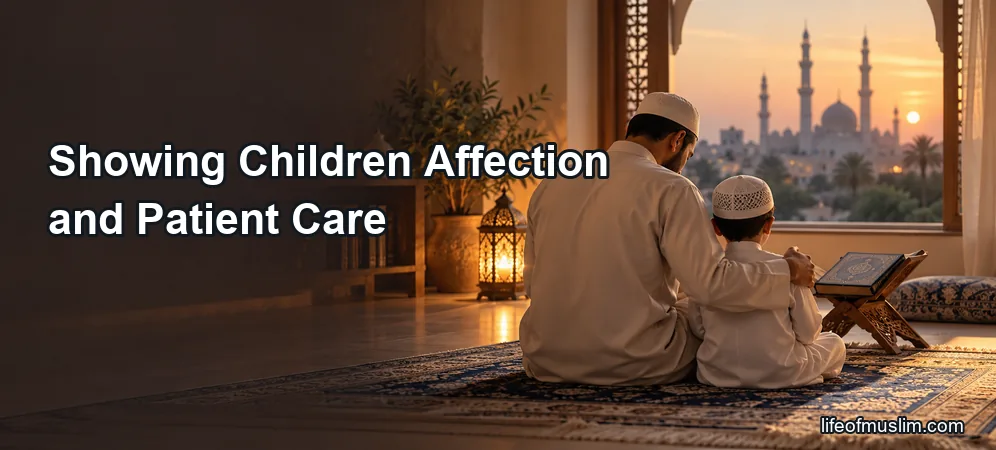
Children need more than food, clothing, and instruction. They also need safe affection, patient attention, and mercy they can recognise. Sahih al-Bukhari 5997 records that the Prophet Muhammad ﷺ kissed Al-Hasan ibn Ali. When a man said he had ten children but had never kissed any of them, the Prophet ﷺ replied that whoever does not show mercy will not be shown mercy.
Let Children Experience Mercy
The hadith places visible affection beside a clear lesson about mercy. Care should not remain an unspoken feeling that children are expected to guess. A warm greeting, an appropriate embrace, gentle words, and attentive listening can communicate safety and belonging.
Children differ in age, temperament, sensory needs, and comfort with touch. Do not force physical affection. Ask, observe, and use other caring expressions when a child prefers space.
Give Attention Before Correction
A child’s mistake may require correction, but mercy shapes how correction is given. Listen to what happened, separate the behaviour from the child’s worth, explain the rule clearly, and choose a response suited to the child’s age and understanding.
Avoid public humiliation, insulting labels, threats that create terror, and comparisons between siblings. Firm boundaries can be maintained without cruelty. The purpose is to teach safer and better conduct, not to release adult anger.
Make Daily Care Dependable
Mercy is often expressed through ordinary reliability. Keep reasonable promises, notice illness or distress, prepare meals, help with learning, and make time for conversation without constant interruption from a screen.
Even a short daily routine can matter. Welcome the child after school, ask one calm question, read together, or share a simple household task. Consistency teaches that care is not offered only when the child performs perfectly.
Teach Worship With Patience
Introduce prayer, Quran recitation, duas, and manners in an age-appropriate way. Model the practice, explain briefly, repeat patiently, and recognise sincere effort. Do not make every family interaction a test or use worship as a threat.
Adults should keep learning too. If a religious question is beyond your knowledge, say so honestly and ask a trustworthy scholar or teacher rather than giving a confident guess.
Repair After Adult Mistakes
Parents and caregivers become tired and sometimes respond poorly. Mercy includes admitting a mistake, apologising, repairing harm, and changing the pattern. An apology does not remove adult responsibility; it demonstrates truthfulness and teaches a child how relationships recover.
If a child reports abuse, danger, severe bullying, or another serious concern, listen calmly and seek appropriate safeguarding or professional help. Do not silence the child to protect reputation.
Share Care Fairly
Children may need different forms of support, but each should experience respect and belonging. Avoid using affection as a reward that can be withdrawn to control a child. Coordinate care between parents and trusted caregivers so rules are understandable and essential needs are not neglected.
Conclusion
Sahih al-Bukhari 5997 presents affection toward a child as part of mercy. Let care become visible through appropriate affection, listening, patient teaching, dependable routines, fair boundaries, and honest repair. A merciful home helps children learn that strength and tenderness can belong together.
روزمرہ خاندانی زندگی میں بچوں سے محبت، رحمت اور صبر کے ساتھ دیکھ بھال
بچوں کو صرف خوراک، لباس اور ہدایات کی ضرورت نہیں۔ انہیں محفوظ محبت، صبر سے دی گئی توجہ اور ایسی رحمت بھی چاہیے جسے وہ محسوس کر سکیں۔ صحیح بخاری 5997 میں ہے کہ نبی محمد ﷺ نے حسن بن علی رضی اللہ عنہ کو بوسہ دیا۔ ایک شخص نے کہا کہ اس کے دس بچے ہیں مگر اس نے کبھی کسی کو بوسہ نہیں دیا، تو نبی ﷺ نے فرمایا کہ جو رحم نہیں کرتا اس پر رحم نہیں کیا جاتا۔
بچوں کو رحمت کا تجربہ دیں
حدیث ظاہر کی گئی محبت کے ساتھ رحمت کا واضح سبق دیتی ہے۔ دیکھ بھال صرف دل کا چھپا ہوا احساس نہ رہے جسے بچے خود سمجھنے کی کوشش کریں۔ گرم جوشی سے استقبال، مناسب انداز میں گلے لگانا، نرم الفاظ اور توجہ سے سننا سلامتی اور تعلق کا احساس دے سکتے ہیں۔
بچے عمر، مزاج، حسی ضروریات اور جسمانی قربت کے بارے میں پسند میں مختلف ہوتے ہیں۔ جسمانی محبت پر مجبور نہ کریں۔ پوچھیں، بچے کے ردعمل کو دیکھیں اور اگر وہ فاصلہ پسند کرے تو دیکھ بھال کے دوسرے طریقے اختیار کریں۔
اصلاح سے پہلے توجہ دیں
بچے کی غلطی اصلاح مانگ سکتی ہے، مگر اصلاح کا انداز رحمت طے کرتی ہے۔ پہلے واقعہ سنیں، غلط عمل کو بچے کی قدر سے الگ رکھیں، اصول واضح کریں اور بچے کی عمر و سمجھ کے مطابق جواب منتخب کریں۔
لوگوں کے سامنے شرمندہ کرنے، توہین آمیز نام، خوف پیدا کرنے والی دھمکیوں اور بہن بھائیوں کے موازنے سے بچیں۔ مضبوط حدود ظلم کے بغیر قائم رہ سکتی ہیں۔ مقصد محفوظ اور بہتر رویہ سکھانا ہے، بڑوں کا غصہ نکالنا نہیں۔
روزانہ دیکھ بھال کو قابل اعتماد بنائیں
رحمت اکثر معمول کی قابل اعتماد خدمت میں ظاہر ہوتی ہے۔ مناسب وعدے پورے کریں، بیماری یا پریشانی محسوس کریں، کھانا تیار کریں، تعلیم میں مدد دیں اور اسکرین کی مسلسل مداخلت کے بغیر گفتگو کا وقت نکالیں۔
مختصر روزانہ معمول بھی اہم ہو سکتا ہے۔ اسکول سے واپسی پر استقبال کریں، ایک پرسکون سوال پوچھیں، ساتھ پڑھیں یا گھر کا آسان کام مل کر کریں۔ تسلسل بچے کو سکھاتا ہے کہ دیکھ بھال صرف بہترین کارکردگی پر نہیں ملتی۔
عبادت صبر کے ساتھ سکھائیں
نماز، قرآن کی تلاوت، دعائیں اور آداب عمر کے مطابق متعارف کرائیں۔ خود نمونہ بنیں، مختصر وضاحت کریں، صبر سے دہرائیں اور مخلص کوشش کی قدر کریں۔ ہر خاندانی گفتگو کو امتحان نہ بنائیں اور عبادت کو دھمکی کے طور پر استعمال نہ کریں۔
بڑوں کو بھی سیکھتے رہنا چاہیے۔ اگر دینی سوال آپ کے علم سے باہر ہو تو دیانت سے یہ بات کہیں اور یقین کے ساتھ اندازہ لگانے کے بجائے معتبر عالم یا استاد سے پوچھیں۔
بڑوں کی غلطی کے بعد اصلاح کریں
والدین اور نگہداشت کرنے والے تھک جاتے ہیں اور کبھی غلط انداز میں جواب دیتے ہیں۔ رحمت میں غلطی ماننا، معافی مانگنا، نقصان کی تلافی اور طریقہ بدلنا بھی شامل ہے۔ معافی بالغ کی ذمہ داری ختم نہیں کرتی؛ یہ سچائی دکھاتی اور بچے کو سکھاتی ہے کہ تعلق کیسے بحال ہوتا ہے۔
اگر بچہ بدسلوکی، خطرے، شدید غنڈہ گردی یا کسی سنگین مسئلے کی اطلاع دے تو سکون سے سنیں اور مناسب حفاظتی یا پیشہ ورانہ مدد حاصل کریں۔ شہرت بچانے کے لیے بچے کو خاموش نہ کرائیں۔
دیکھ بھال انصاف سے بانٹیں
بچوں کو مدد کی مختلف صورتیں درکار ہو سکتی ہیں، مگر ہر بچے کو عزت اور تعلق کا احساس ہونا چاہیے۔ محبت کو ایسا انعام نہ بنائیں جسے بچے کو قابو کرنے کے لیے واپس لے لیا جائے۔ والدین اور قابل اعتماد نگہداشت کرنے والے باہمی رابطہ رکھیں تاکہ اصول سمجھ میں آئیں اور بنیادی ضروریات نظر انداز نہ ہوں۔
خلاصہ
صحیح بخاری 5997 بچے سے محبت کو رحمت کا حصہ بناتی ہے۔ مناسب محبت، توجہ سے سننے، صبر سے تعلیم، قابل اعتماد معمول، منصفانہ حدود اور دیانت دار اصلاح کے ذریعے دیکھ بھال کو نمایاں کریں۔ رحمت والا گھر بچوں کو سکھاتا ہے کہ مضبوطی اور نرمی ایک ساتھ رہ سکتی ہیں۔
References
Sahih al-Bukhari — Good Manners and Form (Al-Adab), Chapter: To Be Merciful to Children and Embrace Them, Hadith 5997; Book 78, Hadith 28