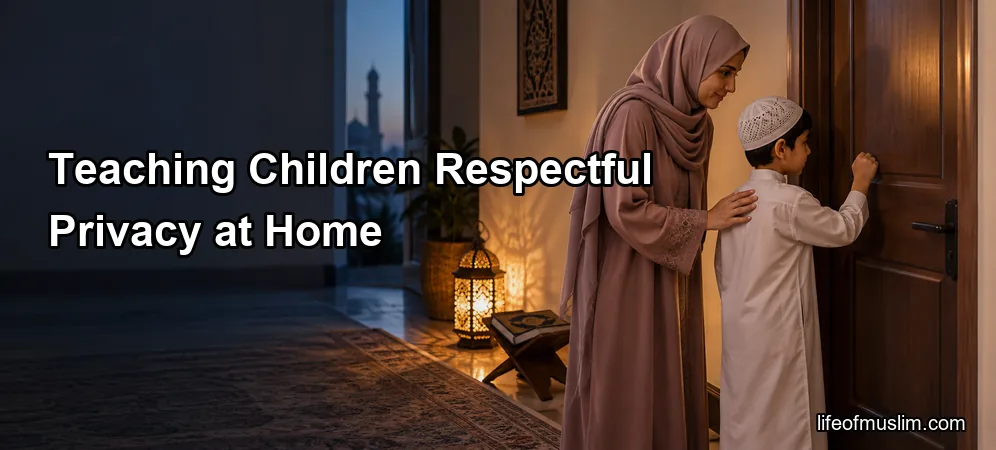
Privacy is part of good manners inside the home. Children need patient teaching so they learn that love and closeness do not remove personal boundaries. Quran 24:58 identifies three household times when children who have not reached puberty should ask permission before entering private spaces.
Learn the Three Times of Privacy
Allah instructs believers to require permission from children who are still under age at three times: before the dawn prayer, around midday when outer clothes may be removed, and after the late evening prayer (Quran 24:58). The verse calls these three times of privacy.
These moments often involve sleep, changing clothes, or personal rest. The instruction protects dignity while recognising that family members normally move around and attend to one another during the rest of the day.
Teach the Habit Calmly
Young children do not automatically understand privacy. Explain the rule in simple words: stop outside, knock or call, wait for a clear answer, and enter only after permission. Demonstrate the sequence instead of expecting a child to learn through embarrassment.
Use the same calm reminder each time. If a child forgets, correct the action without shouting or exposing private details. Repetition helps the habit become natural.
Make Boundaries Easy to Follow
Households can support the teaching with practical signals. Keep private doors closed at the relevant times. Let children know which rooms require permission and what they should do when no one answers. A simple family phrase such as “Please wait until I say come in” can create clarity.
Adults should also avoid confusing children. Do not invite them to enter freely one day and become angry the next without explanation. Consistent expectations make respectful conduct easier.
Model the Respect You Expect
Children learn boundaries when adults respect them too. Knock before entering a child’s room where appropriate, allow reasonable privacy for changing clothes, and avoid searching personal belongings without a genuine need. Parents still carry responsibility for safety and guidance, but supervision can be exercised with wisdom and dignity.
Teach siblings to use the same manners with one another. Privacy should not become a privilege for only the oldest or strongest family member.
Adjust as Children Grow
Quran 24:58 specifically addresses children who have not reached puberty. The following verse explains that after reaching puberty, they should seek permission as adults do. Parents should therefore update household expectations as children mature rather than leaving the lesson unchanged.
This teaching should remain modest and age-appropriate. It is not necessary to burden a young child with adult details. The goal is to build a respectful habit that can grow with understanding.
Conclusion
Quran 24:58 gives families a clear framework for protecting privacy before dawn prayer, at midday rest, and after the evening prayer. By teaching children to knock, wait, and enter with permission, parents nurture modesty without fear or shame. Consistent boundaries help the home remain both close and respectful.
بچوں کو گھر میں تین روزانہ اوقات کی رازداری سکھانا
گھر کے اندر رازداری اچھے اخلاق کا حصہ ہے۔ بچوں کو صبر سے سکھانے کی ضرورت ہے کہ محبت اور قربت ذاتی حدود ختم نہیں کرتیں۔ قرآن 24:58 گھر کے تین ایسے اوقات بیان کرتا ہے جب بلوغت سے پہلے کے بچوں کو نجی جگہ میں داخل ہونے سے پہلے اجازت لینی چاہیے۔
رازداری کے تین اوقات سمجھیں
اللہ تعالیٰ مومنوں کو ہدایت دیتا ہے کہ جو بچے ابھی بالغ نہیں ہوئے وہ تین اوقات میں اجازت لیں: فجر کی نماز سے پہلے، دوپہر کے وقت جب بیرونی کپڑے اتارے جا سکتے ہیں، اور عشاء کی نماز کے بعد (قرآن 24:58)۔ آیت انہیں رازداری کے تین اوقات قرار دیتی ہے۔
ان اوقات میں عموماً نیند، لباس بدلنے یا ذاتی آرام کی ضرورت ہوتی ہے۔ یہ ہدایت عزت و پردے کی حفاظت کرتی ہے اور ساتھ ہی یہ تسلیم کرتی ہے کہ باقی دن گھر والے عام طور پر ایک دوسرے کے پاس آتے جاتے اور ضروریات پوری کرتے ہیں۔
عادت نرمی سے سکھائیں
چھوٹے بچے خود بخود رازداری نہیں سمجھتے۔ آسان الفاظ میں طریقہ بتائیں: دروازے کے باہر رکیں، دستک دیں یا آواز دیں، واضح جواب کا انتظار کریں اور اجازت ملنے کے بعد داخل ہوں۔ بچے کو شرمندہ کر کے سکھانے کے بجائے خود یہ ترتیب دکھائیں۔
ہر بار ایک ہی پرسکون یاد دہانی استعمال کریں۔ اگر بچہ بھول جائے تو چیخنے یا نجی باتیں ظاہر کرنے کے بغیر اس عمل کی اصلاح کریں۔ بار بار مشق سے یہ عادت فطری بن جاتی ہے۔
حدود پر عمل آسان بنائیں
گھر والے عملی اشاروں سے اس تعلیم کو مضبوط کر سکتے ہیں۔ متعلقہ اوقات میں نجی کمروں کے دروازے بند رکھیں۔ بچوں کو بتائیں کہ کن کمروں میں اجازت ضروری ہے اور جواب نہ ملے تو کیا کرنا ہے۔ ”میرے اندر آنے کے کہنے تک انتظار کرو“ جیسا سادہ گھریلو جملہ بات واضح کر سکتا ہے۔
بڑے بچوں کو الجھن میں نہ ڈالیں۔ ایک دن آزادانہ داخل ہونے دیں اور اگلے دن وضاحت کے بغیر غصہ کریں تو اصول سمجھنا مشکل ہوگا۔ یکساں توقعات احترام والے رویے کو آسان بناتی ہیں۔
جس احترام کی توقع ہے خود بھی دکھائیں
بچے حدود اس وقت سیکھتے ہیں جب بڑے بھی ان کا احترام کریں۔ مناسب موقع پر بچے کے کمرے میں جانے سے پہلے دستک دیں، لباس بدلنے کے لیے مناسب رازداری دیں اور حقیقی ضرورت کے بغیر ذاتی سامان نہ ٹٹولیں۔ والدین پر حفاظت اور تربیت کی ذمہ داری باقی رہتی ہے، لیکن نگرانی حکمت اور عزت کے ساتھ کی جا سکتی ہے۔
بہن بھائیوں کو بھی ایک دوسرے کے ساتھ یہی آداب سکھائیں۔ رازداری صرف سب سے بڑے یا طاقت ور گھر والے کا حق نہیں ہونی چاہیے۔
بچوں کے بڑھنے کے ساتھ اصول بہتر کریں
قرآن 24:58 خاص طور پر ان بچوں کا ذکر کرتا ہے جو ابھی بلوغت تک نہیں پہنچے۔ اگلی آیت بتاتی ہے کہ بالغ ہونے کے بعد وہ بڑوں کی طرح اجازت لیں۔ اس لیے والدین کو بچوں کی عمر بڑھنے کے ساتھ گھریلو توقعات کو بھی بہتر کرنا چاہیے۔
یہ تعلیم باحیا اور عمر کے مطابق رہنی چاہیے۔ چھوٹے بچے پر بڑوں کی تفصیلات کا بوجھ ڈالنا ضروری نہیں۔ مقصد احترام والی ایسی عادت بنانا ہے جو سمجھ کے ساتھ بڑھتی رہے۔
نتیجہ
قرآن 24:58 خاندانوں کو فجر سے پہلے، دوپہر کے آرام اور عشاء کے بعد رازداری کی حفاظت کا واضح طریقہ دیتا ہے۔ بچوں کو دستک دینا، انتظار کرنا اور اجازت سے داخل ہونا سکھا کر والدین خوف یا شرمندگی کے بغیر حیا کی تربیت کرتے ہیں۔ مستقل حدود گھر کو قربت کے ساتھ احترام والا بھی بناتی ہیں۔