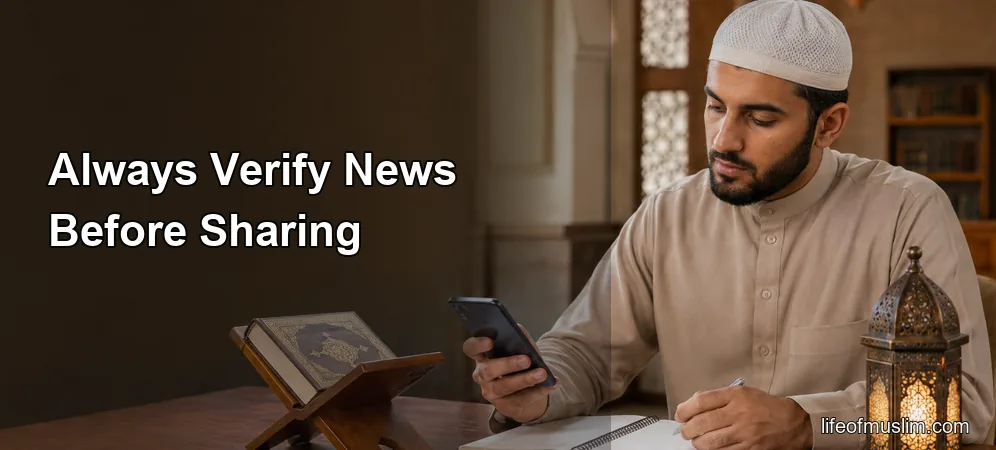
News can travel across a family group, workplace, community, or social-media account in seconds. A message may feel urgent, surprising, or emotionally convincing, yet passing it on without checking can damage reputations and relationships. The Quran teaches believers to pause before acting on uncertain reports so that innocent people are not harmed and regret does not follow.
A Quranic Command to Verify Reports
In Surah Al-Hujurat, Allah instructs believers that when an unreliable person brings news, they should “verify it so you do not harm people unknowingly.” The verse directly connects verification with preventing injustice and later regret.
This guidance is deeply relevant to modern communication. Forwarding, reposting, commenting, or making a decision based on a report can all have consequences. Speed does not remove responsibility, and popularity does not turn an unverified claim into truth.
Pause When a Message Provokes Strong Emotion
False or incomplete information often spreads because it produces anger, fear, excitement, or outrage. Strong emotion can make immediate sharing feel necessary. That is precisely when a deliberate pause becomes valuable.
Do not let a dramatic headline or voice note decide your response. Read the full message, notice what is actually claimed, and separate confirmed facts from guesses, opinions, or missing context.
Check the Original Source
Ask who first reported the information and whether that source is identifiable. A screenshot, cropped quotation, unnamed witness, or forwarded message may hide the original context. Look for the complete statement rather than relying on someone else’s summary.
If the claim concerns religion, return to the Quran or an authentic hadith source and consult qualified scholars when explanation is needed. Do not attach Allah’s name, a Quran verse, or a statement to the Prophet ﷺ without reliable verification.
Confirm Before Affecting Another Person
Greater possible harm requires greater care. A report about someone’s character, family, employment, finances, health, or private conduct should not be treated casually. Contacting the person directly may sometimes clarify a misunderstanding, provided this can be done respectfully and without spreading the allegation further.
Verification is not an excuse to investigate private matters without permission. The goal is to avoid acting unjustly, not to satisfy curiosity. If the information is neither necessary nor beneficial, leaving it unshared may be the safest choice.
Distinguish Facts from Interpretation
A real photograph can have a false caption. A genuine quotation can be removed from its setting. A true event can be described with important details missing. Verification therefore includes checking the date, location, full context, and whether the conclusion actually follows from the evidence.
Use careful language when certainty is limited. Saying that a claim is unconfirmed is more honest than presenting it as established. Do not turn suspicion into a public accusation.
Do Not Share Merely Because Others Have
Many reposts show that a message is popular, not that it is accurate. Each person remains responsible for their own decision to share. “Everyone is saying it” is not a substitute for evidence.
Before forwarding, ask whether the recipient needs the information, whether sharing serves a good purpose, and what could happen if the report is wrong. A few seconds of restraint may protect someone from serious harm.
Correct False Information Responsibly
If you discover that something you shared was false or misleading, remove it where possible and correct it promptly. Send the correction to the same people or groups that received the original claim. A quiet deletion may not repair an impression that has already spread.
Make the correction clear without creating more attention than necessary. If a person was harmed, apologise sincerely and take reasonable steps to restore their reputation. Turn to Allah in repentance and change the habit that allowed the error.
Create a Household Habit of Verification
Families can agree not to forward alarming messages until someone checks the source. Parents can teach children that edited images, copied posts, and confident voices are not automatic evidence. Communities can reward careful accuracy instead of celebrating whoever shares first.
A culture of verification protects trust. It also makes communication calmer because people learn that every urgent-looking message does not demand an immediate reaction.
Conclusion
Verifying news is a practical act of faith and responsibility. By pausing, checking original sources, considering possible harm, using honest language, and correcting mistakes, Muslims can protect people from injustice and themselves from avoidable regret.
نقصان اور پچھتاوے سے بچنے کے لیے خبر ضرور جانچیں
کوئی خبر چند لمحوں میں خاندانی گروپ، کام کی جگہ، معاشرے یا سوشل میڈیا اکاؤنٹ تک پہنچ سکتی ہے۔ پیغام فوری، حیران کن یا جذباتی طور پر قائل کرنے والا محسوس ہو سکتا ہے، لیکن تحقیق کے بغیر اسے آگے بڑھانا عزت اور تعلقات کو نقصان پہنچا سکتا ہے۔ قرآن مومنوں کو غیر یقینی خبر پر عمل کرنے سے پہلے رکنے کی تعلیم دیتا ہے تاکہ بے قصور لوگوں کو نقصان نہ ہو اور بعد میں پچھتاوا نہ آئے۔
خبر کی تحقیق کا قرآنی حکم
سورۃ الحجرات میں اللہ تعالیٰ مومنوں کو ہدایت فرماتا ہے کہ جب کوئی ناقابل اعتماد شخص خبر لائے تو اسے جانچیں تاکہ لاعلمی میں لوگوں کو نقصان نہ پہنچے۔ آیت تحقیق کو ناانصافی اور بعد کے پچھتاوے سے بچنے کے ساتھ براہ راست وابستہ کرتی ہے۔
یہ رہنمائی آج کے ذرائع ابلاغ میں بہت اہم ہے۔ پیغام آگے بھیجنا، پوسٹ دوبارہ شائع کرنا، تبصرہ کرنا یا کسی خبر کی بنیاد پر فیصلہ کرنا سب نتائج رکھتے ہیں۔ رفتار ذمہ داری ختم نہیں کرتی اور مقبولیت غیر مصدقہ دعوے کو سچ نہیں بناتی۔
جذبات بھڑکانے والے پیغام پر رکیں
غلط یا ادھوری معلومات اکثر اس لیے پھیلتی ہیں کہ وہ غصہ، خوف، جوش یا اشتعال پیدا کرتی ہیں۔ شدید جذبہ فوری طور پر خبر پھیلانا ضروری محسوس کرا سکتا ہے۔ یہی وہ وقت ہے جب سوچ سمجھ کر رکنا زیادہ قیمتی ہوتا ہے۔
ڈرامائی سرخی یا آواز کا پیغام آپ کا ردعمل طے نہ کرے۔ پورا پیغام پڑھیں، دیکھیں کہ اصل دعویٰ کیا ہے، اور ثابت شدہ حقیقت کو اندازے، رائے یا نامکمل سیاق سے الگ کریں۔
اصل ماخذ تلاش کریں
پوچھیں کہ خبر سب سے پہلے کس نے دی اور کیا اس ماخذ کی شناخت ممکن ہے۔ تصویر، ادھورا اقتباس، بے نام گواہ یا آگے بھیجا ہوا پیغام اصل سیاق چھپا سکتا ہے۔ کسی دوسرے کے خلاصے پر انحصار کرنے کے بجائے مکمل بیان تلاش کریں۔
اگر دعویٰ دین کے بارے میں ہو تو قرآن یا مستند حدیث کے اصل ماخذ کی طرف رجوع کریں اور وضاحت کی ضرورت ہو تو اہل علم سے پوچھیں۔ معتبر تصدیق کے بغیر کوئی بات اللہ، قرآن یا نبی کریم ﷺ کی طرف منسوب نہ کریں۔
کسی شخص کو متاثر کرنے سے پہلے تصدیق کریں
ممکنہ نقصان جتنا بڑا ہو، احتیاط بھی اتنی زیادہ ہونی چاہیے۔ کسی کے کردار، خاندان، ملازمت، مالی معاملات، صحت یا نجی عمل کے بارے میں خبر کو معمولی نہ سمجھیں۔ بعض اوقات متعلقہ شخص سے احترام کے ساتھ براہ راست پوچھنا غلط فہمی دور کر سکتا ہے، بشرطیکہ اس سے الزام مزید نہ پھیلے۔
تحقیق نجی معاملات میں بلا اجازت کھوج لگانے کا بہانہ نہیں ہے۔ مقصد ناانصافی سے بچنا ہے، تجسس پورا کرنا نہیں۔ اگر معلومات نہ ضروری ہیں نہ فائدہ مند، تو انہیں آگے نہ بڑھانا محفوظ ترین راستہ ہو سکتا ہے۔
حقیقت اور تشریح میں فرق کریں
حقیقی تصویر کے ساتھ غلط عبارت لکھی جا سکتی ہے۔ درست اقتباس کو اس کے سیاق سے الگ کیا جا سکتا ہے۔ سچا واقعہ اہم تفصیلات کے بغیر بیان ہو سکتا ہے۔ اس لیے تحقیق میں تاریخ، مقام، پورا پس منظر اور یہ جانچنا شامل ہے کہ پیش کیا گیا نتیجہ واقعی ثبوت سے نکلتا ہے یا نہیں۔
جب یقین محدود ہو تو محتاط زبان استعمال کریں۔ یہ کہنا کہ دعویٰ غیر مصدقہ ہے، اسے ثابت شدہ بات کے طور پر پیش کرنے سے زیادہ دیانت دارانہ ہے۔ شک کو عوامی الزام میں تبدیل نہ کریں۔
صرف اس لیے نہ پھیلائیں کہ دوسروں نے پھیلایا ہے
بہت زیادہ بار آگے بھیجا جانا صرف مقبولیت دکھاتا ہے، صحت نہیں۔ ہر شخص خبر پھیلانے کے اپنے فیصلے کا ذمہ دار رہتا ہے۔ یہ کہنا کہ سب لوگ یہی کہہ رہے ہیں، دلیل کا بدل نہیں۔
پیغام بھیجنے سے پہلے پوچھیں کہ کیا وصول کرنے والے کو اس معلومات کی ضرورت ہے، کیا اسے پھیلانے سے کوئی اچھا مقصد پورا ہوتا ہے، اور اگر خبر غلط ہو تو کیا نقصان ہو سکتا ہے۔ چند لمحوں کی احتیاط کسی کو بڑے نقصان سے بچا سکتی ہے۔
غلط معلومات کی ذمہ داری سے اصلاح کریں
اگر معلوم ہو کہ آپ کی بھیجی ہوئی بات غلط یا گمراہ کن تھی تو جہاں ممکن ہو اسے ہٹائیں اور فوراً اصلاح کریں۔ تصحیح انہی لوگوں یا گروہوں تک پہنچائیں جنہیں اصل دعویٰ ملا تھا۔ خاموشی سے حذف کرنا اس تاثر کو درست نہیں کرتا جو پہلے ہی پھیل چکا ہو۔
تصحیح واضح ہو مگر ضرورت سے زیادہ توجہ پیدا نہ کرے۔ اگر کسی شخص کو نقصان پہنچا ہو تو مخلصانہ معذرت کریں اور اس کی عزت بحال کرنے کے مناسب اقدامات کریں۔ اللہ سے توبہ کریں اور اس عادت کو بدلیں جس نے غلطی کی راہ بنائی۔
گھر میں تحقیق کی عادت بنائیں
خاندان یہ طے کر سکتے ہیں کہ خوفناک پیغام ماخذ جانچنے سے پہلے آگے نہیں بڑھایا جائے گا۔ والدین بچوں کو سکھا سکتے ہیں کہ بدلی ہوئی تصاویر، نقل شدہ پوسٹیں اور پراعتماد آواز خود بخود ثبوت نہیں بنتے۔ معاشرہ پہلے خبر دینے والے کے بجائے درست تحقیق کرنے والے کی قدر کرے۔
تحقیق کی عادت اعتماد کی حفاظت کرتی ہے۔ اس سے گفتگو پرسکون بھی ہوتی ہے کیونکہ لوگ سمجھتے ہیں کہ ہر فوری دکھائی دینے والا پیغام فوراً ردعمل کا مطالبہ نہیں کرتا۔
خلاصہ
خبر کی تحقیق ایمان اور ذمہ داری کا عملی اظہار ہے۔ رک کر، اصل ماخذ جانچ کر، ممکنہ نقصان کو دیکھ کر، دیانت دار زبان استعمال کرکے اور غلطی کی اصلاح کرکے مسلمان لوگوں کو ناانصافی اور خود کو قابل اجتناب پچھتاوے سے بچا سکتے ہیں۔