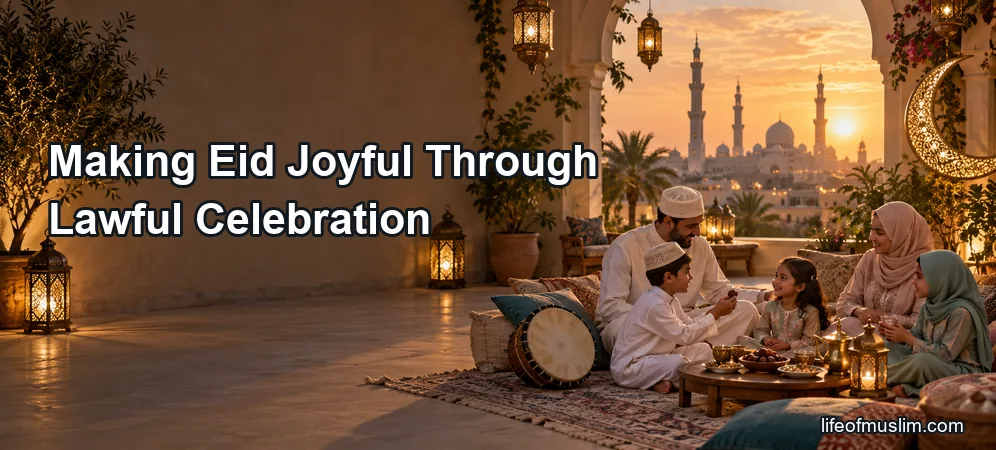
Eid is a time of worship, gratitude, family connection, and permitted happiness. Joy does not need extravagance, comparison, or neglect of responsibility. A report from Aisha (may Allah be pleased with her) shows the Prophet Muhammad ﷺ allowing a simple Eid expression of happiness in his home, giving Muslim families a sound starting point for thoughtful celebration.
The Hadith Recognises Eid as a Festival
Sahih Muslim 892a reports that two girls from the Ansar were with Aisha, reciting what the Ansar had recited about the day of Bu’ath. The report clarifies that they were not professional singers. When Abu Bakr objected, the Prophet ﷺ said: “Every people have a festival and it is our festival.”
Sunnah.com places this narration in The Book of Prayer — Two Eids, in the chapter permitting play that involves no disobedience during the days of Eid. The context matters: the occasion was Eid, the enjoyment was simple, and the Prophet ﷺ allowed it.
Keep Worship at the Centre
Eid happiness grows from obedience to Allah. Prepare for the prayer, learn the local arrangements, arrive responsibly, and avoid letting late shopping or entertainment displace worship. Families can explain to children why Eid follows a season or act of worship and why gratitude belongs at the heart of the day.
Celebration and worship do not need to compete. A realistic plan leaves room for prayer, rest, relatives, meals, and enjoyment without making the day chaotic.
Choose Simple, Lawful Enjoyment
Families may enjoy good food, suitable games, gifts, visits, stories, and cheerful time together. Keep activities safe, modest, age-appropriate, and free from humiliation or waste. The hadith should not be stretched into a blanket ruling about every form of entertainment. Questions about particular activities should be taken to reliable scholars who understand the details.
Simple enjoyment can be more memorable than an overloaded schedule. Give people enough time to talk, laugh, eat, and rest without turning the day into a performance for photographs or social media.
Include Children With Patient Care
Children may be excited, tired, or overwhelmed. Set clear expectations kindly, plan breaks, bring necessary food or medication, and choose activities suited to their ages. Correct poor behaviour without shaming them before guests.
Let children contribute by preparing a card, arranging dates, greeting relatives, or choosing a simple game. Participation helps them connect Eid with service as well as receiving gifts.
Remember Those Who May Feel Alone
A new Muslim, student far from home, widowed relative, elderly neighbour, or family facing hardship may experience Eid differently. Offer a specific invitation, transport, a meal, or a considerate visit. Respect a refusal and avoid intrusive questions about private circumstances.
Generosity should protect dignity. Give quietly where needed and do not display another person’s hardship as part of the celebration.
Avoid Competition and Waste
Eid clothing, food, and gifts should remain within lawful means. Agree on a budget before shopping and avoid debt taken only to match other families. Reuse decorations, prepare realistic portions, store leftovers safely, and share suitable extra food.
Children can be taught gratitude without comparing the number or price of gifts. Adults should also resist measuring a successful Eid by appearance, expense, or online attention.
Make Family Care Part of the Celebration
Share responsibilities before the day so one person is not left cooking, cleaning, hosting, and caring for children alone. Ask older relatives about comfortable visit times, make venues accessible, and leave room for anyone who needs quiet or rest.
If family tension exists, keep speech respectful and avoid reopening disputes during the gathering. Necessary conversations can be arranged privately at a calmer time.
Conclusion
Sahih Muslim 892a shows the Prophet ﷺ recognising Eid as the Muslim festival and allowing simple enjoyment in his home. Families can honour this lesson by centring worship, choosing lawful and modest activities, caring patiently for children, including people who may be alone, controlling waste, and sharing responsibilities. A joyful Eid can be warm, grateful, and memorable without becoming extravagant or careless.
جائز خوشی اور خاندانی توجہ کے ساتھ عید کو خوشگوار بنانا
عید عبادت، شکر، خاندانی تعلق اور جائز خوشی کا وقت ہے۔ خوشی کے لیے فضول خرچی، مقابلہ یا ذمہ داری سے غفلت ضروری نہیں۔ حضرت عائشہ رضی اللہ عنہا کی روایت سے معلوم ہوتا ہے کہ نبی محمد ﷺ نے اپنے گھر میں عید کے موقع پر سادہ خوشی کی اجازت دی۔ یہ مسلم خاندانوں کو سوچ سمجھ کر جشن منانے کے لیے مضبوط بنیاد فراہم کرتی ہے۔
حدیث عید کو تہوار تسلیم کرتی ہے
صحیح مسلم 892a میں روایت ہے کہ انصار کی دو لڑکیاں حضرت عائشہ رضی اللہ عنہا کے پاس تھیں اور یومِ بعاث سے متعلق انصار کے اشعار پڑھ رہی تھیں۔ روایت واضح کرتی ہے کہ وہ پیشہ ور گانے والیاں نہیں تھیں۔ حضرت ابوبکر رضی اللہ عنہ نے اعتراض کیا تو نبی ﷺ نے فرمایا: ”ہر قوم کا ایک تہوار ہے اور یہ ہمارا تہوار ہے۔“
Sunnah.com پر یہ روایت کتاب صلاة العیدین میں اس باب کے تحت درج ہے جس میں عید کے دن ایسی کھیل کی اجازت بیان ہوئی ہے جس میں نافرمانی نہ ہو۔ سیاق اہم ہے: موقع عید کا تھا، خوشی سادہ تھی اور نبی ﷺ نے اسے برقرار رہنے دیا۔
عبادت کو مرکز میں رکھیں
عید کی خوشی اللہ کی اطاعت سے پیدا ہوتی ہے۔ نماز کی تیاری کریں، مقامی انتظام معلوم کریں، ذمہ داری سے پہنچیں اور آخری وقت کی خریداری یا تفریح کو عبادت پر غالب نہ آنے دیں۔ خاندان بچوں کو سمجھا سکتے ہیں کہ عید کس عبادت کے بعد آتی ہے اور شکر کو دن کے مرکز میں کیوں ہونا چاہیے۔
خوشی اور عبادت کو ایک دوسرے کا مقابل نہیں بننا چاہیے۔ حقیقت پسندانہ منصوبہ نماز، آرام، رشتہ داروں، کھانے اور تفریح سب کے لیے جگہ رکھتا ہے اور دن کو بدنظمی سے بچاتا ہے۔
سادہ اور جائز خوشی منتخب کریں
خاندان اچھا کھانا، مناسب کھیل، تحفے، ملاقاتیں، کہانیاں اور خوشگوار وقت اختیار کرسکتے ہیں۔ سرگرمیوں کو محفوظ، باحیا، عمر کے مطابق اور تذلیل و اسراف سے پاک رکھیں۔ حدیث کو ہر قسم کی تفریح کے لیے عمومی اجازت نہیں بنانا چاہیے۔ کسی خاص سرگرمی کے بارے میں سوال ہو تو تفصیل سمجھنے والے قابلِ اعتماد عالم سے رجوع کریں۔
سادہ خوشی حد سے بھرے ہوئے پروگرام سے زیادہ یادگار ہوسکتی ہے۔ لوگوں کو گفتگو، مسکراہٹ، کھانے اور آرام کا وقت دیں اور دن کو تصاویر یا سوشل میڈیا کی نمائش نہ بنائیں۔
بچوں کو صبر کے ساتھ شامل کریں
بچے جوش، تھکن یا بے چینی محسوس کرسکتے ہیں۔ توقعات نرمی سے واضح کریں، وقفے رکھیں، ضروری خوراک یا دوا ساتھ لیں اور عمر کے مطابق سرگرمی منتخب کریں۔ مہمانوں کے سامنے شرمندہ کیے بغیر غلط رویے کی اصلاح کریں۔
بچوں کو کارڈ تیار کرنے، کھجوریں سجانے، رشتہ داروں کو سلام کرنے یا سادہ کھیل منتخب کرنے میں شریک کریں۔ عملی شرکت انہیں عید کو صرف تحفے لینے کے بجائے خدمت سے بھی جوڑتی ہے۔
تنہائی محسوس کرنے والوں کو یاد رکھیں
نیا مسلمان، گھر سے دور طالب علم، بیوہ رشتہ دار، بوڑھا پڑوسی یا مشکل میں مبتلا خاندان عید کو مختلف انداز میں محسوس کرسکتا ہے۔ واضح دعوت، سواری، کھانا یا خیال رکھنے والی ملاقات پیش کریں۔ انکار کا احترام کریں اور نجی حالات کے بارے میں دخل اندازی والے سوال نہ کریں۔
سخاوت عزت کی حفاظت کرے۔ جہاں ضرورت ہو خاموشی سے دیں اور کسی کی مشکل کو جشن کی نمائش نہ بنائیں۔
مقابلے اور اسراف سے بچیں
عید کے کپڑے، کھانا اور تحفے جائز استطاعت کے اندر رہیں۔ خریداری سے پہلے بجٹ طے کریں اور صرف دوسرے خاندانوں کی برابری کے لیے قرض نہ لیں۔ سجاوٹ دوبارہ استعمال کریں، مناسب مقدار تیار کریں، بچا کھانا محفوظ رکھیں اور قابلِ استعمال اضافی کھانا بانٹیں۔
بچوں کو تحفوں کی تعداد یا قیمت کا مقابلہ کیے بغیر شکر سکھایا جاسکتا ہے۔ بڑوں کو بھی کامیاب عید کو ظاہری شان، خرچ یا آن لائن توجہ سے ناپنے سے بچنا چاہیے۔
خاندانی توجہ کو خوشی کا حصہ بنائیں
ذمہ داریاں پہلے تقسیم کریں تاکہ ایک شخص پر کھانا پکانے، صفائی، میزبانی اور بچوں کی دیکھ بھال کا پورا بوجھ نہ آئے۔ بزرگوں سے مناسب وقت پوچھیں، جگہ کو قابلِ رسائی بنائیں اور خاموشی یا آرام کے محتاج فرد کے لیے گنجائش رکھیں۔
اگر خاندان میں کشیدگی ہو تو گفتگو باادب رکھیں اور اجتماع میں پرانے اختلاف نہ چھیڑیں۔ ضروری بات کے لیے بعد میں نجی اور پرسکون وقت مقرر کیا جاسکتا ہے۔
نتیجہ
صحیح مسلم 892a میں نبی ﷺ نے عید کو مسلمانوں کا تہوار تسلیم کیا اور اپنے گھر میں سادہ خوشی کی اجازت دی۔ خاندان عبادت کو مرکز میں رکھ کر، جائز اور معتدل سرگرمیاں منتخب کرکے، بچوں کی صبر سے دیکھ بھال کرکے، تنہا لوگوں کو شامل کرکے، فضول خرچی روک کر اور ذمہ داریاں بانٹ کر اس تعلیم کا احترام کرسکتے ہیں۔ خوشگوار عید اسراف یا غفلت کے بغیر گرم جوش، شکر والی اور یادگار ہوسکتی ہے۔
References
Sahih Muslim — The Book of Prayer — Two Eids — Chapter 4: Concession Allowing Play That Involves No Disobedience During the Days of Eid — Hadith 892a (Book 8, Hadith 16)