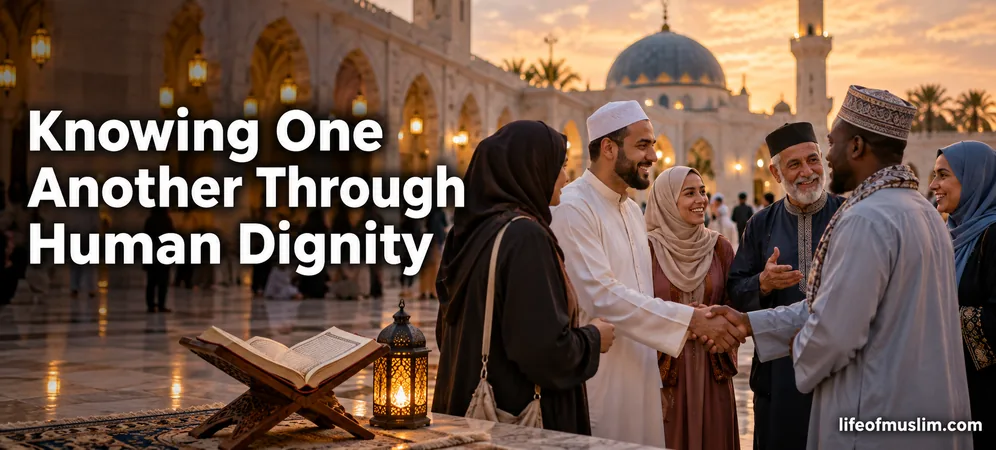
Differences in language, family background, culture, and place of origin can either become opportunities to learn or excuses for pride. Quran 49:13 gives humanity a better direction. Allah created people from a male and a female and made them into peoples and tribes so that they may know one another.
Recognise a Shared Human Origin
Surah Al-Hujurat 49:13 addresses humanity and reminds people of their shared origin. The verse then explains that peoples and tribes exist so that people may know one another. Difference is not presented as permission for contempt.
This reminder weakens claims of automatic superiority based on ancestry, nationality, language, wealth, or social position. Every person deserves truthful and respectful treatment. No background removes accountability, and no label makes injustice acceptable.
Learn Before Forming Judgments
Knowing one another requires more than recognising a name or appearance. Ask respectful questions, listen without interruption, and allow people to describe their own experiences. Do not treat one person as a representative of an entire community.
Check assumptions before repeating them. A joke, rumour, or generalisation may sound familiar while still being false and harmful. Judge a specific action through reliable facts rather than attaching a sweeping conclusion to a family, region, or group.
Use Differences for Beneficial Cooperation
People bring different skills, languages, experiences, and ways of seeing a problem. A community benefits when these differences are welcomed within clear Islamic ethics. Give people a fair opportunity to contribute and explain expectations without favouritism.
In a mosque, school, workplace, or neighbourhood, introduce newcomers, make space in conversation, and explain unfamiliar procedures. Small acts of welcome help people participate without forcing them to abandon every harmless part of their background.
Do Not Turn Piety Into a Social Claim
Quran 49:13 states that the most noble in Allah’s sight are the most righteous, and it closes by affirming that Allah is All-Knowing and All-Aware. Taqwa is therefore not a badge that people can assign through appearance, family name, or confident self-praise.
Encourage worship and good character, but avoid declaring that one person’s heart is certainly superior to another’s. Allah knows the complete reality. Our task is to act justly, seek righteousness, and correct visible wrongdoing through appropriate means.
Respond to Disrespect With Clear Boundaries
Human dignity does not require silence about insulting or discriminatory conduct. Name the harmful action accurately, protect the affected person, and use a responsible process to address it. Avoid answering one stereotype with another.
Where a mistake comes from ignorance, patient explanation may help. Where behaviour is repeated or threatening, involve suitable community leaders, safeguarding procedures, workplace systems, or lawful authorities according to the situation.
Practise Respect in Ordinary Encounters
Pronounce names carefully, return greetings warmly, avoid mocking accents, and do not exclude people because they are unfamiliar. Share useful information, invite participation, and let consistent character replace quick assumptions.
Conclusion
Quran 49:13 teaches that human diversity should lead people toward knowing one another, while true nobility before Allah is connected to righteousness. Shared origin, careful listening, fair cooperation, and respectful boundaries help communities protect dignity. Differences should deepen understanding, not become tools of pride.
قوموں اور قبیلوں سے آگے انسانی عزت کے ذریعے ایک دوسرے کو جاننا
زبان، خاندان، ثقافت اور مقامِ پیدائش کے فرق سیکھنے کا موقع بھی بن سکتے ہیں اور غرور کا بہانہ بھی۔ قرآن 49:13 انسانیت کو بہتر سمت دیتی ہے۔ اللہ نے لوگوں کو ایک مرد اور عورت سے پیدا کیا اور قوموں اور قبیلوں میں بنایا تاکہ وہ ایک دوسرے کو جانیں۔
مشترک انسانی اصل کو پہچانیں
سورۃ الحجرات 49:13 پوری انسانیت کو مخاطب کرکے مشترک اصل یاد دلاتی ہے۔ پھر آیت بتاتی ہے کہ قومیں اور قبیلے ایک دوسرے کو جاننے کے لیے ہیں۔ فرق کو تحقیر کی اجازت نہیں بنایا گیا۔
یہ یاد دہانی نسب، قومیت، زبان، دولت یا سماجی مرتبے کی بنیاد پر خودکار برتری کے دعوے کم کرتی ہے۔ ہر انسان سچے اور بااحترام سلوک کا مستحق ہے۔ کوئی پس منظر جواب دہی ختم نہیں کرتا اور کوئی شناخت ظلم کو جائز نہیں بناتی۔
فیصلہ بنانے سے پہلے جانیں
ایک دوسرے کو جاننا صرف نام یا شکل پہچاننے سے زیادہ ہے۔ احترام سے سوال کریں، بغیر ٹوکے سنیں اور لوگوں کو اپنا تجربہ خود بیان کرنے دیں۔ ایک شخص کو پوری برادری کا نمائندہ نہ سمجھیں۔
اندازے دہرانے سے پہلے ان کی جانچ کریں۔ مذاق، افواہ یا عمومی بات مانوس لگ سکتی ہے مگر پھر بھی غلط اور نقصان دہ ہو سکتی ہے۔ خاندان، علاقے یا گروہ پر وسیع فیصلہ لگانے کے بجائے مخصوص عمل کو معتبر حقائق سے جانچیں۔
فرق کو مفید تعاون میں استعمال کریں
لوگ مختلف مہارتیں، زبانیں، تجربات اور مسئلہ دیکھنے کے طریقے لاتے ہیں۔ واضح اسلامی اخلاق کے اندر ان فرقوں کا خیرمقدم ہو تو سماج فائدہ اٹھاتا ہے۔ لوگوں کو تعاون کا منصفانہ موقع دیں اور توقعات جانبداری کے بغیر واضح کریں۔
مسجد، اسکول، دفتر یا محلے میں نئے لوگوں کا تعارف کرائیں، گفتگو میں جگہ دیں اور ناواقف طریقے سمجھائیں۔ خیرمقدم کے چھوٹے اعمال لوگوں کو شریک ہونے دیتے ہیں بغیر اس کے کہ وہ اپنے پس منظر کی ہر بے ضرر چیز چھوڑ دیں۔
تقویٰ کو سماجی دعویٰ نہ بنائیں
قرآن 49:13 بتاتی ہے کہ اللہ کے نزدیک سب سے معزز وہ ہے جو سب سے زیادہ متقی ہے، اور آیت کے آخر میں اللہ کے علم اور خبر کی تاکید ہے۔ اس لیے تقویٰ ایسا نشان نہیں جسے لوگ ظاہری شکل، خاندانی نام یا خود ستائی سے طے کر لیں۔
عبادت اور اچھے کردار کی ترغیب دیں، مگر یہ دعویٰ نہ کریں کہ ایک شخص کا دل لازماً دوسرے سے بہتر ہے۔ اللہ مکمل حقیقت جانتا ہے۔ ہماری ذمہ داری انصاف، تقویٰ کی کوشش اور ظاہر غلطی کی مناسب اصلاح ہے۔
بے احترامی پر واضح حدود قائم کریں
انسانی عزت کا مطلب توہین یا امتیازی رویے پر خاموش رہنا نہیں۔ نقصان دہ عمل کو درست طور پر بیان کریں، متاثرہ شخص کی حفاظت کریں اور مسئلہ حل کرنے کے لیے ذمہ دارانہ طریقہ اپنائیں۔ ایک دقیانوسی خیال کا جواب دوسرے سے نہ دیں۔
غلطی لاعلمی سے ہو تو صبر کے ساتھ وضاحت مفید ہو سکتی ہے۔ رویہ بار بار یا دھمکی آمیز ہو تو صورت حال کے مطابق مناسب سماجی رہنما، حفاظتی طریقہ، ادارہ جاتی نظام یا قانونی اختیار شامل کریں۔
روزمرہ ملاقاتوں میں احترام اپنائیں
نام احتیاط سے ادا کریں، سلام گرم جوشی سے لوٹائیں، لہجے کا مذاق نہ بنائیں اور ناواقف ہونے کی وجہ سے کسی کو الگ نہ کریں۔ مفید معلومات بانٹیں، شرکت کی دعوت دیں اور جلدباز اندازوں کی جگہ مستقل کردار کو دیں۔
نتیجہ
قرآن 49:13 سکھاتی ہے کہ انسانی فرق ایک دوسرے کو جاننے کا ذریعہ ہونا چاہیے، جبکہ اللہ کے نزدیک حقیقی عزت تقویٰ سے وابستہ ہے۔ مشترک اصل، غور سے سننا، منصفانہ تعاون اور بااحترام حدود سماج میں عزت محفوظ کرتے ہیں۔ فرق سمجھ بڑھائیں، غرور کا ذریعہ نہ بنیں۔