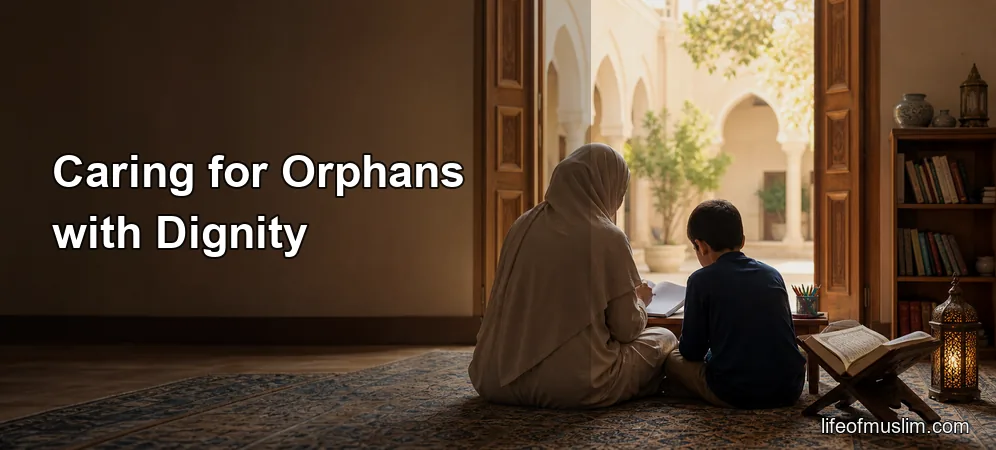
An orphan needs more than occasional attention. Children thrive through safety, stable relationships, education, and respectful care. Islam directs believers to protect orphans from oppression and gives great honour to those who consistently look after them.
Never Oppress or Humiliate an Orphan
Allah says: “So do not oppress the orphan.” (Quran 93:9)
This brief command establishes an important boundary. Help must protect dignity rather than create fear, dependence, or public embarrassment. An orphan is a person with rights and potential, not a story to be displayed for praise.
The Honour of Consistent Care
The Prophet Muhammad (peace be upon him) said that he and the person who looks after and provides for an orphan will be together in Paradise like two fingers held close.
The hadith highlights sustained responsibility. Useful care continues beyond one gift. It considers food, education, emotional security, healthcare, safe housing, and dependable adults who keep their word.
Support without Taking Away Dignity
Speak to the child with respect and include them in age-appropriate decisions. Do not repeatedly remind them of what has been given or compare them with other children. Avoid labels that make loss the centre of their identity.
Protect privacy. Do not share photographs, names, family history, or emotional details to attract donations without proper consent and safeguarding. A child’s vulnerable moments should not become public content.
Choose Reliable, Long-Term Help
Before sponsoring through an organisation, check its registration, safeguarding policy, financial reporting, and method of supporting children. Ask whether assistance strengthens a stable family or community environment and whether progress is reviewed responsibly.
If direct support is appropriate, agree on clear and realistic commitments. School fees, supplies, transport, tutoring, regular meals, or healthcare may be more useful when planned consistently than when provided unpredictably.
Protect Money and Property
Anyone responsible for an orphan’s funds or belongings must keep careful records and separate them from personal assets. Spending decisions should benefit the child and follow applicable law and qualified guidance. Do not borrow, delay, or use entrusted property for convenience.
Where legal guardianship or financial management is involved, use authorised processes and professional advice. Good intentions do not replace accountability.
Offer Presence as Well as Material Help
Children also need trustworthy attention. Listen without forcing them to discuss grief, keep appointments, celebrate progress without comparison, and support healthy friendships and learning. Respect the role of guardians and do not create competing loyalties.
When emotional, behavioural, medical, or safeguarding concerns appear, involve qualified professionals and responsible guardians. Care should be patient, informed, and centred on the child’s welfare.
Conclusion
Caring for orphans is a long-term trust built on dignity, protection, and consistency. Offer reliable support, preserve privacy, manage resources honestly, and treat every child as a person of worth. Quiet, dependable care can strengthen both the child and the wider community.
یتیم بچوں کی عزت اور مستقل مدد کے ساتھ دیکھ بھال
یتیم بچے کو کبھی کبھار توجہ سے زیادہ کی ضرورت ہوتی ہے۔ بچے حفاظت، مستحکم تعلق، تعلیم اور باعزت دیکھ بھال سے نشوونما پاتے ہیں۔ اسلام اہل ایمان کو یتیموں کو ظلم سے بچانے کی ہدایت دیتا اور مسلسل کفالت کرنے والوں کو بڑی فضیلت عطا کرتا ہے۔
یتیم کو دبائیں یا ذلیل نہ کریں
اللہ تعالیٰ کا مفہوم ہے: یتیم پر سختی نہ کرو۔ (القرآن 93:9)
یہ مختصر حکم اہم حد قائم کرتا ہے۔ مدد کو خوف، محتاجی یا سب کے سامنے شرمندگی پیدا کرنے کے بجائے عزت محفوظ کرنی چاہیے۔ یتیم حقوق اور صلاحیت رکھنے والا انسان ہے، تعریف حاصل کرنے کے لیے دکھائی جانے والی کہانی نہیں۔
مسلسل کفالت کی فضیلت
نبی کریم صلی اللہ علیہ وسلم نے فرمایا، مفہوم: آپ اور یتیم کی کفالت اور خرچ اٹھانے والا جنت میں دو قریب انگلیوں کی طرح ساتھ ہوں گے۔
یہ حدیث مسلسل ذمہ داری کی اہمیت بتاتی ہے۔ مفید دیکھ بھال ایک تحفے پر ختم نہیں ہوتی۔ اس میں خوراک، تعلیم، جذباتی تحفظ، صحت، محفوظ رہائش اور وعدہ نبھانے والے قابل اعتماد بڑوں کا خیال شامل ہے۔
عزت کم کیے بغیر مدد کریں
بچے سے احترام کے ساتھ بات کریں اور عمر کے مطابق فیصلوں میں اسے شامل کریں۔ دی گئی چیز بار بار نہ جتائیں اور دوسرے بچوں سے موازنہ نہ کریں۔ ایسے ناموں سے بچیں جو محرومی کو اس کی پوری شناخت بنا دیں۔
رازداری محفوظ رکھیں۔ مناسب اجازت اور حفاظتی اصول کے بغیر عطیات کے لیے تصویر، نام، خاندانی تاریخ یا جذباتی تفصیل نہ پھیلائیں۔ بچے کے کمزور لمحے عوامی مواد نہیں بننے چاہییں۔
قابل اعتماد اور طویل مدتی مدد چنیں
کسی ادارے کے ذریعے کفالت سے پہلے اس کی رجسٹریشن، بچوں کے حفاظتی اصول، مالی رپورٹ اور مدد کا طریقہ دیکھیں۔ معلوم کریں کہ مدد مستحکم خاندان یا معاشرتی ماحول مضبوط کرتی ہے اور پیش رفت کا ذمہ دارانہ جائزہ لیا جاتا ہے۔
براہ راست مدد مناسب ہو تو واضح اور حقیقت پسندانہ ذمہ داری طے کریں۔ اسکول فیس، سامان، آمدورفت، تدریسی مدد، باقاعدہ کھانا یا صحت کی سہولت مسلسل منصوبے کے ساتھ غیر متوقع مدد سے زیادہ مفید ہو سکتی ہے۔
مال اور ملکیت محفوظ رکھیں
یتیم کے مال یا سامان کا ذمہ دار شخص مکمل ریکارڈ رکھے اور اسے ذاتی اثاثے سے الگ رکھے۔ خرچ بچے کے فائدے میں اور متعلقہ قانون اور مستند رہنمائی کے مطابق ہو۔ سہولت کے لیے امانت ادھار نہ لیں، دیر نہ کریں اور استعمال نہ کریں۔
قانونی سرپرستی یا مالی انتظام میں مجاز طریقہ اور پیشہ ورانہ مشورہ اپنائیں۔ اچھی نیت جواب دہی کی جگہ نہیں لیتی۔
مالی مدد کے ساتھ وقت بھی دیں
بچوں کو قابل اعتماد توجہ بھی چاہیے۔ غم کی بات پر مجبور کیے بغیر سنیں، ملاقات کا وعدہ نبھائیں، موازنہ کیے بغیر پیش رفت کی حوصلہ افزائی کریں اور اچھی دوستی اور تعلیم میں مدد دیں۔ سرپرست کے کردار کا احترام کریں اور متبادل وفاداری پیدا نہ کریں۔
جذباتی، رویے، طبی یا حفاظتی تشویش ہو تو مستند ماہر اور ذمہ دار سرپرست کو شامل کریں۔ دیکھ بھال صابر، باخبر اور بچے کی بھلائی پر مرکوز ہونی چاہیے۔
خلاصہ
یتیموں کی دیکھ بھال عزت، حفاظت اور مستقل مزاجی پر قائم طویل مدتی امانت ہے۔ قابل اعتماد مدد دیں، رازداری محفوظ رکھیں، وسائل دیانت سے سنبھالیں اور ہر بچے کو قدر والا انسان سمجھیں۔ خاموش اور مسلسل خدمت بچے اور پورے معاشرے کو مضبوط بنا سکتی ہے۔
References
Quran — Surah Ad-Duhaa, 93:9
Sahih al-Bukhari — Good Manners and Form (Al-Adab), Chapter: The Superiority of the One Who Looks After an Orphan, Hadith 6005 (Book 78, Hadith 36)