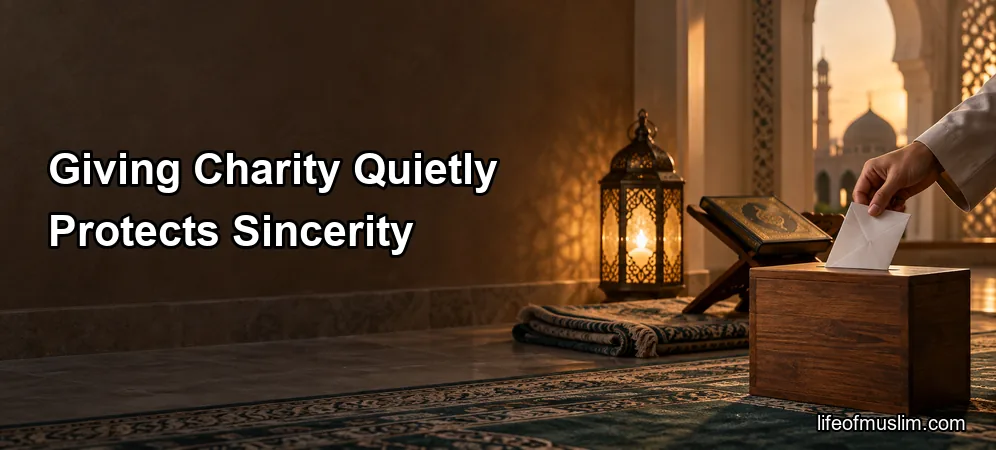
Charity should relieve need without turning another person’s hardship into a public display. Giving quietly can protect the intention of the donor and the dignity of the recipient. A well-known hadith about seven people granted special shade includes a powerful description of private charity.
Private Charity Among Seven Honoured Deeds
Abu Huraira reported that the Prophet ﷺ described seven people who will receive Allah’s shade on a day when there will be no other shade. Among them is “a person who practices charity so secretly that his left hand does not know what his right hand has given” (Sahih al-Bukhari 1423).
The expression shows an exceptional level of concealment. The giver is not performing generosity for attention, praise, or social standing. The deed remains known to Allah even when people do not see it.
Protect the Intention Before Giving
Before donating, pause and ask why you are giving. Seek Allah’s pleasure and the genuine benefit of the recipient. Avoid measuring the value of a deed by likes, public thanks, photographs, or the number of people who know about it.
If the heart begins seeking recognition, renew the intention rather than abandoning the good deed. Human motives can become mixed. Honest self-correction helps the giver continue doing good while resisting the desire to be admired.
Preserve the Recipient’s Dignity
A person in need should not have to exchange privacy for support. Do not publish names, faces, medical details, family problems, or humiliating descriptions without informed permission. Give through a safe channel and share only the information necessary to complete the help.
Speak respectfully and avoid making the recipient feel indebted to you. A quiet transfer, sealed envelope, private delivery, or trusted organisation can reduce embarrassment. Where direct giving is appropriate, allow the person reasonable choice in how lawful help is used.
Verify Needs and Giving Channels
Secrecy does not remove the need for care. Confirm that a charity or appeal is trustworthy, especially before sending money online. Check official contact details, payment information, current need, and how funds will be handled. Protect personal and financial data.
When a situation requires specialist help, such as medical care, safeguarding, debt advice, or emergency housing, connect the person with qualified services. Charity should be compassionate and responsible, not careless.
Know When Public Giving May Serve a Purpose
The hadith praises deeply hidden charity. It does not mean every charitable activity must be invisible. An organisation may need transparent records, audited reports, or a public campaign to collect enough support. A parent or teacher may sometimes model giving to teach a child.
Even then, keep the focus on the cause rather than the donor. Share only what is necessary, protect recipients, and avoid exaggerated claims. Accountability can be maintained without turning vulnerable people into advertising.
Build a Quiet Giving Habit
Set aside a realistic amount regularly, even if it is small. Keep a private list of verified causes, support someone through a trusted intermediary, or contribute anonymously when the system allows. Consistency makes private charity part of life rather than a rare emotional response.
Charity also includes useful non-monetary help, but the specific image in this hadith concerns hidden giving. Let that image train the heart to love deeds that Allah knows even when no audience applauds.
Conclusion
Sahih al-Bukhari 1423 includes the secret giver among seven people promised special shade. Quiet charity can strengthen sincerity, protect privacy, and preserve dignity. By verifying needs, using safe channels, and resisting unnecessary attention, Muslims can give in a way that helps people while keeping the deed close to Allah.
خاموشی سے صدقہ دینا اخلاص اور ضرورت مند کی عزت بچاتا ہے
صدقہ ضرورت کو کم کرے، کسی کی مشکل کو عوامی نمائش نہ بنائے۔ خاموشی سے دینا دینے والے کی نیت اور لینے والے کی عزت دونوں کی حفاظت کر سکتا ہے۔ ان سات لوگوں کے بارے میں مشہور حدیث جنہیں خاص سایہ ملے گا، پوشیدہ صدقے کی بہت مؤثر تصویر پیش کرتی ہے۔
سات معزز اعمال میں پوشیدہ صدقہ
ابو ہریرہ رضی اللہ عنہ سے روایت ہے کہ نبی کریم ﷺ نے ان سات لوگوں کا ذکر فرمایا جنہیں اس دن اللہ کا سایہ ملے گا جب اس کے سوا کوئی سایہ نہ ہوگا۔ ان میں وہ شخص بھی شامل ہے جو اتنی رازداری سے صدقہ کرتا ہے کہ اس کے بائیں ہاتھ کو بھی معلوم نہیں ہوتا کہ دائیں ہاتھ نے کیا دیا۔ (صحیح البخاری 1423)
یہ تعبیر انتہائی رازداری کو ظاہر کرتی ہے۔ دینے والا توجہ، تعریف یا سماجی مرتبے کے لیے سخاوت نہیں دکھاتا۔ لوگ نہ بھی دیکھیں تو یہ عمل اللہ کے علم میں رہتا ہے۔
دینے سے پہلے نیت کی حفاظت کریں
عطیہ دینے سے پہلے رک کر پوچھیں کہ آپ کیوں دے رہے ہیں۔ اللہ کی رضا اور ضرورت مند کا حقیقی فائدہ مقصود رکھیں۔ کسی عمل کی قدر کو پسندیدگیوں، علانیہ شکریے، تصاویر یا جاننے والوں کی تعداد سے نہ ناپیں۔
اگر دل تعریف چاہنے لگے تو نیکی چھوڑنے کے بجائے نیت درست کریں۔ انسانی نیتوں میں ملاوٹ آ سکتی ہے۔ دیانت دارانہ خود احتسابی انسان کو نیکی جاری رکھنے اور تعریف کی خواہش کا مقابلہ کرنے میں مدد دیتی ہے۔
ضرورت مند کی عزت محفوظ رکھیں
کسی ضرورت مند کو مدد کے بدلے اپنی رازداری نہیں دینی چاہیے۔ باخبر اجازت کے بغیر نام، چہرہ، طبی تفصیل، خاندانی مسئلہ یا شرمندہ کرنے والی بات شائع نہ کریں۔ محفوظ ذریعے سے مدد دیں اور صرف اتنی معلومات بانٹیں جو مدد مکمل کرنے کے لیے ضروری ہوں۔
احترام سے بات کریں اور لینے والے کو اپنا مقروض محسوس نہ کرائیں۔ خاموش منتقلی، بند لفافہ، نجی ترسیل یا قابل اعتماد ادارہ شرمندگی کم کر سکتا ہے۔ جہاں براہ راست مدد مناسب ہو، جائز مدد کے استعمال میں شخص کو مناسب اختیار دیں۔
ضرورت اور ذریعے کی تصدیق کریں
رازداری احتیاط کی ضرورت ختم نہیں کرتی۔ خاص طور پر آن لائن رقم بھیجنے سے پہلے دیکھیں کہ ادارہ یا اپیل قابل اعتماد ہے۔ سرکاری رابطہ، ادائیگی کی تفصیل، موجودہ ضرورت اور رقم کے استعمال کی جانچ کریں۔ ذاتی اور مالی معلومات محفوظ رکھیں۔
جہاں طبی نگہداشت، تحفظ، قرض کے مشورے یا ہنگامی رہائش جیسی ماہر مدد درکار ہو، متعلقہ شخص کو مستند خدمت تک پہنچائیں۔ صدقہ ہمدرد اور ذمہ دار ہونا چاہیے، لاپرواہ نہیں۔
علانیہ تعاون کب مفید ہو سکتا ہے
حدیث بہت زیادہ پوشیدہ صدقے کی فضیلت بیان کرتی ہے، لیکن اس کا مطلب یہ نہیں کہ ہر خیراتی سرگرمی مکمل طور پر چھپی ہو۔ کسی ادارے کو شفاف ریکارڈ، آڈٹ شدہ رپورٹ یا مطلوبہ مدد جمع کرنے کے لیے عوامی مہم کی ضرورت ہو سکتی ہے۔ والدین یا استاد بچے کو سکھانے کے لیے کبھی عملی مثال دے سکتے ہیں۔
ایسی صورت میں بھی توجہ دینے والے کے بجائے ضرورت پر رکھیں۔ صرف ضروری بات بتائیں، ضرورت مندوں کی حفاظت کریں اور مبالغہ آمیز دعووں سے بچیں۔ کمزور لوگوں کو اشتہار بنائے بغیر بھی جواب دہی قائم رکھی جا سکتی ہے۔
خاموش صدقے کی عادت بنائیں
باقاعدگی سے اپنی استطاعت کے مطابق رقم الگ رکھیں، خواہ وہ تھوڑی ہو۔ تصدیق شدہ ضروریات کی نجی فہرست رکھیں، معتبر واسطے سے کسی کی مدد کریں یا جہاں ممکن ہو گمنام تعاون کریں۔ پابندی کے ساتھ دینے سے نجی صدقہ وقتی جذبات کے بجائے زندگی کا حصہ بنتا ہے۔
غیر مالی مفید مدد بھی صدقہ ہے، لیکن اس حدیث کی خاص مثال پوشیدہ مالی تعاون سے متعلق ہے۔ یہ تصویر دل کو ایسے اعمال سے محبت کرنا سکھائے جنہیں اللہ جانتا ہے، چاہے کوئی سامع تعریف نہ کرے۔
نتیجہ
صحیح البخاری 1423 پوشیدہ صدقہ کرنے والے کو ان سات افراد میں شامل کرتی ہے جن کے لیے خاص سایے کی بشارت ہے۔ خاموش صدقہ اخلاص بڑھا، رازداری بچا اور عزت محفوظ رکھ سکتا ہے۔ ضرورت کی تصدیق، محفوظ ذریعے کے استعمال اور غیر ضروری توجہ سے اجتناب کے ذریعے مسلمان ایسی مدد کر سکتے ہیں جو لوگوں کو فائدہ دے اور عمل کو اللہ کے قریب رکھے۔
References
Sahih al-Bukhari – Obligatory Charity Tax (Zakat), Chapter 16: To Give Objects of Charity with the Right Hand, In-book Hadith 27; Reference 1423