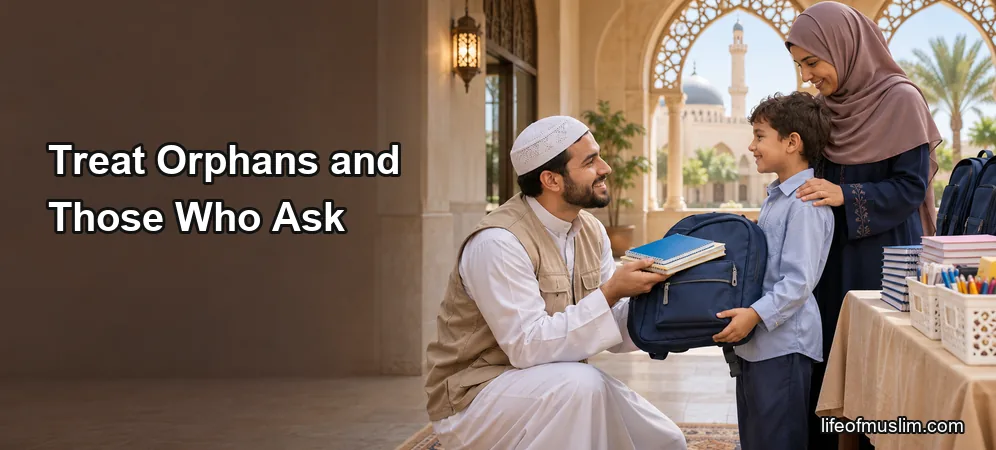
Surah Ad-Duhaa connects gratitude for Allah’s blessings with the way vulnerable people are treated. It forbids oppression of the orphan, warns against repelling the person who asks, and commands believers to proclaim the blessings of their Lord. Gratitude therefore becomes visible through dignity, care, and responsible speech.
Three Connected Quranic Instructions
Allah says: “So do not oppress the orphan, nor repulse the beggar. And proclaim the blessings of your Lord.” These commands move from protecting the vulnerable, to responding without harsh rejection, to openly acknowledging Allah’s favour.
The sequence teaches that blessings should soften conduct. A person who recognises Allah’s care should not use strength, wealth, knowledge, or status to humiliate someone with less protection.
Protect Orphans From Control and Humiliation
An orphan needs more than material assistance. They need safety, fair treatment, patient listening, privacy, and adults who do not exploit dependence. Decisions involving their property, education, care, and future should be handled with serious trust.
Do not use help to demand gratitude, obedience beyond what is right, or public praise. A child’s story and image should not be displayed merely to promote the helper.
Respond Kindly to the Person Who Asks
A person may ask for money, food, information, time, or guidance. You may not always be able to provide what is requested, but refusal does not need contempt. Listen briefly, answer honestly, and speak without ridicule.
If direct help is not possible, offer a safe alternative when you know one. Do not make promises you cannot keep or send someone toward an unverified service.
Verify Needs Without Interrogating
Responsible giving may require reasonable verification, especially when managing donated funds. Ask only what is needed, explain why, and protect personal information. Repeatedly forcing someone to retell painful details can become another form of harm.
Use clear processes that apply fairly. Safeguarding, lawful reporting, and qualified support are essential where abuse, neglect, or danger may be involved.
Give Help That Preserves Choice
Whenever practical, ask what would actually help rather than assuming. School supplies, transport, food, fees, mentoring, or access to services may be more useful than a visible gift chosen for the giver’s satisfaction.
Offer assistance privately and avoid unnecessary photographs or announcements. Dignity means the recipient remains a person with choices, not a display of someone else’s generosity.
Proclaim Blessings With Gratitude, Not Boasting
Speaking about Allah’s blessings should direct praise to Him and encourage thankful use. It should not become comparison, self-importance, or a way to make struggling people feel smaller.
Acknowledge the blessing of family, knowledge, provision, safety, or opportunity, then show gratitude through service. The most convincing proclamation is often responsible action joined to sincere words.
Build Care Into Community Systems
Personal kindness matters, but reliable systems protect people when individual attention changes. Mosques and community organisations can use confidential referral processes, trained safeguarding contacts, transparent funds, and partnerships with qualified services.
Good intentions should be supported by accountability. Clear records, appropriate oversight, and privacy help assistance reach people without exposing them.
Conclusion
Quran 93:9–11 teaches that gratitude and social care belong together. Protect the orphan from oppression, answer the person who asks without harshness, and speak of Allah’s blessings with humility. When help preserves privacy, choice, and safety, gratitude becomes mercy that people can genuinely feel.
یتیم اور سوال کرنے والے کے ساتھ عزت اور دیکھ بھال
سورۂ الضحیٰ اللہ کی نعمتوں کے شکر کو کمزور لوگوں کے ساتھ رویے سے جوڑتی ہے۔ وہ یتیم پر ظلم سے روکتی، سوال کرنے والے کو جھڑکنے سے منع کرتی اور رب کی نعمت بیان کرنے کا حکم دیتی ہے۔ یوں شکر عزت، دیکھ بھال اور ذمہ دار گفتگو میں ظاہر ہوتا ہے۔
تین باہم جڑی قرآنی ہدایات
اللہ تعالیٰ فرماتا ہے کہ یتیم پر سختی نہ کرو، سوال کرنے والے کو نہ جھڑکو اور اپنے رب کی نعمت بیان کرو۔ یہ احکام کمزور کی حفاظت، سخت انکار سے اجتناب اور اللہ کے فضل کے کھلے اعتراف کو ایک ساتھ جوڑتے ہیں۔
یہ ترتیب سکھاتی ہے کہ نعمت رویے کو نرم کرے۔ اللہ کی نگہداشت پہچاننے والا قوت، مال، علم یا مرتبے سے کم محفوظ شخص کو ذلیل نہ کرے۔
یتیم کو قابو اور ذلت سے بچائیں
یتیم کو صرف مالی مدد نہیں بلکہ حفاظت، منصفانہ رویہ، صبر سے سماعت، رازداری اور ایسے بڑوں کی ضرورت ہے جو اس کی محتاجی سے فائدہ نہ اٹھائیں۔ اس کے مال، تعلیم، دیکھ بھال اور مستقبل کے فیصلے امانت کے ساتھ کیے جائیں۔
مدد کے بدلے تعریف، ناجائز فرمانبرداری یا عوامی شہرت کا مطالبہ نہ کریں۔ بچے کی کہانی اور تصویر صرف مددگار کی تشہیر کے لیے ظاہر نہ کی جائے۔
سوال کرنے والے کو نرمی سے جواب دیں
کوئی شخص مال، کھانا، معلومات، وقت یا رہنمائی مانگ سکتا ہے۔ ہر درخواست پوری نہیں ہو سکتی، مگر انکار حقارت کے ساتھ ضروری نہیں۔ مختصر سنیں، سچا جواب دیں اور تمسخر کے بغیر بات کریں۔
براہِ راست مدد ممکن نہ ہو تو معلوم محفوظ متبادل بتائیں۔ ایسا وعدہ نہ کریں جو پورا نہ ہو اور کسی کو غیر مصدقہ خدمت کی طرف نہ بھیجیں۔
تفتیش بنائے بغیر ضرورت جانچیں
ذمہ دار مدد میں مناسب تصدیق درکار ہو سکتی ہے، خصوصاً عطیات کے انتظام میں۔ صرف ضروری سوال کریں، وجہ بتائیں اور ذاتی معلومات محفوظ رکھیں۔ کسی کو تکلیف دہ تفصیل بار بار سنانے پر مجبور کرنا مزید نقصان بن سکتا ہے۔
واضح اور سب پر منصفانہ طریقہ اپنائیں۔ جہاں بدسلوکی، غفلت یا خطرہ ہو وہاں حفاظت، قانونی اطلاع اور اہل مدد ضروری ہے۔
ایسی مدد دیں جو اختیار محفوظ رکھے
ممکن ہو تو اندازہ لگانے کے بجائے پوچھیں کہ حقیقی فائدہ کس چیز میں ہے۔ تعلیمی سامان، سواری، خوراک، فیس، رہنمائی یا خدمات تک رسائی اس نمایاں تحفے سے بہتر ہو سکتی ہے جو صرف دینے والے کو خوش کرے۔
مدد نجی طور پر دیں اور غیر ضروری تصویر یا اعلان سے بچیں۔ عزت کا مطلب ہے کہ وصول کرنے والا اپنی پسند رکھنے والا انسان رہے، کسی اور کی سخاوت کی نمائش نہ بنے۔
نعمت شکر سے بیان کریں، فخر سے نہیں
اللہ کی نعمت بیان کرنا تعریف کو اسی کی طرف لوٹائے اور شکر والے استعمال کی ترغیب دے۔ اسے مقابلہ، خود اہمیت یا پریشان شخص کو کمتر دکھانے کا ذریعہ نہ بنائیں۔
خاندان، علم، رزق، حفاظت یا موقع کی نعمت تسلیم کریں اور پھر خدمت سے شکر دکھائیں۔ ذمہ دار عمل کے ساتھ مخلص الفاظ اکثر سب سے مؤثر بیان ہوتے ہیں۔
اجتماعی نظام میں دیکھ بھال شامل کریں
ذاتی نرمی اہم ہے مگر قابلِ اعتماد نظام اس وقت بھی حفاظت کرتا ہے جب فرد کی توجہ بدل جائے۔ مسجد اور ادارے رازدارانہ رہنمائی، تربیت یافتہ حفاظتی رابطہ، شفاف فنڈ اور اہل خدمات کے ساتھ شراکت قائم کر سکتے ہیں۔
اچھی نیت کے ساتھ جواب دہی ضروری ہے۔ واضح ریکارڈ، مناسب نگرانی اور رازداری مدد کو بے عزتی کے بغیر مستحق تک پہنچاتے ہیں۔
نتیجہ
قرآن 93:9–11 سکھاتا ہے کہ شکر اور سماجی نگہداشت ساتھ ہیں۔ یتیم کو ظلم سے بچائیں، سوال کرنے والے کو سختی کے بغیر جواب دیں اور اللہ کی نعمت عاجزی سے بیان کریں۔ جب مدد رازداری، اختیار اور حفاظت قائم رکھے تو شکر ایسی رحمت بنتا ہے جسے لوگ حقیقتاً محسوس کریں۔