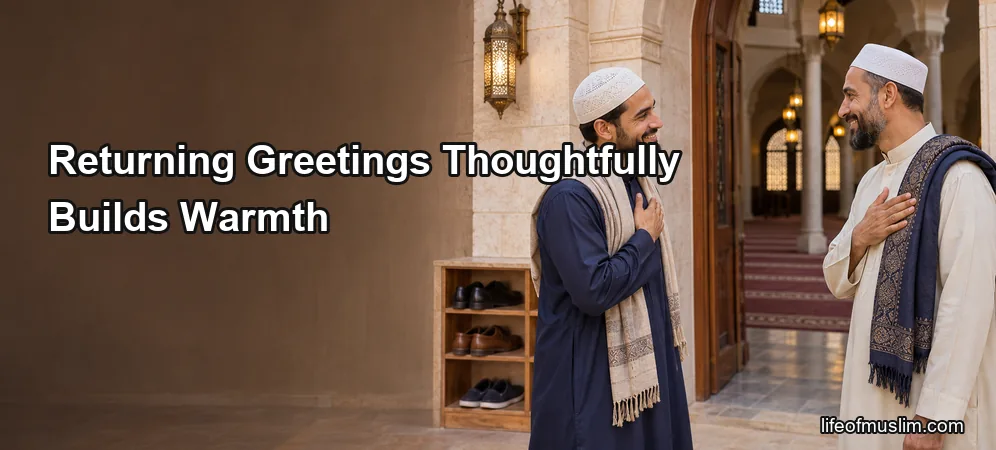
A greeting may take only a moment, yet it can communicate peace, recognition, and respect. The Quran teaches believers not to treat greetings casually. A greeting should be returned with something better or at least with an equal response, turning an ordinary encounter into accountable good character.
The Quranic Instruction to Return Greetings
Allah says: “And when you are greeted, respond with a better greeting or at least similarly. Surely Allah is a vigilant Reckoner of all things.” The verse gives both a generous standard and a clear minimum: improve the greeting when appropriate, or return it similarly.
This instruction reminds us that small social actions matter to Allah. Ignoring someone unnecessarily, replying with cold contempt, or using status to decide who deserves acknowledgement can damage trust.
Give the Greeting Your Attention
A reply can be correct in words but careless in manner. When possible, pause, face the person, and answer clearly enough to be heard. A warm tone and attentive expression show that the greeting was received rather than merely processed.
Busy moments still require basic respect. If you cannot stop, return the greeting promptly and explain briefly that you need to continue. Courtesy does not always require a long conversation.
Improve the Response Without Performing
A better greeting can include fuller words of peace, a sincere smile, asking about wellbeing, or welcoming a guest appropriately. The improvement should be natural and suited to the relationship and setting.
Avoid turning greetings into competition or public performance. The aim is to spread peace and honour another person, not to display superior manners.
Include People Who Are Easily Overlooked
Greet workers, newcomers, older people, children, people with disabilities, and those outside your usual social circle with the same basic dignity. Selective warmth can reveal pride even when the words sound polite.
Learn names when appropriate and pronounce them carefully. In group settings, make space for the person who arrives instead of continuing as though they are invisible.
Use Greetings to Repair Everyday Distance
Minor awkwardness can grow when each person waits for the other to speak first. A sincere greeting can reopen a respectful door without pretending that every concern has already been resolved.
If a serious issue remains, address it separately and fairly. Do not load the greeting with sarcasm, indirect accusations, or pressure for immediate closeness.
Respect Boundaries and Safety
Returning a greeting does not require giving personal information, extending a meeting, or entering an unsafe situation. A brief courteous response can preserve manners while maintaining necessary boundaries.
In online spaces, verify who is contacting you before sharing details. Avoid suspicious links and unwanted private conversations. Good manners and prudent safety can exist together.
Carry the Etiquette Into Digital Communication
Messages often begin with salam but receive a delayed or incomplete response. When practical, acknowledge the greeting before moving to the request. If a full reply needs time, a short confirmation can prevent needless uncertainty.
Do not use copied greetings to send spam or manipulate attention. A meaningful greeting respects the recipient’s time and purpose.
Conclusion
Quran 4:86 turns greeting etiquette into a form of accountable worship. By replying clearly, improving the response sincerely, including overlooked people, and respecting boundaries, believers can build warmth without pretence. Repeated daily greetings help create communities where people feel recognised and peace is actively shared.
سلام کا سوچ سمجھ کر جواب محبت، احترام اور اعتماد بڑھاتا ہے
سلام میں صرف ایک لمحہ لگتا ہے مگر وہ امن، پہچان اور احترام ظاہر کر سکتا ہے۔ قرآن اہلِ ایمان کو سلام کے معاملے میں لاپرواہ نہ رہنے کی تعلیم دیتا ہے۔ سلام کا جواب بہتر انداز میں یا کم از کم اسی طرح دینا چاہیے تاکہ معمولی ملاقات جواب دہ اچھے کردار میں بدل جائے۔
سلام لوٹانے کی قرآنی ہدایت
اللہ تعالیٰ فرماتا ہے کہ جب تمہیں سلام کیا جائے تو اس سے بہتر جواب دو یا کم از کم ویسا ہی لوٹاؤ، بے شک اللہ ہر چیز کا حساب لینے والا ہے۔ آیت ایک کشادہ معیار اور واضح کم از کم حد دونوں دیتی ہے: مناسب ہو تو جواب بہتر بناؤ، ورنہ اسی طرح لوٹاؤ۔
یہ ہدایت یاد دلاتی ہے کہ چھوٹے سماجی اعمال بھی اللہ کے نزدیک اہم ہیں۔ بلا وجہ کسی کو نظر انداز کرنا، حقارت سے سرد جواب دینا یا مرتبے کے مطابق لوگوں کو جواب دینا اعتماد کو نقصان پہنچاتا ہے۔
سلام کو توجہ دیں
جواب الفاظ میں درست مگر انداز میں لاپرواہ ہو سکتا ہے۔ ممکن ہو تو رکیں، شخص کی طرف متوجہ ہوں اور اتنی وضاحت سے جواب دیں کہ وہ سن سکے۔ گرم لہجہ اور متوجہ چہرہ دکھاتا ہے کہ سلام واقعی قبول ہوا۔
مصروف وقت میں بھی بنیادی احترام ضروری ہے۔ اگر رک نہیں سکتے تو فوراً جواب دیں اور مختصر بتا دیں کہ آپ کو آگے بڑھنا ہے۔ ادب ہمیشہ طویل گفتگو کا تقاضا نہیں کرتا۔
دکھاوے کے بغیر جواب بہتر بنائیں
بہتر جواب میں مکمل دعائے سلامتی، مخلص مسکراہٹ، خیریت پوچھنا یا مہمان کا مناسب استقبال شامل ہو سکتا ہے۔ بہتری فطری اور تعلق و جگہ کے مطابق ہونی چاہیے۔
سلام کو مقابلہ یا عوامی نمائش نہ بنائیں۔ مقصد امن پھیلانا اور دوسرے کی عزت ہے، اپنی برتر تہذیب دکھانا نہیں۔
نظر انداز ہونے والوں کو شامل کریں
کارکن، نئے آنے والے، بزرگ، بچے، معذور افراد اور عام حلقے سے باہر لوگوں کو بھی بنیادی عزت کے ساتھ سلام کریں۔ چنیدہ گرمجوشی تکبر ظاہر کر سکتی ہے، خواہ الفاظ مہذب ہوں۔
مناسب ہو تو نام یاد کریں اور درست ادا کریں۔ مجلس میں آنے والے کے لیے جگہ بنائیں، یوں گفتگو جاری نہ رکھیں جیسے وہ موجود ہی نہیں۔
روزمرہ فاصلے کی اصلاح کے لیے سلام
معمولی جھجک بڑھ سکتی ہے جب ہر شخص دوسرے کے پہلے بولنے کا انتظار کرے۔ مخلص سلام احترام کا دروازہ دوبارہ کھول سکتا ہے، بغیر یہ ظاہر کیے کہ ہر مسئلہ حل ہو چکا ہے۔
اگر سنجیدہ مسئلہ باقی ہو تو اسے الگ اور انصاف سے حل کریں۔ سلام میں طنز، پوشیدہ الزام یا فوری قربت کا دباؤ شامل نہ کریں۔
حدود اور حفاظت کا احترام کریں
سلام کا جواب ذاتی معلومات دینے، ملاقات بڑھانے یا غیر محفوظ حالت میں داخل ہونے کا تقاضا نہیں۔ مختصر باادب جواب ضروری حدود کے ساتھ اچھے آداب محفوظ رکھ سکتا ہے۔
آن لائن جگہ میں معلومات بانٹنے سے پہلے رابطہ کرنے والے کو جانچیں۔ مشکوک لنک اور ناپسندیدہ نجی گفتگو سے بچیں۔ اچھے آداب اور محتاط حفاظت ساتھ چل سکتے ہیں۔
ڈیجیٹل گفتگو میں بھی یہی ادب رکھیں
پیغام اکثر سلام سے شروع ہوتا ہے مگر جواب دیر سے یا نامکمل ملتا ہے۔ ممکن ہو تو درخواست سے پہلے سلام کا جواب دیں۔ مکمل جواب میں وقت لگے تو مختصر اطلاع غیر ضروری بے یقینی روک سکتی ہے۔
نقل شدہ سلام کو فضول پیغام یا توجہ کھینچنے کے لیے استعمال نہ کریں۔ بامعنی سلام مخاطب کے وقت اور مقصد کا احترام کرتا ہے۔
نتیجہ
قرآن 4:86 سلام کے ادب کو جواب دہ عبادت بناتا ہے۔ واضح جواب، مخلصانہ بہتری، نظر انداز لوگوں کی شمولیت اور حدود کے احترام سے اہلِ ایمان بناوٹ کے بغیر محبت بڑھا سکتے ہیں۔ روزانہ کے سلام ایسی جماعت بناتے ہیں جہاں لوگ پہچانے جائیں اور امن عملاً پھیلایا جائے۔