Good manners are part of faithful daily living. They appear not only in major acts of service, but also in the small choices that help another person feel welcome. Making room in a gathering is one of those simple choices.
Quranic Guidance for Shared Gatherings
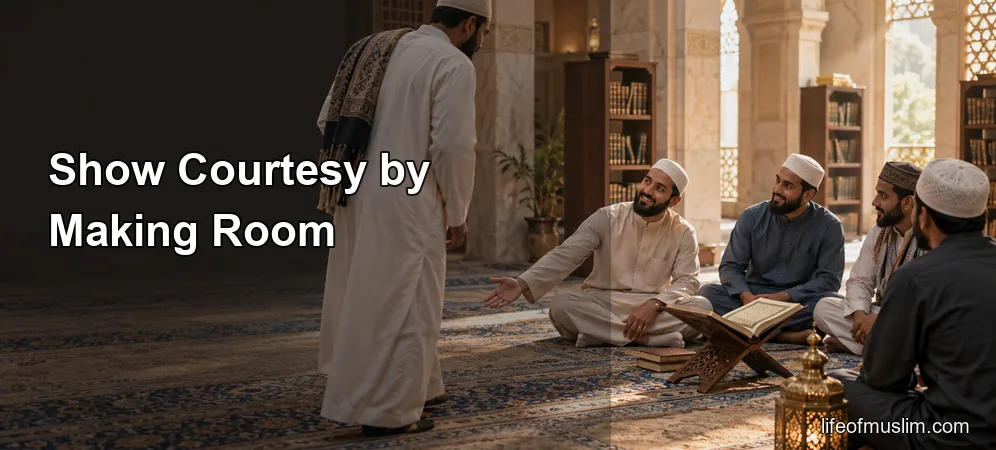
Allah says in Surah Al-Mujadila: “When you are told to make room in gatherings, then do so. Allah will make room for you.” This instruction connects belief with considerate behaviour. A gathering should not become a place where people guard space, ignore newcomers, or make others feel unwanted.
The verse also teaches believers to respond when asked to rise or rearrange themselves. Courtesy therefore includes flexibility. We may prefer a particular seat, position, or group, but good character asks us to notice the needs of others and cooperate without resentment.
Making Space Is More Than Moving Aside
Physical space matters, especially in the mosque, a study circle, a family visit, or a community event. Yet the principle also encourages an open-hearted attitude. We make room when we listen to a quiet person, include someone who is new, allow an elder to sit comfortably, or help a parent with children find a suitable place.
These actions may look ordinary, but they protect dignity. A person who enters a gathering may already feel hesitant. A welcoming gesture can remove embarrassment and strengthen affection between Muslims.
Practising Courtesy Without Drawing Attention
Move calmly when space is needed. Avoid loud comments that embarrass the newcomer or suggest that helping is a burden. If a gathering is crowded, communicate gently and cooperate with those organizing it.
Do not reserve more space than necessary. Keep personal belongings close, avoid blocking paths, and notice people who may need easier access. When asked to change places, respond with a willing heart rather than turning a small request into an argument.
Courtesy in Modern Shared Spaces
The same character can guide meetings, classrooms, public transport, waiting areas, and online group discussions. We can make room for another person’s useful contribution, avoid dominating every conversation, and ensure that people are not excluded because they are unfamiliar or less confident.
This does not mean abandoning appropriate boundaries or safety. It means being attentive, fair, and helpful within them. Islamic courtesy combines kindness with sound judgment.
Conclusion
Making room for others is a practical expression of humility and care. By shifting a little, listening well, and welcoming people sincerely, we turn an ordinary gathering into an opportunity for reward. A believer looks beyond personal comfort and helps shared spaces reflect respect, order, and brotherhood.
مشترکہ مجلس میں دوسروں کے لیے جگہ بنانے کی اسلامی تعلیم
اچھے اخلاق ایمان کے ساتھ روزمرہ زندگی گزارنے کا حصہ ہیں۔ ان کا اظہار صرف بڑی خدمتوں میں نہیں ہوتا بلکہ ان چھوٹے فیصلوں میں بھی ہوتا ہے جن سے کسی دوسرے شخص کو خوش آمدید ہونے کا احساس ملتا ہے۔ مجلس میں جگہ بنانا ایسا ہی ایک سادہ عمل ہے۔
مشترکہ مجالس کے لیے قرآنی رہنمائی
اللہ تعالیٰ سورۃ المجادلہ میں ارشاد فرماتا ہے کہ جب تم سے کہا جائے کہ مجلسوں میں جگہ کشادہ کرو تو جگہ بنا دو، اللہ تمہارے لیے کشادگی پیدا فرمائے گا۔ یہ ہدایت ایمان کو باہمی لحاظ کے ساتھ جوڑتی ہے۔ مجلس ایسی جگہ نہیں بننی چاہیے جہاں لوگ جگہ روکے رکھیں، آنے والے کو نظر انداز کریں یا اسے غیر ضروری محسوس کرائیں۔
آیت یہ بھی سکھاتی ہے کہ جب اٹھنے یا اپنی جگہ بدلنے کے لیے کہا جائے تو تعاون کیا جائے۔ اس لیے شائستگی میں لچک بھی شامل ہے۔ ہمیں کسی خاص نشست، مقام یا گروہ کے ساتھ بیٹھنا پسند ہو سکتا ہے، لیکن اچھا کردار دوسروں کی ضرورت دیکھنے اور ناراضی کے بغیر تعاون کرنے کا مطالبہ کرتا ہے۔
جگہ بنانا صرف ایک طرف سرکنا نہیں
مسجد، درس کی مجلس، خاندانی ملاقات یا اجتماعی تقریب میں جسمانی جگہ بنانا اہم ہے۔ تاہم یہ اصول کشادہ دلی کی طرف بھی رہنمائی کرتا ہے۔ ہم اس وقت جگہ بناتے ہیں جب خاموش شخص کی بات توجہ سے سنتے ہیں، نئے آنے والے کو شامل کرتے ہیں، بزرگ کو آرام سے بیٹھنے دیتے ہیں یا بچوں کے ساتھ آنے والے والدین کے لیے مناسب جگہ تلاش کرنے میں مدد دیتے ہیں۔
یہ کام بظاہر معمولی ہو سکتے ہیں، مگر یہ عزتِ نفس کی حفاظت کرتے ہیں۔ مجلس میں داخل ہونے والا شخص پہلے ہی جھجک محسوس کر رہا ہو سکتا ہے۔ خوش آمدید کہنے کا ایک مخلصانہ اشارہ اس کی پریشانی دور کر سکتا ہے اور مسلمانوں کے درمیان محبت بڑھا سکتا ہے۔
نمائش کے بغیر شائستگی اختیار کریں
جب جگہ کی ضرورت ہو تو سکون سے ایک طرف ہو جائیں۔ ایسی بلند آواز گفتگو سے بچیں جو نئے آنے والے کو شرمندہ کرے یا یہ تاثر دے کہ مدد کرنا بوجھ ہے۔ مجلس بھری ہوئی ہو تو نرمی سے بات کریں اور انتظام کرنے والوں کے ساتھ تعاون کریں۔
ضرورت سے زیادہ جگہ نہ روکیں۔ اپنا سامان قریب رکھیں، راستے بند نہ کریں اور ان لوگوں کا خیال رکھیں جنہیں آسان رسائی درکار ہو۔ جگہ بدلنے کے لیے کہا جائے تو معمولی درخواست کو بحث بنانے کے بجائے خوش دلی سے قبول کریں۔
آج کے مشترکہ مقامات میں شائستگی
یہی اخلاق اجلاس، جماعت، پبلک ٹرانسپورٹ، انتظار گاہ اور آن لائن گروہی گفتگو میں بھی رہنمائی کر سکتا ہے۔ ہم دوسرے شخص کی مفید بات کے لیے موقع پیدا کر سکتے ہیں، ہر گفتگو پر غالب آنے سے بچ سکتے ہیں اور نئے یا کم پراعتماد لوگوں کو الگ تھلگ ہونے سے محفوظ رکھ سکتے ہیں۔
اس کا مطلب مناسب حدود یا حفاظت کو چھوڑنا نہیں۔ مطلب یہ ہے کہ ان حدود کے اندر توجہ، انصاف اور مدد کا رویہ اختیار کیا جائے۔ اسلامی شائستگی نرمی کو درست فیصلے کے ساتھ جمع کرتی ہے۔
خلاصہ
دوسروں کے لیے جگہ بنانا عاجزی اور خیال رکھنے کا عملی اظہار ہے۔ تھوڑا سا سرکنے، اچھی طرح سننے اور خلوص سے خوش آمدید کہنے کے ذریعے ایک عام مجلس بھی اجر کا موقع بن سکتی ہے۔ مومن اپنی سہولت سے آگے دیکھتا ہے اور مشترکہ جگہ کو احترام، ترتیب اور بھائی چارے کا نمونہ بنانے میں حصہ لیتا ہے۔