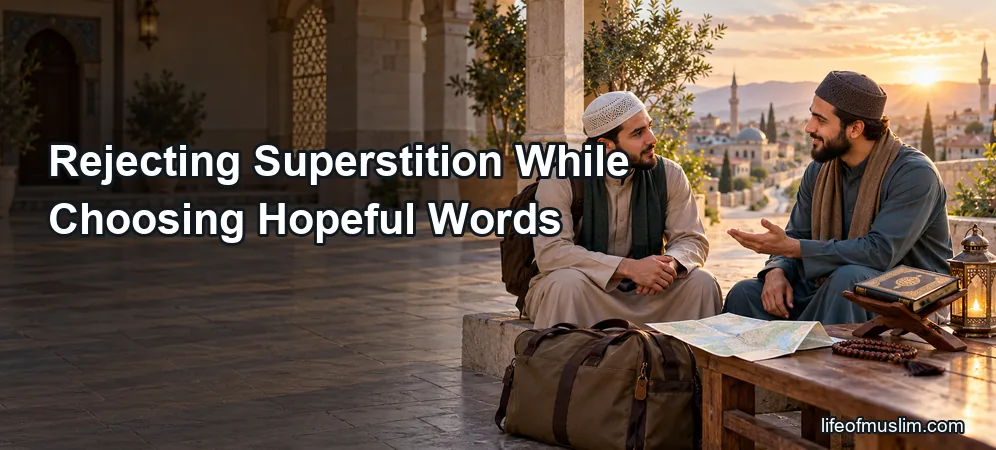
People sometimes delay a journey, fear an ordinary event, or expect harm because of a sign, date, sound, dream, number, or coincidence. Such beliefs can replace evidence and responsible planning with anxiety. Sahih Muslim 2223a rejects divination and identifies the good omen as a good word that a person hears.
The Hadith Rejects Divination and Values Good Words
Abu Huraira reported that the Prophet Muhammad ﷺ said there is no divination, while the best type is the good omen. When asked what the good omen was, he replied: “A good word which one of you hears.”
Sunnah.com records this narration as Sahih Muslim 2223a in The Book of Greetings, under the chapter concerning evil omens and good words. The teaching removes fearful superstition while recognising the encouragement a wholesome word can bring.
Do Not Give Ordinary Events Hidden Power
A bird, sound, colour, number, broken object, chance meeting, or inconvenient delay does not independently control the future. Do not cancel a lawful plan or accuse someone because an ordinary event felt unlucky. Outcomes belong to Allah, and decisions should be guided by sound Islamic principles, verified information, consultation, and sensible preparation.
Rejecting superstition does not mean ignoring real evidence. A dangerous weather warning, medical symptom, safety fault, or reliable travel notice should be taken seriously because it provides relevant information, not because it is an omen.
Use Hopeful Words Without Making False Promises
A good word may remind someone of Allah’s mercy, encourage patient effort, recognise sincere progress, or calm unnecessary fear. Say, “May Allah make it easy,” “Let us prepare carefully,” or “You can take the next step with help.” Keep encouragement truthful and modest.
Do not promise that a particular result will certainly occur. Hopeful speech supports responsible action; it does not claim knowledge of the unseen.
Review Decisions With Evidence and Consultation
When uncertainty arises, write down the actual decision, available evidence, possible risks, and lawful options. Ask knowledgeable and trustworthy people who understand the religious, technical, medical, legal, or financial details involved. Consultation should replace guesswork rather than simply confirm what fear already wants.
For everyday choices, set a reasonable deadline and proceed once suitable information is available. Endless searching for signs can become another form of avoidance.
Remove Superstitious Messages From Family Habits
Families may repeat sayings about unlucky days, names, objects, visitors, or events without considering their meaning. Correct these ideas gently and explain that benefit and harm are under Allah’s control. Avoid mocking older relatives or frightening children while teaching the correct principle.
Do not forward fortune-telling, horoscope, numerology, charm, or omen content as entertainment. Repetition can normalise beliefs that should be rejected.
Respond Calmly When Fear Persists
Superstitious fear may continue even after a person understands the rule. Reduce repeated checking, stop asking many people for predictions, make authentic dua, and complete a small responsible action. A trusted scholar can clarify religious confusion.
If fear becomes persistent, disrupts daily life, or is connected to severe anxiety, seek qualified mental-health support. Receiving appropriate care does not conflict with reliance on Allah.
Let Good Words Lead to Good Conduct
Encouragement is most useful when followed by honest effort. Prepare for the journey, check the agreement, take medical advice, repair the mistake, or begin the task. Good words are not substitutes for responsibility; they can help the heart approach responsibility with hope.
Conclusion
Sahih Muslim 2223a rejects divination and identifies the good omen as a good word a person hears. Muslims can apply this guidance by refusing to assign hidden power to ordinary events, distinguishing evidence from superstition, offering truthful encouragement, consulting qualified people, correcting family habits gently, and seeking support when fear persists. Hopeful speech is strongest when it leads to trust in Allah and responsible action.
بدشگونی چھوڑ کر امید بھری بات اور ذمہ دار عمل اپنانا
بعض لوگ کسی علامت، تاریخ، آواز، خواب، عدد یا اتفاق کی وجہ سے سفر مؤخر، عام واقعے سے خوف زدہ یا نقصان کے منتظر ہوجاتے ہیں۔ ایسی سوچ دلیل اور ذمہ دار منصوبہ بندی کی جگہ پریشانی پیدا کرسکتی ہے۔ صحیح مسلم 2223a بدشگونی کو رد کرتی اور نیک فال کو اچھی بات قرار دیتی ہے جو انسان سنتا ہے۔
حدیث بدشگونی رد اور اچھی بات کی قدر کرتی ہے
حضرت ابو ہریرہ رضی اللہ عنہ سے روایت ہے کہ نبی محمد ﷺ نے فرمایا کہ بدشگونی نہیں اور اس کی بہتر صورت نیک فال ہے۔ پوچھا گیا کہ نیک فال کیا ہے تو آپ ﷺ نے فرمایا: ”اچھی بات جو تم میں سے کوئی سنے۔“
Sunnah.com پر یہ روایت کتاب السلام میں بدشگونی اور نیک فال کے باب کے تحت صحیح مسلم 2223a کے طور پر درج ہے۔ یہ تعلیم خوف والی توہم پرستی دور کرتی اور پاکیزہ بات سے ملنے والی حوصلہ افزائی کو تسلیم کرتی ہے۔
عام واقعات کو پوشیدہ اختیار نہ دیں
پرندہ، آواز، رنگ، عدد، ٹوٹی چیز، اچانک ملاقات یا معمولی تاخیر خود مستقبل کو قابو نہیں کرتی۔ کسی عام واقعے کو منحوس سمجھ کر جائز منصوبہ منسوخ یا کسی پر الزام نہ لگائیں۔ نتائج اللہ کے اختیار میں ہیں اور فیصلے صحیح اسلامی اصول، تصدیق شدہ معلومات، مشورے اور مناسب تیاری سے ہونے چاہییں۔
توہم پرستی چھوڑنے کا مطلب حقیقی دلیل نظر انداز کرنا نہیں۔ خطرناک موسم کی تنبیہ، طبی علامت، حفاظتی خرابی یا معتبر سفری اطلاع سنجیدگی سے لینی چاہیے کیونکہ وہ متعلقہ معلومات دیتی ہے، بدشگونی نہیں۔
جھوٹا وعدہ کیے بغیر امید بھری بات کریں
اچھی بات اللہ کی رحمت یاد دلا، صبر والی کوشش کی حوصلہ افزائی، مخلص پیش رفت کی قدر یا غیر ضروری خوف کم کرسکتی ہے۔ کہیں: ”اللہ آسانی فرمائے،“ ”آئیں احتیاط سے تیاری کریں،“ یا ”مدد کے ساتھ اگلا قدم لیا جاسکتا ہے۔“ حوصلہ سچا اور معتدل رکھیں۔
کسی خاص نتیجے کے یقینی ہونے کا وعدہ نہ کریں۔ امید بھری بات ذمہ دار عمل کی مدد کرتی ہے، غیب کے علم کا دعویٰ نہیں۔
فیصلے کو دلیل اور مشورے سے دیکھیں
غیر یقینی کیفیت میں اصل فیصلہ، دستیاب دلیل، ممکنہ خطرات اور جائز راستے لکھیں۔ ایسے قابلِ اعتماد لوگوں سے پوچھیں جو متعلقہ دینی، فنی، طبی، قانونی یا مالی تفصیل سمجھتے ہوں۔ مشورہ اندازے کی جگہ لے، صرف خوف کی خواہش کی تصدیق نہ کرے۔
روزمرہ فیصلے کے لیے مناسب وقت مقرر کریں اور کافی معلومات ملنے پر آگے بڑھیں۔ نشانیوں کی لامتناہی تلاش خود کام سے بچنے کا ایک طریقہ بن سکتی ہے۔
خاندانی عادات سے توہماتی پیغام دور کریں
خاندان کبھی منحوس دن، نام، چیز، مہمان یا واقعے کے متعلق جملے معنی سمجھے بغیر دہراتے ہیں۔ ان خیالات کی نرمی سے اصلاح کریں اور سمجھائیں کہ فائدہ و نقصان اللہ کے اختیار میں ہے۔ درست اصول سکھاتے وقت بزرگوں کا مذاق نہ اڑائیں اور بچوں کو خوف زدہ نہ کریں۔
فال، زائچہ، اعداد سے قسمت، تعویذ یا شگون سے متعلق مواد کو تفریح کے نام پر آگے نہ بھیجیں۔ بار بار دہرانا غلط عقیدے کو معمول بنا سکتا ہے۔
خوف باقی رہے تو پرسکون طریقے سے جواب دیں
اصول سمجھنے کے بعد بھی توہماتی خوف باقی رہ سکتا ہے۔ بار بار جانچ کم کریں، پیش گوئی کے لیے بہت سے لوگوں سے پوچھنا بند کریں، مستند دعا پڑھیں اور ایک چھوٹا ذمہ دار قدم مکمل کریں۔ قابلِ اعتماد عالم دینی الجھن واضح کرسکتا ہے۔
خوف مستقل ہو، روزمرہ زندگی میں خلل ڈالے یا شدید بے چینی سے جڑا ہو تو ماہر نفسیاتی مدد حاصل کریں۔ مناسب علاج لینا اللہ پر توکل کے خلاف نہیں۔
اچھی بات کو اچھے عمل تک پہنچائیں
حوصلہ اس وقت زیادہ مفید ہے جب اس کے بعد ایماندار کوشش ہو۔ سفر کی تیاری کریں، معاہدہ دیکھیں، طبی مشورہ لیں، غلطی درست کریں یا کام شروع کریں۔ اچھی بات ذمہ داری کا بدل نہیں؛ وہ دل کو امید کے ساتھ ذمہ داری اپنانے میں مدد دیتی ہے۔
نتیجہ
صحیح مسلم 2223a بدشگونی کو رد کرتی اور نیک فال کو وہ اچھی بات قرار دیتی ہے جو انسان سنتا ہے۔ مسلمان عام واقعات کو پوشیدہ اختیار دینے سے انکار، دلیل اور توہم میں فرق، سچی حوصلہ افزائی، ماہر لوگوں سے مشورہ، خاندانی عادات کی نرم اصلاح اور مستقل خوف میں مدد حاصل کرکے اس رہنمائی پر عمل کرسکتے ہیں۔ امید بھری بات اس وقت مضبوط ہوتی ہے جب وہ اللہ پر توکل اور ذمہ دار عمل تک پہنچائے۔
References
Sahih Muslim — Book 39: The Book of Greetings — Chapter 34: Evil Omens and Al-Fa’l, and That Which May Be Regarded as Inauspicious — Hadith 2223a (Book 39, Hadith 150)