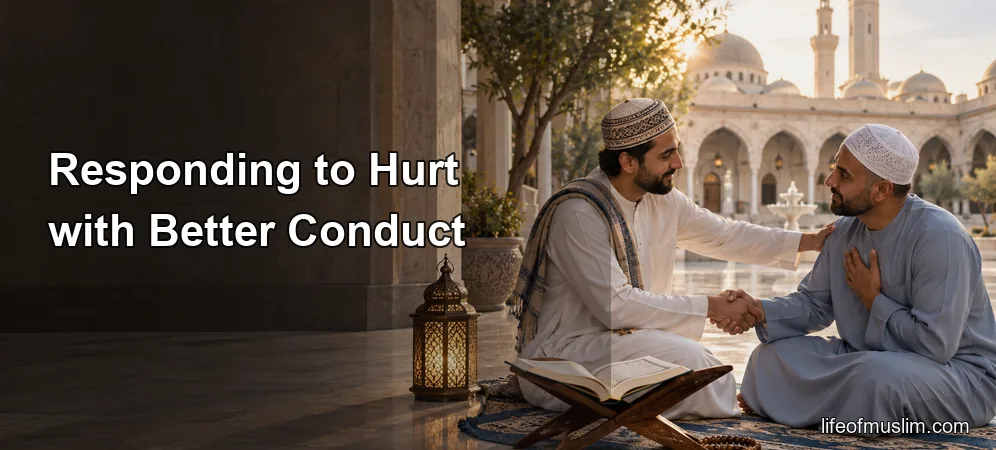
Being hurt by another person can awaken anger, pride, and the desire to answer immediately. Islam does not treat harmful conduct as equal to goodness. It teaches believers to choose the response that is better, even when that choice requires patience and self-control.
Respond to Harm with What Is Best
Allah says in Surah Fussilat: “Good and evil cannot be equal. Respond to evil with what is best.” The verse continues by describing how hostility may change into close friendship. It directs our attention away from copying bad behaviour and toward a response shaped by faith and excellent character.
A better response may be a calm explanation, a dignified silence, a fair correction, or forgiveness when forgiveness is wise. The correct choice depends on the situation, but the principle remains clear: another person’s poor conduct should not control our own character.
Better Conduct Is Not Weakness
Responding well does not mean approving injustice, accepting repeated abuse, or abandoning appropriate boundaries. A person may seek help, clarify the truth, or protect themselves while still avoiding insults, revenge, and needless cruelty.
Self-control is a form of strength because it keeps anger from choosing our words and actions. It allows us to address a problem without becoming unfair. A firm response can still be respectful, and a necessary boundary can still be communicated without humiliation.
Pause Before Choosing Your Response
When emotions rise, create a short space between the hurt and the reply. Avoid sending a message while angry. Check whether you understood the situation correctly, consider the likely result of your words, and choose language you will not regret later.
Ask what would be better in that moment. Is a private conversation more useful than a public correction? Would listening uncover a misunderstanding? Can a kind word reduce tension without hiding the truth? Thoughtful questions help replace impulsive reaction with purposeful conduct.
Protect the Heart from Lasting Bitterness
Repeatedly replaying an offence can deepen resentment. Deal with the issue responsibly, then resist feeding the heart with imagined arguments. Make dua for guidance, focus on actions within your control, and seek wise support if the matter is serious.
Not every relationship will become close, and reconciliation cannot be forced. Our responsibility is to pursue what is right and better from our side. Even when another person does not change, good conduct protects our conscience and prevents one wrong from producing another.
Conclusion
Choosing a better response turns a painful moment into an opportunity for worship and character. With patience, fairness, and clear boundaries, a Muslim can resist revenge and leave room for peace. We cannot control every action directed toward us, but we can ask Allah for help and take responsibility for our own response.
تکلیف کے جواب میں بہتر رویہ اور صبر کے ساتھ ضبطِ نفس
کسی دوسرے شخص کی طرف سے تکلیف پہنچنے پر غصہ، انا اور فوری جواب دینے کی خواہش پیدا ہو سکتی ہے۔ اسلام برے رویے اور نیکی کو برابر قرار نہیں دیتا۔ وہ مومن کو بہتر جواب اختیار کرنے کی تعلیم دیتا ہے، چاہے اس انتخاب کے لیے صبر اور ضبطِ نفس کی ضرورت ہو۔
برائی کا جواب بہترین طریقے سے دیں
اللہ تعالیٰ سورۃ فصلت میں ارشاد فرماتا ہے کہ نیکی اور بدی برابر نہیں ہو سکتیں، اس لیے برائی کو اس طریقے سے دور کرو جو سب سے بہتر ہو۔ آیت آگے بتاتی ہے کہ دشمنی قریبی دوستی میں بدل سکتی ہے۔ یہ ہدایت ہمیں برے رویے کی نقل کرنے کے بجائے ایمان اور بہترین اخلاق کے مطابق جواب دینے کی طرف متوجہ کرتی ہے۔
بہتر جواب کبھی پرسکون وضاحت، باوقار خاموشی، منصفانہ اصلاح یا مناسب موقع پر معافی ہو سکتا ہے۔ درست انتخاب حالات کے مطابق ہوگا، لیکن اصول واضح ہے کہ دوسرے شخص کا خراب رویہ ہمارے کردار کو قابو میں نہ لے۔
بہتر رویہ کمزوری نہیں
اچھے طریقے سے جواب دینے کا مطلب ناانصافی کو درست ماننا، مسلسل زیادتی برداشت کرنا یا مناسب حدود چھوڑ دینا نہیں۔ انسان مدد لے سکتا ہے، حقیقت واضح کر سکتا ہے اور اپنی حفاظت کر سکتا ہے، مگر اس کے باوجود گالی، انتقام اور غیر ضروری سختی سے بچ سکتا ہے۔
ضبطِ نفس طاقت کی ایک شکل ہے کیونکہ یہ غصے کو ہمارے الفاظ اور اعمال کا فیصلہ کرنے سے روکتا ہے۔ اس کے ذریعے مسئلہ حل کرتے ہوئے ناانصافی سے بچا جا سکتا ہے۔ مضبوط جواب بھی باادب ہو سکتا ہے اور ضروری حد بھی کسی کو ذلیل کیے بغیر واضح کی جا سکتی ہے۔
جواب دینے سے پہلے توقف کریں
جذبات بڑھ جائیں تو تکلیف اور جواب کے درمیان تھوڑا وقفہ پیدا کریں۔ غصے میں پیغام بھیجنے سے بچیں۔ دیکھیں کہ آپ نے صورتحال درست سمجھی ہے یا نہیں، اپنے الفاظ کے ممکنہ نتیجے پر غور کریں اور ایسا انداز منتخب کریں جس پر بعد میں پچھتاوا نہ ہو۔
سوچیں کہ اس لمحے بہتر طریقہ کیا ہوگا۔ کیا عوامی اصلاح کے بجائے تنہائی میں گفتگو زیادہ فائدہ مند ہے؟ کیا توجہ سے سننے پر کوئی غلط فہمی سامنے آ سکتی ہے؟ کیا حقیقت چھپائے بغیر نرم بات تناؤ کم کر سکتی ہے؟ ایسے سوال فوری ردعمل کو مقصدی رویے میں بدلنے میں مدد دیتے ہیں۔
دل کو مستقل تلخی سے بچائیں
کسی تکلیف دہ واقعے کو بار بار ذہن میں دہرانا ناراضی بڑھا سکتا ہے۔ مسئلے سے ذمہ داری کے ساتھ نمٹیں، پھر فرضی بحثوں کے ذریعے دل کو مزید بوجھل نہ کریں۔ ہدایت کے لیے دعا کریں، اپنے اختیار میں موجود اعمال پر توجہ دیں اور معاملہ سنگین ہو تو دانا اور قابلِ اعتماد شخص سے مدد لیں۔
ہر تعلق قریبی دوستی میں نہیں بدلے گا اور صلح زبردستی نہیں کی جا سکتی۔ ہماری ذمہ داری اپنی طرف سے درست اور بہتر راستہ اختیار کرنا ہے۔ اگر دوسرا شخص نہ بھی بدلے تو اچھا رویہ ہمارے ضمیر کی حفاظت کرتا ہے اور ایک غلطی کو دوسری غلطی پیدا کرنے سے روکتا ہے۔
خلاصہ
بہتر جواب کا انتخاب تکلیف دہ لمحے کو عبادت اور کردار سنوارنے کے موقع میں بدل دیتا ہے۔ صبر، انصاف اور واضح حدود کے ساتھ مسلمان انتقام سے بچ سکتا ہے اور امن کی گنجائش پیدا کر سکتا ہے۔ ہم اپنی طرف آنے والے ہر عمل کو قابو نہیں کر سکتے، لیکن اللہ سے مدد مانگ کر اپنے جواب کی ذمہ داری ضرور لے سکتے ہیں۔