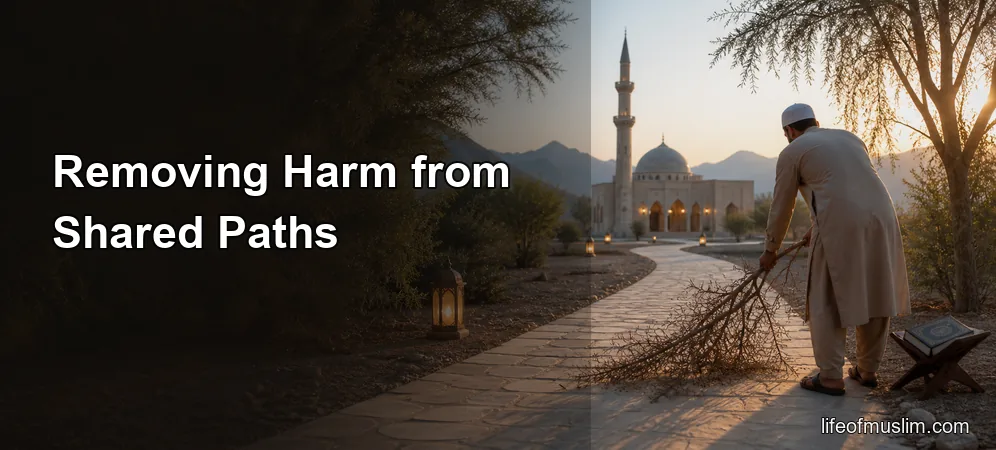
A safe walkway can be protected by a small act: moving a branch, clearing broken glass, drying a spill, or reporting a dangerous obstruction. Islam teaches Muslims to notice harm in shared spaces and take responsible action for the benefit of others.
A Small Action with Great Reward
The Prophet Muhammad (peace be upon him) described a man who found a thorny branch on the path and removed it. Allah appreciated that deed and forgave him.
The account in Sahih al-Bukhari shows that a simple action may carry great value when it prevents injury. The man did not wait for recognition. He saw a danger and removed it.
Keep Shared Paths Free from Trouble
Abu Barza asked the Prophet (peace be upon him) for beneficial guidance. He replied: “Remove the troublesome thing from the paths of the Muslims.”
This teaching develops awareness. A believer should consider who will use the space next: a child, an older person, someone carrying bags, or a person using a wheelchair. Clear access is a form of thoughtful care.
Notice Everyday Hazards
Look for objects that could cause a fall, cut, collision, or blocked entrance. Common examples include loose debris, sharp pieces, trailing cables, spilled liquid, fallen branches, and items left across stairs or walkways.
At home, keep corridors and exits clear. At the mosque, place shoes, bags, and mobility aids where they do not obstruct others. After a gathering, help restore the area instead of assuming someone else will do it.
Remove Harm Safely
Do not create a second danger while solving the first. If an object is light and safe to handle, move it to a proper place. Use gloves or suitable tools for sharp or dirty material. Warn nearby people while cleaning a wet surface.
Do not touch electrical wires, unknown chemicals, suspicious objects, heavy loads, or hazards in moving traffic. Keep others away if possible and contact the responsible building team, emergency service, or local authority. Reporting danger promptly is responsible action.
Respect Necessary Signs and Property
Not every object on a path is rubbish. Safety barriers, accessibility equipment, delivery items, and official signs may serve an important purpose. Check before moving property, and place removed items where they cannot cause further harm.
Make Public Care a Daily Habit
Pause when entering or leaving a shared space. Ask whether the route is clear and whether someone may struggle to pass. Teach children to pick up safe litter, put belongings away, and alert an adult to anything dangerous.
Good community care is consistent and quiet. It includes cleaning after ourselves, reporting broken facilities, and helping without seeking praise. Many small acts can make a mosque, home, school, workplace, or street safer for everyone.
Conclusion
Removing harm from a path combines worshipful intention with practical service. Notice hazards, respond within your ability, and seek qualified help when the risk is beyond you. A clear path is a simple gift to every person who walks after you.
مشترکہ راستوں سے تکلیف دہ چیز ہٹانا
ایک چھوٹا عمل راستے کو محفوظ بنا سکتا ہے: شاخ ہٹانا، ٹوٹا شیشہ صاف کرنا، گرا ہوا پانی خشک کرنا یا خطرناک رکاوٹ کی اطلاع دینا۔ اسلام مسلمانوں کو مشترکہ جگہوں میں تکلیف کو پہچاننے اور دوسروں کے فائدے کے لیے ذمہ دارانہ قدم اٹھانے کی تعلیم دیتا ہے۔
چھوٹا عمل اور بڑا اجر
نبی کریم صلی اللہ علیہ وسلم نے ایک ایسے شخص کا ذکر فرمایا جس نے راستے میں کانٹے دار شاخ دیکھی اور اسے ہٹا دیا۔ اللہ تعالیٰ نے اس کے اس عمل کو قبول فرمایا اور اسے بخش دیا۔
صحیح بخاری کی یہ روایت بتاتی ہے کہ چوٹ سے بچانے والا سادہ عمل بڑی قدر رکھ سکتا ہے۔ اس شخص نے تعریف کا انتظار نہیں کیا۔ اس نے خطرہ دیکھا اور اسے دور کر دیا۔
مشترکہ راستے تکلیف سے پاک رکھیں
حضرت ابو برزہ رضی اللہ عنہ نے نبی کریم صلی اللہ علیہ وسلم سے فائدہ مند رہنمائی مانگی۔ آپ نے فرمایا، مفہوم: مسلمانوں کے راستوں سے تکلیف دہ چیز ہٹا دو۔
یہ تعلیم شعور پیدا کرتی ہے۔ مومن کو سوچنا چاہیے کہ اس جگہ سے اگلا شخص کون گزرے گا: بچہ، بزرگ، سامان اٹھائے ہوئے فرد یا وہ شخص جو وہیل چیئر استعمال کرتا ہے۔ صاف راستہ دوسروں کا خیال رکھنے کی عملی صورت ہے۔
روزمرہ کے خطرات پہچانیں
ایسی چیزوں پر نظر رکھیں جو گرنے، کٹ لگنے، ٹکر یا بند راستے کا سبب بن سکتی ہیں۔ ڈھیلا ملبہ، تیز ٹکڑے، پھیلی تار، گرا ہوا پانی، گری شاخ اور سیڑھی یا راستے میں رکھا سامان عام مثالیں ہیں۔
گھر میں راہ داری اور خروج کے راستے صاف رکھیں۔ مسجد میں جوتے، بیگ اور چلنے میں مدد دینے والے آلات ایسی جگہ رکھیں جہاں دوسروں کا راستہ بند نہ ہو۔ اجتماع کے بعد جگہ درست کرنے میں مدد دیں اور یہ نہ سمجھیں کہ کوئی اور ضرور کرے گا۔
تکلیف کو محفوظ طریقے سے دور کریں
پہلا خطرہ دور کرتے ہوئے دوسرا خطرہ پیدا نہ کریں۔ چیز ہلکی اور سنبھالنے میں محفوظ ہو تو اسے مناسب جگہ منتقل کریں۔ تیز یا گندی چیز کے لیے دستانے یا مناسب آلہ استعمال کریں۔ گیلی سطح صاف کرتے وقت قریب موجود لوگوں کو خبردار کریں۔
بجلی کی تار، نامعلوم کیمیکل، مشکوک چیز، بھاری وزن یا چلتی ٹریفک کے خطرے کو خود نہ چھوئیں۔ ممکن ہو تو دوسروں کو دور رکھیں اور عمارت کے ذمہ دار عملے، ہنگامی خدمت یا مقامی ادارے سے رابطہ کریں۔ خطرے کی فوری اطلاع دینا بھی ذمہ دارانہ عمل ہے۔
ضروری نشانات اور ملکیت کا احترام کریں
راستے میں موجود ہر چیز کچرا نہیں ہوتی۔ حفاظتی رکاوٹ، رسائی کا سامان، ترسیلی سامان اور سرکاری نشان اہم مقصد رکھتے ہیں۔ ملکیت منتقل کرنے سے پہلے تصدیق کریں اور ہٹائی گئی چیز ایسی جگہ رکھیں جہاں مزید نقصان نہ ہو۔
عوامی خیال کو روزانہ کی عادت بنائیں
مشترکہ جگہ میں داخل ہوتے یا نکلتے وقت ایک لمحہ رکیں۔ دیکھیں کہ راستہ صاف ہے اور کسی کو گزرنے میں مشکل تو نہیں ہوگی۔ بچوں کو محفوظ کچرا اٹھانے، اپنا سامان جگہ پر رکھنے اور خطرناک چیز کی اطلاع کسی بڑے کو دینے کی تعلیم دیں۔
اچھی معاشرتی خدمت مسلسل اور خاموش ہوتی ہے۔ اس میں اپنے بعد صفائی، ٹوٹی سہولت کی اطلاع اور تعریف چاہے بغیر مدد کرنا شامل ہے۔ بہت سے چھوٹے عمل مسجد، گھر، اسکول، کام کی جگہ یا سڑک کو سب کے لیے زیادہ محفوظ بنا سکتے ہیں۔
خلاصہ
راستے سے تکلیف ہٹانا عبادت کی نیت کو عملی خدمت سے جوڑتا ہے۔ خطرات پہچانیں، اپنی استطاعت کے اندر قدم اٹھائیں اور زیادہ خطرے میں ماہر مدد حاصل کریں۔ صاف راستہ ہر اس شخص کے لیے سادہ تحفہ ہے جو آپ کے بعد وہاں سے گزرے گا۔
References
Sahih al-Bukhari — Oppressions, Chapter: Removing a Thing from the Way Which Harms the People, Hadith 2472 (Book 46, Hadith 33)
Sahih Muslim — The Book of Virtue, Enjoining Good Manners, and Joining of the Ties of Kinship, Chapter: The Virtue of Removing a Harmful Thing from the Road, Hadith 2618a (Book 45, Hadith 170)