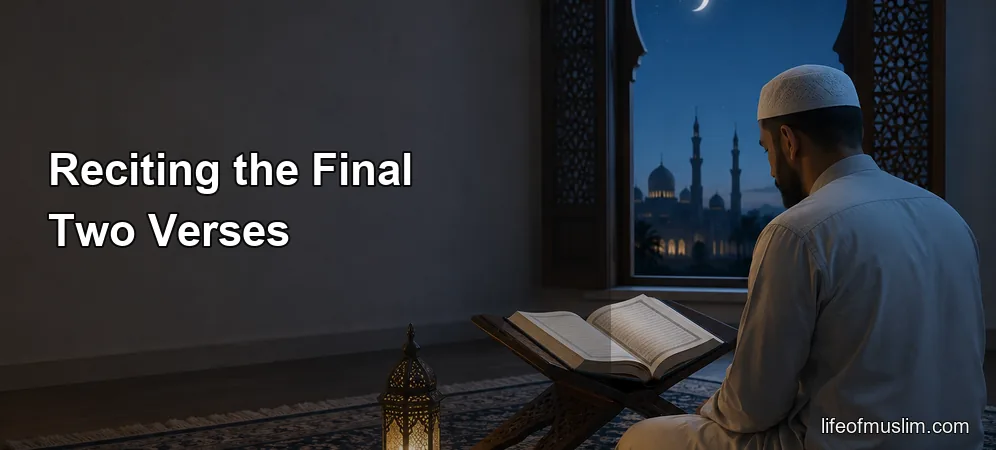
A peaceful night routine can help a Muslim end the day with remembrance rather than distraction. Among the authentic practices connected with the night is reciting the final two verses of Surah Al-Baqarah. These verses affirm faith, obedience, accountability, forgiveness, mercy, and reliance upon Allah, while an authentic hadith describes a special sufficiency for the person who recites them at night.
The Authentic Hadith About Night Recitation
Abu Mas‘ud reported that the Prophet Muhammad ﷺ said: “If somebody recited the last two Verses of Surat Al-Baqara at night, that will be sufficient for him.” The report appears in Sahih al-Bukhari in the Book of Virtues of the Quran.
The wording should be preserved without adding a meaning that the hadith itself does not state. Scholars have discussed the scope of “sufficient,” so a general educational article should not turn one interpretation into a definite claim. The clear action in the hadith is to recite the final two verses during the night.
Know Which Verses to Recite
The final two verses of Surah Al-Baqarah are ayahs 285 and 286. Ayah 285 begins with the Messenger and the believers affirming faith in Allah, His angels, His Books, and His messengers. It includes the response of hearing and obeying, seeking Allah’s forgiveness, and recognising the final return to Him.
Ayah 286 teaches that Allah does not require a soul beyond what it can afford. It includes supplications asking Allah not to punish for forgetfulness or mistakes, not to place unbearable burdens, and to grant pardon, forgiveness, mercy, guardianship, and help.
Recite from the Quran Accurately
Use a reliable printed mushaf or a trusted Quran source. If Arabic reading is still developing, learn gradually from a qualified teacher or accurate recitation. Listening can support pronunciation, but it should not be confused with personally reciting the verses.
Avoid copying the Arabic text from an unverified image or social-media post. Small spelling or vowel errors can be difficult for a learner to recognise. Keeping a dependable copy beside the bed or bookmarked on a device makes the practice easier.
Choose a Consistent Time During the Night
The hadith says “at night” and does not restrict the practice to one minute. A person may connect the recitation with a dependable part of the evening, such as after ‘Isha, after completing household responsibilities, or before sleep.
Choose a time that can be maintained without neglecting an obligation. If the usual routine is disrupted by travel, work, illness, or family needs, recite when a suitable opportunity becomes available during the night.
Recite with Attention to Meaning
Correct recitation is important, and understanding helps the heart engage with what the tongue reads. Notice how the verses move through belief, obedience, forgiveness, responsibility, and dua. Read a reliable translation in a language you understand, while recognising that the Quran itself is recited in Arabic.
Reflection should remain connected to the revealed words. Do not invent secret formulas, guaranteed worldly outcomes, or fixed repetition counts that are not found in the verified sources.
Build the Practice Without Making It Burdensome
Keep the mushaf accessible and learn the two verses in manageable portions. A family may revise them together respectfully, while each person works toward accurate personal recitation. Gentle consistency is more helpful than turning the practice into a source of pressure.
If a night is missed, resume the practice rather than abandoning it through discouragement. The aim is to build a sincere connection with Allah’s words and follow authentic guidance steadily.
Let the Verses Shape the End of the Day
Ayah 285 reminds the believer of faith, obedience, forgiveness, and return to Allah. Ayah 286 combines responsibility with hope and teaches comprehensive supplication. Reciting them at night can therefore close the day with truths that correct pride, fear, carelessness, and despair.
After recitation, avoid rushing immediately into distracting content when possible. Allow a quiet moment for the meanings to settle and make sincere dua to Allah.
Conclusion
Reciting Al-Baqarah 2:285–286 at night is an authentic Prophetic practice supported by Sahih al-Bukhari. Learn the verses accurately, understand their central meanings, choose a dependable time, and keep the practice sincere without attaching unverified promises to it.
ہر رات سورۃ البقرہ کی آخری دو آیات کی تلاوت
پرسکون رات کا معمول مسلمان کو دن کا اختتام غفلت کے بجائے اللہ کی یاد کے ساتھ کرنے میں مدد دیتا ہے۔ رات سے متعلق مستند اعمال میں سورۃ البقرہ کی آخری دو آیات کی تلاوت شامل ہے۔ یہ آیات ایمان، اطاعت، جواب دہی، مغفرت، رحمت اور اللہ پر بھروسے کی تعلیم دیتی ہیں، جبکہ صحیح حدیث رات میں انہیں پڑھنے والے کے لیے ایک خاص کفایت بیان کرتی ہے۔
رات کی تلاوت کے بارے میں صحیح حدیث
حضرت ابو مسعود رضی اللہ عنہ سے روایت ہے کہ نبی کریم ﷺ نے فرمایا کہ جو شخص رات میں سورۃ البقرہ کی آخری دو آیات پڑھے، وہ اس کے لیے کافی ہوں گی۔ یہ روایت صحیح البخاری کی کتاب فضائل القرآن میں موجود ہے۔
حدیث کے الفاظ کو محفوظ رکھنا چاہیے اور ایسا معنی شامل نہیں کرنا چاہیے جو روایت میں بیان نہیں ہوا۔ اہل علم نے کافی ہونے کے دائرے پر گفتگو کی ہے، اس لیے عام تعلیمی مضمون میں کسی ایک تشریح کو قطعی دعویٰ نہیں بنانا چاہیے۔ حدیث میں واضح عمل رات کے دوران آخری دو آیات کی تلاوت ہے۔
جانیں کہ کون سی آیات پڑھنی ہیں
سورۃ البقرہ کی آخری دو آیات 285 اور 286 ہیں۔ آیت 285 رسول اور مومنوں کے اللہ، فرشتوں، کتابوں اور رسولوں پر ایمان کے اقرار سے شروع ہوتی ہے۔ اس میں سننے اور اطاعت کرنے، اللہ سے مغفرت طلب کرنے اور آخری واپسی اسی کی طرف ہونے کا اقرار ہے۔
آیت 286 سکھاتی ہے کہ اللہ کسی جان پر اس کی استطاعت سے زیادہ ذمہ داری نہیں ڈالتا۔ اس میں بھول یا غلطی پر مؤاخذہ نہ کرنے، ناقابل برداشت بوجھ سے بچانے، اور معافی، مغفرت، رحمت، سرپرستی اور مدد کی دعائیں شامل ہیں۔
قرآن سے درست تلاوت کریں
قابل اعتماد مطبوعہ مصحف یا معتبر قرآنی ماخذ استعمال کریں۔ اگر عربی پڑھنا ابھی بہتر ہو رہا ہو تو کسی اہل استاد یا درست تلاوت سے آہستہ آہستہ سیکھیں۔ سننا تلفظ میں مدد دے سکتا ہے، مگر اسے اپنی تلاوت کے برابر نہیں سمجھنا چاہیے۔
غیر مصدقہ تصویر یا سوشل میڈیا پوسٹ سے عربی عبارت نقل کرنے سے بچیں۔ املا یا حرکات کی چھوٹی غلطی سیکھنے والے کے لیے پہچاننا مشکل ہو سکتی ہے۔ قابل اعتماد نسخہ بستر کے پاس رکھنا یا مستند صفحہ آلے میں محفوظ کرنا عمل آسان بناتا ہے۔
رات میں مستقل وقت منتخب کریں
حدیث میں رات کا ذکر ہے اور اس عمل کو کسی ایک لمحے تک محدود نہیں کیا گیا۔ انسان اسے شام کے کسی قابل اعتماد حصے کے ساتھ جوڑ سکتا ہے، مثلاً عشاء کے بعد، گھر کی ذمہ داریاں مکمل کرنے کے بعد یا سونے سے پہلے۔
ایسا وقت چنیں جو کسی فرض کو چھوڑے بغیر برقرار رکھا جا سکے۔ اگر سفر، کام، بیماری یا خاندانی ضرورت سے معمول بدل جائے تو رات میں مناسب موقع ملنے پر تلاوت کریں۔
معنی پر توجہ کے ساتھ پڑھیں
درست تلاوت اہم ہے اور سمجھ دل کو زبان کے پڑھے ہوئے کلام سے جوڑتی ہے۔ غور کریں کہ آیات ایمان، اطاعت، مغفرت، ذمہ داری اور دعا کو کس طرح جمع کرتی ہیں۔ اپنی سمجھ کی زبان میں معتبر ترجمہ پڑھیں، جبکہ یہ پہچانیں کہ قرآن کی تلاوت عربی میں ہوتی ہے۔
غور و فکر نازل شدہ الفاظ سے وابستہ رہنا چاہیے۔ ایسے خفیہ نسخے، یقینی دنیاوی نتائج یا مقررہ تعداد ایجاد نہ کریں جو تصدیق شدہ ماخذ میں موجود نہ ہوں۔
عمل کو بوجھ بنائے بغیر عادت بنائیں
مصحف آسان جگہ پر رکھیں اور دونوں آیات کو قابل عمل حصوں میں سیکھیں۔ خاندان احترام کے ساتھ انہیں مل کر دہرا سکتا ہے، جبکہ ہر شخص اپنی درست تلاوت بہتر کرے۔ نرم مزاجی کے ساتھ مستقل مزاجی اس عمل کو دباؤ بنانے سے زیادہ فائدہ مند ہے۔
اگر کوئی رات رہ جائے تو مایوس ہو کر عادت چھوڑنے کے بجائے دوبارہ آغاز کریں۔ مقصد اللہ کے کلام سے مخلصانہ تعلق اور مستند رہنمائی کی مستقل پیروی ہے۔
آیات کو دن کے اختتام پر اثر انداز ہونے دیں
آیت 285 مومن کو ایمان، اطاعت، مغفرت اور اللہ کی طرف واپسی یاد دلاتی ہے۔ آیت 286 ذمہ داری کو امید کے ساتھ جوڑتی اور جامع دعا سکھاتی ہے۔ رات میں ان کی تلاوت دن کا اختتام ان سچائیوں کے ساتھ کر سکتی ہے جو تکبر، خوف، غفلت اور مایوسی کی اصلاح کرتی ہیں۔
تلاوت کے فوراً بعد جہاں ممکن ہو توجہ بٹانے والے مواد میں نہ کھو جائیں۔ چند پرسکون لمحات معانی کو دل میں اترنے دیں اور اللہ سے مخلصانہ دعا کریں۔
خلاصہ
رات میں سورۃ البقرہ کی آیات 285 اور 286 کی تلاوت ایک مستند نبوی عمل ہے جس کی دلیل صحیح البخاری میں موجود ہے۔ آیات درست سیکھیں، ان کے بنیادی معانی سمجھیں، مناسب وقت مقرر کریں اور غیر مصدقہ وعدے منسوب کیے بغیر اخلاص کے ساتھ عمل جاری رکھیں۔
References
Quran — Surah Al-Baqarah, Ayah 285
Quran — Surah Al-Baqarah, Ayah 286
Sahih al-Bukhari — Virtues of the Quran, Chapter: The Superiority of Surat Al-Baqarah, Hadith 5009 (Book 66, Hadith 31)



![Indeed, The Convulsion Of The [Final] Hour Is A Terrible Thing](https://www.lifeofmuslim.com/wp-content/uploads/2020/08/12_Quran.jpg "Indeed, The Convulsion Of The [Final] Hour Is A Terrible Thing")