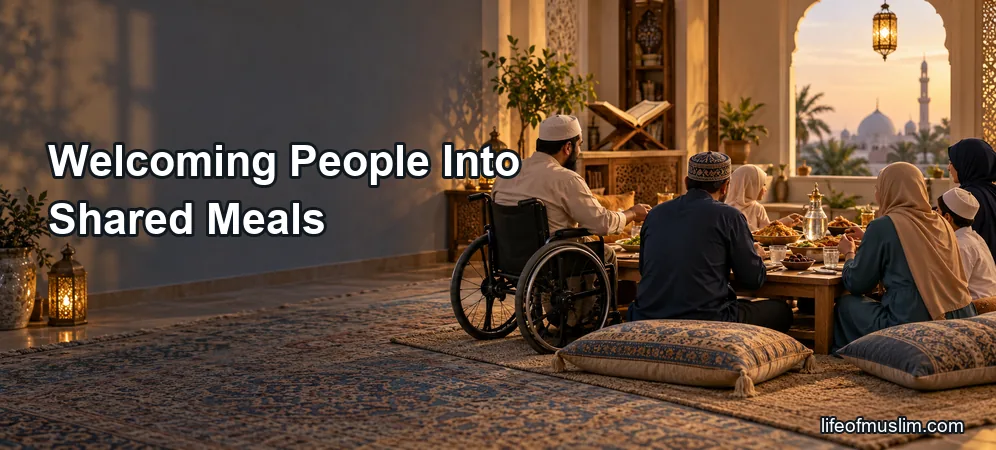
A welcoming Muslim community does more than invite people in words. It notices whether everyone can enter, participate, eat comfortably, and be treated with dignity. Quran 24:61 mentions people who are blind, disabled, or sick while removing restriction around eating, and it permits eating together or separately. The verse then teaches believers to greet one another with peace when entering homes.
Quran 24:61 Removes Social Restriction
Allah says: “There is no restriction on the blind, or the disabled, or the sick.” The verse continues by naming family homes and friends, explaining that there is no blame in eating together or separately, and directing people to exchange a blessed and good greeting of peace when entering houses.
This guidance joins practical ease with respectful belonging. A person should not be made to feel like a burden because of disability, illness, mobility, or the way they need to eat.
Ask About Access Instead of Assuming
Good intentions may still miss a real need. Before a meal, class, family visit, or community gathering, ask privately whether the entrance, seating, lighting, sound, washroom, or serving arrangement needs adjustment. Let the person describe what is useful rather than deciding for them.
Do not demand medical details. A simple question such as “What would make participation easier?” protects privacy while allowing practical preparation.
Make Shared Meals Comfortable and Dignified
Leave enough space for wheelchairs, walking aids, or a companion. Place food and water within comfortable reach, describe dishes when helpful, and keep paths free from bags, shoes, and loose cables. If someone needs to eat separately, earlier, or with assistance, respect that choice without drawing attention to it.
The verse permits eating together or separately. Inclusion therefore does not mean forcing everyone into one arrangement. It means removing shame and making suitable participation possible.
Offer Help Without Taking Away Independence
Ask before moving a wheelchair, taking an arm, carrying an item, or speaking on someone’s behalf. Help that ignores consent can become uncomfortable even when it is well meant. Address the person directly, listen to the answer, and accept a polite refusal.
Children can learn these manners early. Teach them not to stare, mock, imitate, or ask intrusive questions. Encourage natural conversation, shared play, and respectful assistance.
Remember People Who Cannot Attend
Illness, fatigue, transport, or an inaccessible venue may prevent attendance. Inclusion can continue through a prepared meal, a short visit, a phone call, accessible online participation, or arranging suitable transport when possible. Ask what is welcome rather than assuming every person wants the same form of contact.
Begin the Home With Peace
Quran 24:61 closes this guidance with the greeting of peace when entering homes. Salam establishes warmth before food is served or practical help is discussed. Use it sincerely, introduce people who may not know one another, and make sure no guest is left outside the conversation.
Improve Community Planning
Accessibility should not depend on one guest repeatedly asking for basic consideration. Mosques, families, and community groups can review entrances, seating, signs, lighting, sound, and communication methods before events. Invite feedback and correct problems without becoming defensive.
Not every barrier can be removed immediately, but honest planning, clear information, and steady improvement are better than silence. Qualified local guidance may be needed for building safety, medical support, or specialised access.
Conclusion
Quran 24:61 teaches ease around eating, names people who are blind, disabled, or sick, and joins home life with a blessed greeting of peace. Muslims can apply this guidance by asking about access, arranging meals thoughtfully, respecting independence, remembering those unable to attend, teaching children dignified manners, and improving community spaces. True welcome is shown through practical care as well as kind words.
معذوری رکھنے والے افراد کو مشترک کھانوں اور اجتماعی زندگی میں خوش آمدید کہنا
خوش آمدید کہنے والی مسلم برادری صرف الفاظ میں دعوت نہیں دیتی۔ وہ یہ بھی دیکھتی ہے کہ ہر شخص داخل ہوسکے، شریک ہوسکے، آرام سے کھانا کھاسکے اور عزت کے ساتھ پیش آئے۔ قرآن 24:61 نابینا، معذور اور بیمار لوگوں کا ذکر کرتے ہوئے کھانے کے معاملے میں پابندی دور کرتا ہے اور مل کر یا الگ کھانے کی اجازت بیان کرتا ہے۔ پھر آیت گھروں میں داخل ہوتے وقت ایک دوسرے کو سلام کرنے کی تعلیم دیتی ہے۔
قرآن 24:61 معاشرتی تنگی دور کرتا ہے
اللہ تعالیٰ فرماتا ہے کہ نابینا، معذور اور بیمار پر کوئی پابندی نہیں۔ آیت آگے خاندان اور دوستوں کے گھروں کا ذکر کرتی، مل کر یا الگ کھانے میں کوئی حرج نہ ہونے کی وضاحت کرتی اور گھروں میں داخل ہوتے وقت اللہ کی طرف سے بابرکت اور پاکیزہ سلام پیش کرنے کی ہدایت دیتی ہے۔
یہ رہنمائی عملی آسانی کو باعزت تعلق کے ساتھ جوڑتی ہے۔ معذوری، بیماری، چلنے پھرنے کی کیفیت یا کھانے کی مخصوص ضرورت کی وجہ سے کسی کو بوجھ محسوس نہیں کرانا چاہیے۔
اندازہ لگانے کے بجائے رسائی کے بارے میں پوچھیں
اچھی نیت کے باوجود حقیقی ضرورت نظر انداز ہوسکتی ہے۔ کھانے، سبق، خاندانی ملاقات یا اجتماعی پروگرام سے پہلے نجی طور پر پوچھیں کہ داخلے، نشست، روشنی، آواز، غسل خانے یا کھانا پیش کرنے کے انتظام میں تبدیلی درکار ہے یا نہیں۔ خود فیصلہ کرنے کے بجائے متعلقہ شخص کو بتانے دیں کہ کیا چیز مفید ہوگی۔
طبی تفصیلات کا مطالبہ نہ کریں۔ یہ سادہ سوال کہ ”شرکت کو آسان بنانے کے لیے کیا مددگار ہوگا؟“ رازداری بھی محفوظ رکھتا اور عملی تیاری بھی ممکن بناتا ہے۔
مشترک کھانے کو آرام دہ اور باعزت بنائیں
وہیل چیئر، چلنے کے سہارے یا ساتھ آنے والے فرد کے لیے کافی جگہ رکھیں۔ کھانا اور پانی آسان پہنچ میں رکھیں، ضرورت ہو تو کھانوں کی وضاحت کریں اور راستے کو تھیلوں، جوتوں اور ڈھیلی تاروں سے صاف رکھیں۔ کسی کو الگ، پہلے یا مدد کے ساتھ کھانا ہو تو اس انتخاب کا احترام کریں اور بلا ضرورت توجہ نہ دلائیں۔
آیت مل کر یا الگ کھانے کی اجازت دیتی ہے۔ اس لیے شمولیت کا مطلب سب کو ایک ہی انتظام پر مجبور کرنا نہیں۔ اس کا مطلب شرمندگی دور کرنا اور مناسب شرکت ممکن بنانا ہے۔
خود مختاری چھینے بغیر مدد پیش کریں
وہیل چیئر ہلانے، بازو پکڑنے، کوئی چیز اٹھانے یا کسی کی طرف سے بولنے سے پہلے اجازت پوچھیں۔ رضامندی نظر انداز کرنے والی مدد اچھی نیت کے باوجود ناگوار ہوسکتی ہے۔ براہِ راست اسی شخص سے بات کریں، جواب سنیں اور مؤدبانہ انکار قبول کریں۔
بچوں کو یہ آداب شروع سے سکھائے جاسکتے ہیں۔ انہیں گھورنے، مذاق اڑانے، نقل اتارنے یا ذاتی سوال کرنے سے روکیں۔ فطری گفتگو، مشترک سرگرمی اور باعزت مدد کی حوصلہ افزائی کریں۔
ان لوگوں کو یاد رکھیں جو شریک نہیں ہوسکتے
بیماری، تھکن، سواری یا ناقابلِ رسائی جگہ کسی کو آنے سے روک سکتی ہے۔ تیار کھانا پہنچانے، مختصر ملاقات، فون، قابلِ رسائی آن لائن شرکت یا ممکن ہو تو مناسب سواری کے ذریعے تعلق قائم رکھا جاسکتا ہے۔ یہ فرض نہ کریں کہ سب ایک ہی قسم کا رابطہ چاہتے ہیں، بلکہ پوچھیں کہ کیا مناسب ہوگا۔
گھر کی ابتدا سلامتی کے پیغام سے کریں
قرآن 24:61 گھروں میں داخل ہوتے وقت سلام کی ہدایت کے ساتھ اس رہنمائی کو مکمل کرتا ہے۔ کھانا پیش ہونے یا عملی مدد پر گفتگو سے پہلے سلام گرم جوشی پیدا کرتا ہے۔ اسے اخلاص سے کہیں، اجنبی لوگوں کا تعارف کرائیں اور کسی مہمان کو گفتگو سے باہر نہ رہنے دیں۔
اجتماعی منصوبہ بندی بہتر بنائیں
بنیادی سہولت کے لیے ہر مرتبہ ایک مہمان کو درخواست نہ کرنی پڑے۔ مساجد، خاندان اور اجتماعی ادارے پروگرام سے پہلے داخلے، نشست، نشانات، روشنی، آواز اور رابطے کے طریقوں کا جائزہ لے سکتے ہیں۔ رائے طلب کریں اور دفاعی رویہ اپنائے بغیر مسائل درست کریں۔
ہر رکاوٹ فوراً دور نہیں ہوسکتی، مگر ایماندار منصوبہ بندی، واضح معلومات اور مسلسل بہتری خاموشی سے بہتر ہیں۔ عمارت کی حفاظت، طبی مدد یا مخصوص رسائی کے لیے مقامی ماہر رہنمائی درکار ہوسکتی ہے۔
نتیجہ
قرآن 24:61 کھانے میں آسانی کی تعلیم دیتا، نابینا، معذور اور بیمار افراد کا ذکر کرتا اور گھریلو زندگی کو بابرکت سلام کے ساتھ جوڑتا ہے۔ مسلمان رسائی کے بارے میں پوچھ کر، کھانے کا خیال رکھنے والا انتظام کرکے، خود مختاری کا احترام کرکے، غیر حاضر لوگوں کو یاد رکھ کر، بچوں کو باعزت آداب سکھا کر اور اجتماعی جگہوں کو بہتر بنا کر اس رہنمائی پر عمل کرسکتے ہیں۔ حقیقی خوش آمدید مہربان الفاظ کے ساتھ عملی توجہ میں بھی ظاہر ہوتی ہے۔