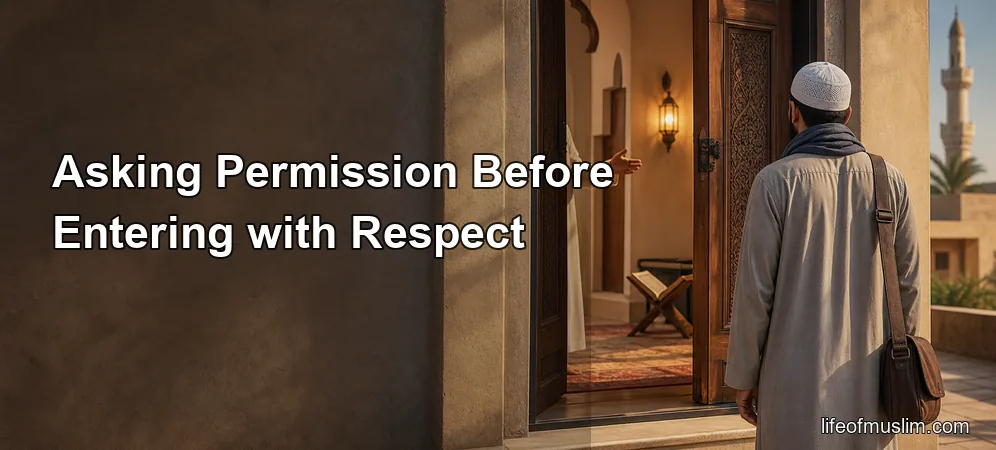
A home is a place of rest, family life, and privacy. Arriving with good intentions does not remove the need for permission. Islamic manners teach visitors to greet, wait respectfully, and accept that the occupants may not be ready to receive anyone.
Ask Permission and Offer Salam
Allah says: “Do not enter any house other than your own until you have asked for permission and greeted its occupants.” (Quran 24:27)
The verse places permission and greeting before entry. Familiarity, family connection, or a previously open door does not automatically make every time suitable. The people inside should be able to decide when and how to welcome a visitor.
Ask Three Times, Then Leave
Abu Musa sought permission to enter three times. When permission was not given, he returned, following the instruction of the Prophet Muhammad (peace be upon him).
Repeated knocking, ringing, or calling can turn a request into pressure. After reasonable attempts, leave calmly. No response is not permission, and returning should not be treated as a personal insult.
Announce Yourself Clearly
Offer salam and identify yourself so the occupants know who is waiting. Stand where you are visible without looking into private rooms or through windows. Give enough time for people to answer, dress appropriately, or prepare the space.
When using an intercom or message, state the purpose briefly. Avoid vague or urgent-sounding language when there is no emergency.
Arrange Visits When Possible
A short message before travelling can prevent inconvenience. Confirm the day, approximate time, and expected duration. If plans change, send an update rather than appearing unexpectedly or leaving people waiting.
An invitation for one time does not create permanent permission. Ask again for a later visit and do not bring additional guests without checking with the host.
Respect Boundaries inside the Home
Permission to enter is not permission to explore every room, open cupboards, photograph the home, or share private details. Stay in the area offered by the host and ask before using belongings or facilities beyond what is clearly available.
Teach children to knock before entering bedrooms, offices, or other private spaces. Adults should model the same respect rather than treating a child’s room or possessions as having no boundaries.
Accept “Not Now” Gracefully
The occupants may be resting, working, caring for someone, or handling a private matter. They do not owe a detailed explanation. Respond kindly, suggest another time if appropriate, and protect them from embarrassment.
In a genuine emergency, seek help through the proper emergency service or responsible authority. Do not label ordinary impatience as an emergency to bypass permission.
Conclusion
Asking permission protects privacy and makes hospitality sincere rather than forced. Greet clearly, wait without looking inside, limit repeated requests, and leave peacefully when entry is not offered. These simple manners build trust between visitors and households.
داخل ہونے سے پہلے احترام کے ساتھ اجازت مانگنا
گھر آرام، خاندانی زندگی اور رازداری کی جگہ ہے۔ اچھی نیت سے آنے پر بھی اجازت کی ضرورت ختم نہیں ہوتی۔ اسلامی آداب مہمان کو سلام کرنے، احترام سے انتظار کرنے اور یہ قبول کرنے کی تعلیم دیتے ہیں کہ گھر والے اس وقت ملاقات کے لیے تیار نہ ہوں۔
اجازت مانگیں اور سلام کریں
اللہ تعالیٰ کا مفہوم ہے: اپنے گھروں کے سوا دوسرے گھروں میں اس وقت تک داخل نہ ہو جب تک اجازت نہ لے لو اور گھر والوں کو سلام نہ کر لو۔ (القرآن 24:27)
یہ آیت داخلے سے پہلے اجازت اور سلام کو رکھتی ہے۔ واقفیت، خاندانی تعلق یا پہلے کھلا ہوا دروازہ ہر وقت کو خود بخود مناسب نہیں بناتا۔ اندر موجود لوگوں کو یہ فیصلہ کرنے کا حق ہے کہ کب اور کیسے مہمان کا استقبال کریں۔
تین بار اجازت مانگیں، پھر واپس جائیں
حضرت ابو موسیٰ رضی اللہ عنہ نے تین مرتبہ داخلے کی اجازت مانگی۔ اجازت نہ ملی تو نبی کریم صلی اللہ علیہ وسلم کی ہدایت کے مطابق واپس چلے گئے۔
بار بار دستک، گھنٹی یا فون درخواست کو دباؤ بنا سکتا ہے۔ مناسب کوشش کے بعد خاموشی سے واپس جائیں۔ جواب نہ ملنا اجازت نہیں اور واپس جانے کو ذاتی توہین نہ سمجھیں۔
اپنی شناخت واضح بتائیں
سلام کریں اور نام بتائیں تاکہ گھر والے جانیں کہ کون منتظر ہے۔ ایسی جگہ کھڑے ہوں جہاں آپ نظر آئیں لیکن نجی کمروں یا کھڑکی سے اندر نہ دیکھیں۔ لوگوں کو جواب دینے، مناسب لباس پہننے یا جگہ تیار کرنے کے لیے کافی وقت دیں۔
انٹرکام یا پیغام میں مقصد مختصر بتائیں۔ حقیقی ہنگامی حالت نہ ہو تو مبہم یا فوری خطرے والا انداز اختیار نہ کریں۔
ممکن ہو تو ملاقات پہلے طے کریں
روانہ ہونے سے پہلے مختصر پیغام تکلیف سے بچا سکتا ہے۔ دن، اندازاً وقت اور متوقع مدت طے کریں۔ منصوبہ بدلے تو اچانک پہنچنے یا دوسروں کو انتظار کرانے کے بجائے اطلاع دیں۔
ایک وقت کی دعوت مستقل اجازت نہیں بنتی۔ اگلی ملاقات کے لیے دوبارہ پوچھیں اور میزبان سے تصدیق کیے بغیر اضافی مہمان ساتھ نہ لائیں۔
گھر کے اندر حدود کا احترام کریں
داخلے کی اجازت ہر کمرہ دیکھنے، الماری کھولنے، گھر کی تصویر لینے یا نجی تفصیل پھیلانے کی اجازت نہیں۔ میزبان کی پیش کردہ جگہ میں رہیں اور ایسی چیز یا سہولت استعمال کرنے سے پہلے پوچھیں جو واضح طور پر عام استعمال کے لیے نہ ہو۔
بچوں کو سکھائیں کہ خواب گاہ، دفتر یا نجی جگہ میں داخل ہونے سے پہلے دستک دیں۔ بڑوں کو بھی یہی احترام دکھانا چاہیے اور بچے کے کمرے یا سامان کو بے حد نہ سمجھیں۔
اس وقت ممکن نہیں کو خوش دلی سے قبول کریں
گھر والے آرام، کام، مریض کی دیکھ بھال یا کسی نجی معاملے میں مصروف ہو سکتے ہیں۔ ان پر تفصیلی وجہ بتانا لازم نہیں۔ نرمی سے جواب دیں، مناسب ہو تو دوسرا وقت تجویز کریں اور انہیں شرمندگی سے بچائیں۔
حقیقی ہنگامی حالت میں متعلقہ ہنگامی خدمت یا ذمہ دار ادارے سے مدد لیں۔ عام بے صبری کو ہنگامی حالت کہہ کر اجازت کی حد نہ توڑیں۔
خلاصہ
اجازت مانگنا رازداری محفوظ کرتا اور مہمان نوازی کو مجبور کرنے کے بجائے مخلص بناتا ہے۔ واضح سلام کریں، اندر دیکھے بغیر انتظار کریں، درخواست محدود رکھیں اور داخلہ نہ ملے تو سکون سے واپس جائیں۔ یہ سادہ آداب مہمان اور گھرانے کے درمیان اعتماد بناتے ہیں۔
References
Quran — Surah An-Nur, 24:27
Sahih al-Bukhari — Asking Permission, Chapter: To Greet and Ask Permission Three Times, Hadith 6245 (Book 79, Hadith 19)