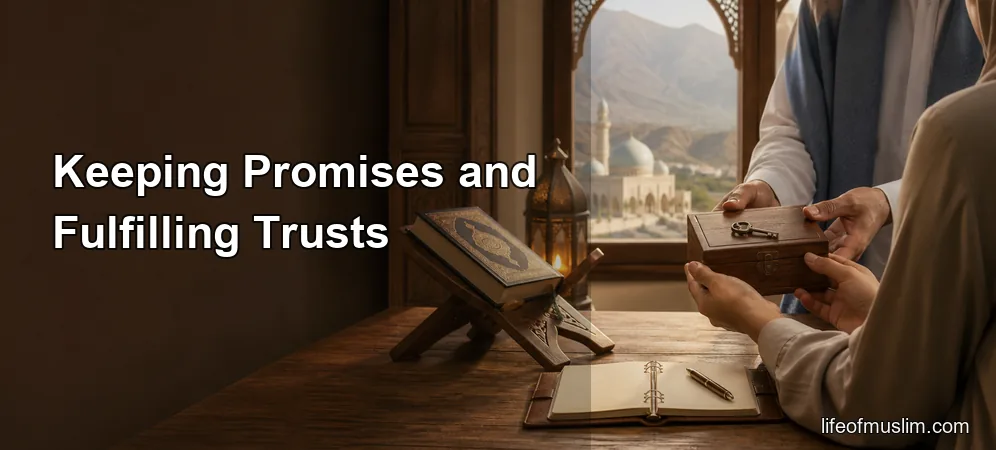
Trust is built through ordinary commitments: returning an item, keeping an appointment, protecting private information, or completing agreed work. Islam treats promises and entrusted responsibilities seriously because other people arrange their lives around what we say and accept.
Pledges Bring Accountability
Allah says: “Honour your pledges, for you will surely be accountable for them.” (Quran 17:34)
A promise should therefore be made with care. Agreeing too quickly may feel polite in the moment, but an unrealistic commitment can later waste another person’s time, money, or confidence.
Breaking Promises and Trusts Is a Serious Warning
The Prophet Muhammad (peace be upon him) described three signs of hypocrisy: lying in speech, repeatedly breaking promises, and proving dishonest when trusted.
This warning should encourage self-correction, not careless accusations against other people. A Muslim should examine personal habits, repent for deliberate dishonesty, and repair the rights affected by a broken commitment.
Make Commitments Clear
Before promising, confirm what is expected, when it is due, and what resources are required. Separate a firm commitment from an intention or possibility. Saying “I will try” is not the same as confirming that a task will be completed.
For important matters, write down dates, amounts, responsibilities, and conditions. Clear records protect relationships by reducing confusion, especially when money, property, work, or several people are involved.
Protect What Has Been Entrusted
An entrusted item should be stored safely, used only with permission, and returned at the agreed time. Do not lend it to someone else or treat access as ownership. If damage or loss occurs, inform the owner honestly and promptly.
Trust also includes information. Protect passwords, documents, private conversations, photographs, and workplace data. Do not share confidential material merely because it is interesting or convenient.
Communicate before a Promise Is Missed
Unexpected circumstances can make a sincere commitment difficult. Contact the affected person as early as possible, explain without inventing excuses, and propose a realistic alternative. Silence often makes the harm greater.
If a promise has already been broken, acknowledge it directly, apologise, return any right or property, and agree on a repair you can actually complete. A new promise should not be used to hide the first failure.
Do Not Promise What Is Wrong or Beyond You
Do not commit to wrongdoing, deception, or concealing harm. A person also should not guarantee an outcome outside their authority. Be honest about limits and seek qualified advice where legal, financial, medical, or safety responsibilities are involved.
Build a Reliable Daily Habit
Use a calendar, reminders, written receipts, and secure storage where helpful. Review open commitments regularly and close them properly. Reliability grows through small repeated actions: arriving when agreed, returning what was borrowed, and giving truthful updates.
Conclusion
Keeping promises and fulfilling trusts are practical signs of dependable character. Commit carefully, record important details, protect entrusted property and information, and communicate early when circumstances change. Trust grows when words and actions remain aligned.
روزمرہ زندگی میں وعدے اور امانت پوری کرنا
اعتماد روزمرہ کی ذمہ داریوں سے بنتا ہے: چیز واپس کرنا، ملاقات کا وقت نبھانا، نجی معلومات محفوظ رکھنا یا طے شدہ کام مکمل کرنا۔ اسلام وعدے اور سپرد کی گئی ذمہ داری کو سنجیدہ قرار دیتا ہے کیونکہ دوسرے لوگ ہماری بات اور قبول کی ہوئی ذمہ داری کے مطابق اپنی زندگی ترتیب دیتے ہیں۔
عہد جواب دہی لاتا ہے
اللہ تعالیٰ کا مفہوم ہے: عہد پورا کرو، یقیناً عہد کے بارے میں پوچھا جائے گا۔ (القرآن 17:34)
اس لیے وعدہ احتیاط سے کرنا چاہیے۔ فوراً رضامندی اس وقت خوش اخلاقی لگ سکتی ہے، لیکن غیر حقیقت پسندانہ ذمہ داری بعد میں دوسرے کا وقت، مال یا اعتماد ضائع کر سکتی ہے۔
وعدہ اور امانت توڑنا سخت تنبیہ ہے
نبی کریم صلی اللہ علیہ وسلم نے نفاق کی تین نشانیاں بیان فرمائیں: بات میں جھوٹ، بار بار وعدہ خلافی اور امانت ملنے پر خیانت۔
یہ تنبیہ دوسروں پر لاپرواہی سے الزام لگانے کے بجائے اپنی اصلاح کی ترغیب دیتی ہے۔ مسلمان کو اپنی عادت دیکھنی، جان بوجھ کر بے ایمانی پر توبہ کرنی اور ٹوٹے وعدے سے متاثر حق کی اصلاح کرنی چاہیے۔
ذمہ داری واضح طے کریں
وعدے سے پہلے معلوم کریں کہ کیا مطلوب ہے، آخری وقت کیا ہے اور کن وسائل کی ضرورت ہوگی۔ پکے وعدے کو ارادے یا امکان سے الگ رکھیں۔ یہ کہنا کہ میں کوشش کروں گا، کام مکمل کرنے کی یقینی رضامندی نہیں۔
اہم معاملے میں تاریخ، رقم، ذمہ داری اور شرط لکھیں۔ واضح ریکارڈ غلط فہمی کم کر کے تعلق محفوظ کرتا ہے، خاص طور پر جب مال، ملکیت، کام یا کئی افراد شامل ہوں۔
سپرد کی گئی چیز محفوظ رکھیں
امانت کو محفوظ جگہ رکھیں، صرف اجازت سے استعمال کریں اور طے شدہ وقت پر واپس کریں۔ اسے کسی اور کو نہ دیں اور رسائی کو ملکیت نہ سمجھیں۔ نقصان یا گمشدگی ہو تو مالک کو فوراً اور سچائی سے بتائیں۔
امانت میں معلومات بھی شامل ہیں۔ پاس ورڈ، دستاویز، نجی گفتگو، تصویر اور کام کی معلومات محفوظ رکھیں۔ خفیہ مواد صرف دلچسپ یا آسان لگنے کی وجہ سے آگے نہ بھیجیں۔
وعدہ پورا نہ ہونے سے پہلے اطلاع دیں
غیر متوقع حالات مخلص وعدہ مشکل بنا سکتے ہیں۔ متاثرہ شخص سے جلد رابطہ کریں، جھوٹا بہانہ بنائے بغیر بات واضح کریں اور حقیقت پسندانہ متبادل پیش کریں۔ خاموشی اکثر نقصان بڑھاتی ہے۔
وعدہ پہلے ہی ٹوٹ گیا ہو تو صاف اعتراف کریں، معذرت کریں، حق یا ملکیت واپس کریں اور ایسی اصلاح طے کریں جو واقعی مکمل کر سکیں۔ نیا وعدہ پہلی ناکامی چھپانے کے لیے استعمال نہ کریں۔
غلط یا استطاعت سے باہر وعدہ نہ کریں
غلط کام، دھوکا یا نقصان چھپانے کا وعدہ نہ کریں۔ ایسا نتیجہ بھی یقینی نہ کہیں جو آپ کے اختیار میں نہیں۔ اپنی حد واضح بتائیں اور قانونی، مالی، طبی یا حفاظتی ذمہ داری میں مستند مشورہ لیں۔
قابل اعتماد روزانہ عادت بنائیں
ضرورت ہو تو کیلنڈر، یاد دہانی، تحریری رسید اور محفوظ جگہ استعمال کریں۔ باقی ذمہ داریوں کا باقاعدہ جائزہ لیں اور انہیں مناسب طور پر مکمل کریں۔ وقت پر پہنچنے، ادھار واپس کرنے اور سچی اطلاع دینے جیسے چھوٹے مسلسل عمل سے اعتبار بنتا ہے۔
خلاصہ
وعدے اور امانت پوری کرنا قابل اعتماد کردار کی عملی علامتیں ہیں۔ سوچ کر ذمہ داری لیں، اہم تفصیل لکھیں، سپرد کی گئی ملکیت اور معلومات محفوظ رکھیں اور حالات بدلیں تو جلد اطلاع دیں۔ جب بات اور عمل ایک ہوں تو اعتماد مضبوط ہوتا ہے۔
References
Quran — Surah Al-Isra, 17:34
Sahih al-Bukhari — Belief, Chapter: The Signs of a Hypocrite, Hadith 33 (Book 2, Hadith 26)