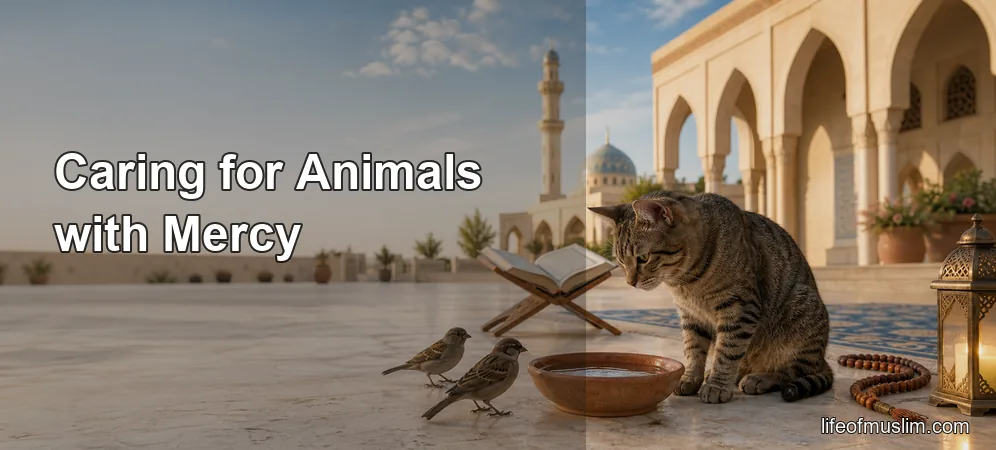
Animals share our homes, streets, farms, and natural surroundings. Islam teaches Muslims to notice their needs and respond with mercy. Kind treatment is not limited to affection; it includes food, water, safe conditions, gentle handling, and responsible decisions.
Animals Are Communities
The Quran says: “All living beings roaming the earth and winged birds soaring in the sky are communities like yourselves.” (Quran 6:38)
This verse invites us to look beyond convenience. Animals live within ordered communities known to Allah. They should not be treated as objects for careless amusement or ignored when their basic needs depend on human action.
A Drink of Water Became a Great Good Deed
Abu Hurairah reported that the Prophet Muhammad (peace be upon him) told of a thirsty man who found a dog suffering from severe thirst. The man returned to a well, carried water in his shoe, and gave the dog a drink. Allah appreciated his deed and forgave him. When the Companions asked about reward for serving animals, the Prophet replied: “Yes, there is a reward for serving any animate.”
The account shows the value of noticing suffering and acting with the means available. The man did not pass by because the animal was unfamiliar or difficult to help. He responded to a clear need.
Provide Food and Water Responsibly
Clean water can be especially important in hot weather. A stable bowl placed in a safe, shaded area may help birds or animals, but it should be washed and refilled regularly. Food should be suitable for the animal and should not create litter, pests, or danger near roads.
Mercy includes thinking about the result of our actions. Feeding without cleanliness or placing an animal in an unsafe location can create new problems. When unsure, seek guidance from a qualified veterinarian or a reputable local animal-welfare service.
Handle Animals Gently and Prevent Harm
Children can be taught to observe animals quietly, avoid chasing them, and ask before touching a pet. Adults should model calm behaviour and stop teasing, rough handling, or neglect. An injured or frightened animal may react defensively, so assistance should be given safely.
Do not approach wildlife in ways that disturb nests, separate young animals from their parents, or damage their habitat. Compassion respects the animal’s nature as well as its immediate comfort.
Pet Ownership Is a Continuing Responsibility
Bringing an animal home requires more than initial enthusiasm. Consider appropriate food, clean shelter, exercise, veterinary care, household safety, and the time needed every day. If these needs cannot be met, it is kinder not to take on the responsibility.
Owners should plan for travel, emergencies, and changes in routine. Abandoning an animal transfers a preventable difficulty to the animal and the wider community.
Make Mercy Part of Ordinary Life
Compassion can appear in simple choices: refilling a clean water bowl, reporting an injured animal to suitable help, driving carefully where animals cross, or teaching a child to be gentle. These actions develop attentiveness and responsibility.
Conclusion
Islamic guidance joins mercy with practical care. The Quran directs us to recognize animals as communities, while the hadith about giving water shows that serving a living creature can be rewarded. By preventing harm and meeting needs responsibly, Muslims can make kindness visible in everyday life.
جانوروں کی دیکھ بھال: رحمت اور ذمہ داری
جانور ہمارے گھروں، گلیوں، کھیتوں اور قدرتی ماحول میں رہتے ہیں۔ اسلام مسلمانوں کو ان کی ضرورت محسوس کرنے اور رحمت کے ساتھ جواب دینے کی تعلیم دیتا ہے۔ اچھا سلوک صرف پیار تک محدود نہیں۔ اس میں خوراک، پانی، محفوظ ماحول، نرمی سے پیش آنا اور ذمہ دارانہ فیصلے شامل ہیں۔
جانور بھی جماعتیں ہیں
قرآن مجید کا مفہوم ہے: زمین پر چلنے والے تمام جانور اور پروں سے اڑنے والے پرندے تمہاری طرح جماعتیں ہیں۔ (القرآن 6:38)
یہ آیت ہمیں صرف اپنی سہولت سے آگے دیکھنے کی دعوت دیتی ہے۔ جانور ان جماعتوں میں رہتے ہیں جنہیں اللہ جانتا ہے۔ انہیں لاپرواہ تفریح کی چیز نہیں سمجھنا چاہیے اور نہ اس وقت نظر انداز کرنا چاہیے جب ان کی بنیادی ضرورت انسانی عمل پر منحصر ہو۔
پانی پلانا ایک عظیم نیک عمل بن گیا
حضرت ابو ہریرہ رضی اللہ عنہ سے روایت ہے کہ نبی کریم صلی اللہ علیہ وسلم نے ایک پیاسے شخص کا واقعہ بیان فرمایا۔ اس نے ایک کتے کو شدید پیاس میں دیکھا، کنویں میں واپس گیا، اپنے جوتے میں پانی لایا اور اسے پلا دیا۔ اللہ نے اس کے عمل کو پسند فرمایا اور اسے بخش دیا۔ صحابہ نے جانوروں کی خدمت پر اجر کے بارے میں پوچھا تو آپ صلی اللہ علیہ وسلم نے فرمایا، مفہوم: ہاں، ہر جاندار کی خدمت میں اجر ہے۔
یہ واقعہ تکلیف کو محسوس کرنے اور دستیاب وسائل سے مدد کرنے کی قدر دکھاتا ہے۔ اس شخص نے جانور کو اجنبی یا مدد کو مشکل سمجھ کر نظر انداز نہیں کیا، بلکہ واضح ضرورت کا جواب دیا۔
خوراک اور پانی ذمہ داری سے دیں
گرم موسم میں صاف پانی خاص طور پر اہم ہو سکتا ہے۔ محفوظ اور سایہ دار جگہ پر مضبوط پیالہ پرندوں یا جانوروں کی مدد کر سکتا ہے، لیکن اسے باقاعدگی سے دھونا اور دوبارہ بھرنا ضروری ہے۔ خوراک جانور کے لیے مناسب ہو اور سڑک کے قریب کچرا، کیڑے یا خطرہ پیدا نہ کرے۔
رحمت میں اپنے عمل کے نتیجے پر غور کرنا بھی شامل ہے۔ صفائی کے بغیر خوراک دینا یا جانور کو غیر محفوظ جگہ جمع کرنا نئی مشکلات پیدا کر سکتا ہے۔ شک کی صورت میں مستند جانوروں کے ڈاکٹر یا قابل اعتماد مقامی ادارے سے رہنمائی لیں۔
نرمی سے پیش آئیں اور نقصان روکیں
بچوں کو سکھایا جا سکتا ہے کہ جانوروں کو خاموشی سے دیکھیں، ان کا پیچھا نہ کریں، اور پالتو جانور کو چھونے سے پہلے اجازت لیں۔ بڑوں کو پرسکون رویہ دکھانا چاہیے اور چھیڑنے، سختی یا غفلت کو روکنا چاہیے۔ زخمی یا خوف زدہ جانور دفاعی ردعمل دے سکتا ہے، اس لیے مدد محفوظ طریقے سے کی جائے۔
جنگلی جانوروں کے قریب ایسے انداز میں نہ جائیں جو گھونسلے خراب کرے، بچوں کو ماں باپ سے جدا کرے، یا ان کے قدرتی مسکن کو نقصان پہنچائے۔ شفقت جانور کی فوری آسانی کے ساتھ اس کی فطرت کا بھی احترام کرتی ہے۔
پالتو جانور مستقل ذمہ داری ہے
کسی جانور کو گھر لانے کے لیے ابتدائی شوق کافی نہیں۔ مناسب خوراک، صاف پناہ، ورزش، طبی دیکھ بھال، گھر کی حفاظت اور روزانہ درکار وقت پر غور کریں۔ اگر یہ ضرورتیں پوری نہیں کی جا سکتیں تو ذمہ داری نہ لینا زیادہ مہربان فیصلہ ہے۔
مالک کو سفر، ہنگامی حالت اور معمول میں تبدیلی کے لیے بھی منصوبہ بنانا چاہیے۔ جانور کو چھوڑ دینا ایک قابل روک مشکل جانور اور پوری آبادی کی طرف منتقل کر دیتا ہے۔
رحمت کو روزمرہ زندگی کا حصہ بنائیں
شفقت سادہ انتخاب میں ظاہر ہو سکتی ہے۔ صاف پانی کا پیالہ بھرنا، زخمی جانور کی مناسب ادارے کو اطلاع دینا، جانوروں کے گزرنے کی جگہ احتیاط سے گاڑی چلانا، یا بچے کو نرمی سکھانا سب مفید اعمال ہیں۔ یہ کام توجہ اور ذمہ داری پیدا کرتے ہیں۔
خلاصہ
اسلامی رہنمائی رحمت کو عملی دیکھ بھال کے ساتھ جوڑتی ہے۔ قرآن ہمیں جانوروں کو جماعتوں کی حیثیت سے پہچاننے کی ہدایت دیتا ہے، جبکہ پانی پلانے والی حدیث دکھاتی ہے کہ کسی جاندار کی خدمت پر اجر مل سکتا ہے۔ نقصان روک کر اور ضروریات ذمہ داری سے پوری کر کے مسلمان روزمرہ زندگی میں مہربانی کو نمایاں کر سکتے ہیں۔
References
Quran — Surah Al-An‘am, 6:38
Sahih al-Bukhari — Distribution of Water, Chapter: The Superiority of Providing Water, Hadith 2363 (Book 42, Hadith 11)







![And We Have Not Sent You, [O Muhammad], Except as a Mercy to the Worlds](https://www.lifeofmuslim.com/wp-content/uploads/2020/08/We2Bhave2Bnot2Bsent2Byou252C2B255BO2BMuhammad255D252C2Bexcept2Bas2Ba2Bmercy2Bto2Bthe2Bworlds.jpg "And We Have Not Sent You, [O Muhammad], Except as a Mercy to the Worlds")