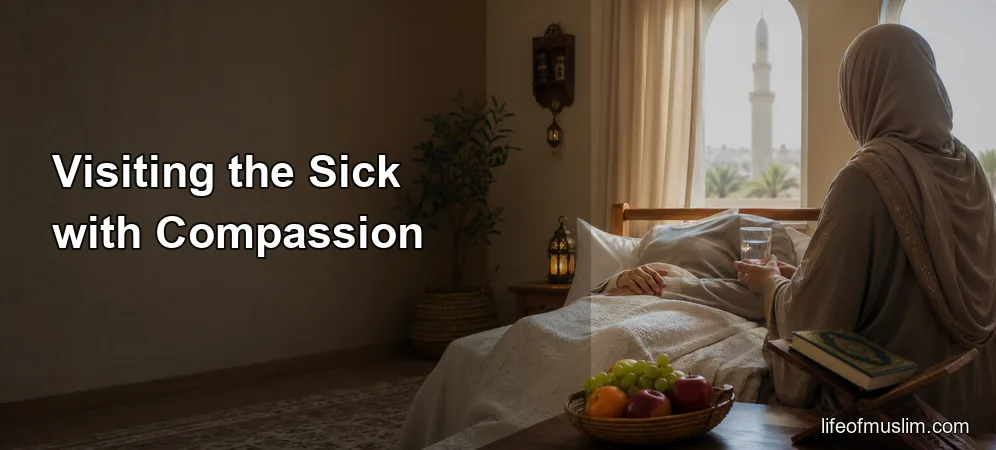
Illness can interrupt routine and leave a person tired, isolated, or uncertain. A thoughtful visit reminds the patient that the community has not forgotten them. Islam gives visiting the sick an honoured place while good manners show how to make the visit genuinely helpful.
Visiting the Sick Is a Muslim’s Right
The Prophet Muhammad (peace be upon him) named visiting the sick among five rights a Muslim has upon other Muslims.
This guidance turns concern into action. A message, call, or visit can strengthen connection, but the patient’s condition and preferences should determine what is suitable.
A Visit with Great Reward
The Prophet (peace be upon him) said: “He who visits the sick is supposed to remain in the fruit garden of Paradise.” He explained this as a place abundant in fruits.
The reward encourages sincere service, not a visit performed for appearance. Give attention to what comforts the patient and protects their dignity.
Ask before Arriving
Contact the patient or caregiver before visiting. Ask about a suitable time, the preferred length, and any health precautions. Do not assume that family closeness removes the need for permission.
If the person is resting, receiving treatment, or avoiding visitors, send a brief kind message instead. Respecting a refusal is part of compassionate care.
Keep the Visit Calm and Considerate
Arrive clean, follow household or hospital rules, and keep your voice gentle. Avoid a long stay unless the patient clearly wants company. Do not crowd the room, bring strong scents, or create extra work for the caregiver.
Listen without demanding medical details. Avoid frightening stories, comparisons, blame, or promises about recovery. Offer hopeful words and make sincere dua without claiming knowledge of an outcome that belongs to Allah.
Offer Practical Help
Ask what would actually be useful. Help may include arranging a meal, collecting medicine, providing transport, caring for children, or completing a necessary errand. Confirm dietary, allergy, and medical restrictions before bringing food.
Do not give medical advice unless you are appropriately qualified and involved in the person’s care. Encourage the patient to follow trusted professional guidance rather than replacing it with unverified remedies.
Protect Privacy and Safety
Do not photograph the patient, share their diagnosis, or post about the visit without clear permission. Health information is private, even when others are concerned.
If you have symptoms of infection or have been asked to take precautions, postpone the visit or use a safer form of contact. Caring for the sick includes avoiding preventable harm.
Remember Them after the Visit
Support often matters after the first days, when attention becomes quieter. Check in respectfully, remember caregivers, and continue practical help within your capacity. A consistent short message may be more comforting than one elaborate visit.
Conclusion
Visiting the sick is an act of faith, compassion, and community responsibility. Seek permission, protect privacy, keep the visit gentle, and offer useful help. When a visit respects the patient’s needs, it can bring companionship without adding burden.
بیمار کی عیادت شفقت اور خیال کے ساتھ
بیماری معمول زندگی روک سکتی اور انسان کو تھکاوٹ، تنہائی یا بے یقینی میں مبتلا کر سکتی ہے۔ بااخلاق عیادت مریض کو یاد دلاتی ہے کہ معاشرہ اسے بھولا نہیں۔ اسلام میں بیمار کی عیادت کو اہم مقام حاصل ہے اور اچھے آداب اس دورے کو واقعی مفید بناتے ہیں۔
بیمار کی عیادت مسلمان کا حق ہے
نبی کریم صلی اللہ علیہ وسلم نے بیمار کی عیادت کو ان پانچ حقوق میں شمار فرمایا جو ایک مسلمان کے دوسرے مسلمانوں پر ہیں۔
یہ رہنمائی فکر کو عمل میں بدلتی ہے۔ پیغام، فون یا ملاقات تعلق مضبوط کر سکتی ہے، لیکن مناسب صورت مریض کی حالت اور پسند کے مطابق ہونی چاہیے۔
عیادت کا بڑا اجر
نبی کریم صلی اللہ علیہ وسلم نے فرمایا، مفہوم: جو بیمار کی عیادت کرتا ہے وہ جنت کے پھلوں کے باغ میں رہتا ہے۔ آپ نے اسے پھلوں سے بھرپور جگہ قرار دیا۔
یہ اجر دکھاوے کے دورے کے بجائے مخلص خدمت کی ترغیب دیتا ہے۔ اس بات پر توجہ دیں کہ مریض کو کیا سکون دیتا اور اس کی عزت محفوظ رکھتا ہے۔
آنے سے پہلے اجازت لیں
عیادت سے پہلے مریض یا دیکھ بھال کرنے والے سے رابطہ کریں۔ مناسب وقت، دورے کی پسندیدہ مدت اور صحت سے متعلق احتیاط پوچھیں۔ قریبی رشتہ اجازت کی ضرورت ختم نہیں کرتا۔
اگر مریض آرام کر رہا ہو، علاج جاری ہو یا ملاقات سے گریز چاہتا ہو تو مختصر مہربان پیغام بھیج دیں۔ انکار کا احترام بھی ہمدردی کا حصہ ہے۔
ملاقات پرسکون اور باخیال رکھیں
صفائی کے ساتھ جائیں، گھر یا ہسپتال کے اصول مانیں اور آواز نرم رکھیں۔ مریض واضح طور پر ساتھ نہ چاہے تو زیادہ دیر نہ بیٹھیں۔ کمرے میں ہجوم، تیز خوشبو یا تیماردار کے لیے اضافی کام پیدا نہ کریں۔
طبی تفصیل مانگے بغیر سنیں۔ خوفناک واقعات، موازنہ، الزام یا صحت یابی کے یقینی وعدوں سے بچیں۔ امید کی بات کریں اور اخلاص سے دعا کریں، لیکن ایسے انجام کا دعویٰ نہ کریں جس کا علم صرف اللہ کے پاس ہے۔
عملی مدد پیش کریں
پوچھیں کہ حقیقت میں کیا مفید ہوگا۔ کھانے کا انتظام، دوا لانا، سواری دینا، بچوں کی دیکھ بھال یا ضروری کام مکمل کرنا مدد کی صورتیں ہو سکتی ہیں۔ کھانا لانے سے پہلے غذا، الرجی اور طبی پابندی کی تصدیق کریں۔
اگر آپ مناسب طور پر مستند اور مریض کی نگہداشت میں شامل نہیں تو طبی مشورہ نہ دیں۔ غیر ثابت علاج سے پیشہ ورانہ رہنمائی بدلنے کے بجائے مریض کو قابل اعتماد ماہر کی ہدایت پر عمل کی ترغیب دیں۔
رازداری اور حفاظت محفوظ رکھیں
واضح اجازت کے بغیر مریض کی تصویر نہ لیں، تشخیص نہ بتائیں اور ملاقات کا ذکر سوشل میڈیا پر نہ کریں۔ دوسرے لوگوں کی فکر کے باوجود صحت کی معلومات نجی رہتی ہیں۔
اگر آپ میں انفیکشن کی علامت ہو یا احتیاط کی ہدایت ملی ہو تو ملاقات ملتوی کریں یا محفوظ رابطہ اپنائیں۔ بیمار کا خیال رکھنے میں قابل پرہیز نقصان سے بچنا بھی شامل ہے۔
ملاقات کے بعد بھی یاد رکھیں
ابتدائی دنوں کے بعد جب توجہ کم ہونے لگے تو مدد زیادہ اہم ہو سکتی ہے۔ احترام سے خیریت پوچھیں، تیمارداروں کو یاد رکھیں اور اپنی استطاعت کے اندر عملی مدد جاری رکھیں۔ مسلسل مختصر پیغام ایک بڑے دورے سے زیادہ تسلی دے سکتا ہے۔
خلاصہ
بیمار کی عیادت ایمان، شفقت اور معاشرتی ذمہ داری کا عمل ہے۔ اجازت لیں، رازداری محفوظ رکھیں، ملاقات نرم رکھیں اور مفید مدد پیش کریں۔ جب عیادت مریض کی ضرورت کا احترام کرے تو یہ بوجھ بڑھائے بغیر ساتھ اور تسلی دے سکتی ہے۔
References
Sahih al-Bukhari — Funerals (Al-Janaa’iz), Chapter: The Order of Following the Funeral Procession, Hadith 1240 (Book 23, Hadith 4)
Sahih Muslim — The Book of Virtue, Enjoining Good Manners, and Joining of the Ties of Kinship, Chapter: The Virtue of Visiting the Sick, Hadith 2568d (Book 45, Hadith 52)