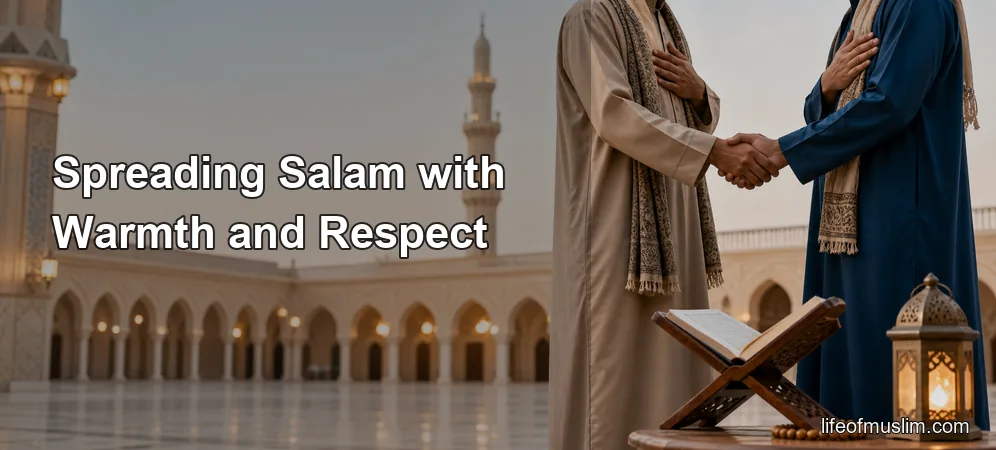
Salam is a brief greeting with deep meaning. It recognises another person, offers peace, and opens a meeting with goodwill. When practised sincerely, it can reduce distance between neighbours, colleagues, relatives, and people meeting for the first time.
Return a Greeting Well
Allah says: “And when you are greeted, respond with a better greeting or at least similarly.” (Quran 4:86)
A greeting deserves attention rather than a careless or delayed response. Answer clearly and warmly when able. The verse teaches that the response should at least match the courtesy offered, while a better reply adds generosity.
Greet Those You Know and Those You Do Not
‘Abdullah ibn ‘Amr reported that a man asked the Prophet Muhammad (peace be upon him) which qualities of Islam are good. The Prophet replied: “To feed the poor and greet those whom you know and those whom you do not know.”
This guidance prevents salam from becoming limited to a familiar circle. A respectful greeting can welcome someone who is new, quiet, elderly, or standing alone.
Make the Greeting Clear and Sincere
Offer salam at a natural volume, with attention directed toward the person or group. Avoid mumbling while walking past or saying the words only as a social performance. The purpose is to communicate peace and recognition.
Body language should support the words. A calm expression, brief pause, and respectful distance can make the greeting comfortable without demanding a long conversation.
Do Not Ignore the Unfamiliar Person
It is easy to greet close friends while overlooking others in the same space. At the mosque, workplace, school, or community gathering, notice people outside your usual group. A simple salam may help them feel included.
Respect personal boundaries and local circumstances. If someone is occupied, speaking, or unable to respond, do not embarrass them. Offer the greeting without turning it into a test of their character.
Use Salam to Begin and Repair Conversation
Starting with peace can soften an ordinary discussion. It is also a useful first step after a minor misunderstanding. The greeting alone does not solve a conflict, but it can show willingness to communicate respectfully.
If an apology or explanation is needed, give it honestly after the greeting. Do not use warm words to avoid addressing real harm.
Teach Salam Through Example
Children learn the greeting by hearing adults use it consistently at home and outside. Encourage them gently, without shaming them for hesitation. Explain when to wait because a person is praying, resting, or engaged in something that should not be interrupted.
In messages and online groups, salam can also set a respectful tone. Keep it sincere and avoid sending repeated greetings merely to demand an immediate reply.
Conclusion
Spreading salam is a simple practice of peace, inclusion, and good manners. Offer it to familiar and unfamiliar Muslims, return greetings well, and respect the situation of the person receiving it. A few sincere words can make everyday spaces warmer and more welcoming.
گرمجوشی اور احترام کے ساتھ سلام پھیلانا
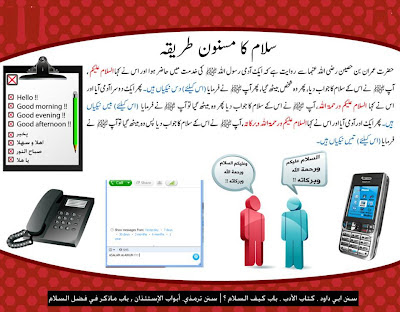
سلام مختصر مگر گہرا معنی رکھنے والی دعا ہے۔ یہ دوسرے شخص کی موجودگی کو تسلیم کرتا، امن پیش کرتا، اور ملاقات کو خیر خواہی سے شروع کرتا ہے۔ اخلاص کے ساتھ یہ پڑوسیوں، ساتھیوں، رشتہ داروں اور پہلی بار ملنے والوں کے درمیان فاصلے کم کر سکتا ہے۔
سلام کا اچھا جواب دیں
اللہ تعالیٰ کا مفہوم ہے: جب تمہیں سلام کیا جائے تو اس سے بہتر جواب دو یا کم از کم ویسا ہی لوٹا دو۔ (القرآن 4:86)
سلام لاپرواہ یا بہت تاخیر والے جواب کے بجائے توجہ کا حق رکھتا ہے۔ ممکن ہو تو واضح اور گرمجوشی سے جواب دیں۔ آیت سکھاتی ہے کہ جواب کم از کم پیش کی گئی خیر خواہی کے برابر ہو، جبکہ بہتر جواب مزید سخاوت دکھاتا ہے۔
جان پہچان اور اجنبی دونوں کو سلام کریں
حضرت عبداللہ بن عمرو رضی اللہ عنہما سے روایت ہے کہ ایک شخص نے نبی کریم صلی اللہ علیہ وسلم سے پوچھا کہ اسلام کی کون سی صفات اچھی ہیں۔ آپ نے فرمایا، مفہوم: محتاج کو کھانا کھلاؤ اور جان پہچان والے اور ناواقف دونوں کو سلام کرو۔
یہ رہنمائی سلام کو صرف واقف حلقے تک محدود ہونے سے روکتی ہے۔ بااحترام سلام نئے، خاموش، بزرگ، یا اکیلے کھڑے شخص کا خیر مقدم کر سکتا ہے۔
سلام واضح اور مخلصانہ ہو
قدرتی آواز میں سلام کریں اور توجہ شخص یا جماعت کی طرف رکھیں۔ گزرتے ہوئے غیر واضح الفاظ کہنے یا صرف سماجی دکھاوے کے لیے سلام کرنے سے بچیں۔ مقصد امن اور پہچان کا اظہار ہے۔
جسمانی انداز بھی الفاظ کی حمایت کرے۔ پرسکون چہرہ، مختصر توقف، اور مناسب فاصلہ سلام کو آرام دہ بنا سکتا ہے، بغیر اس کے کہ طویل گفتگو لازم ہو۔
ناواقف شخص کو نظر انداز نہ کریں
قریبی دوستوں کو سلام کرنا اور اسی جگہ موجود دوسرے لوگوں کو بھول جانا آسان ہے۔ مسجد، کام، اسکول یا اجتماعی پروگرام میں اپنے معمول کے حلقے سے باہر لوگوں کو بھی دیکھیں۔ سادہ سلام انہیں شامل ہونے کا احساس دے سکتا ہے۔
ذاتی حدود اور موقع کا احترام کریں۔ اگر کوئی مصروف، گفتگو میں، یا جواب دینے سے قاصر ہو تو اسے شرمندہ نہ کریں۔ سلام کو اس کے کردار کا امتحان نہ بنائیں۔
گفتگو شروع کرنے اور تعلق بہتر کرنے کے لیے سلام استعمال کریں
امن کے الفاظ سے آغاز عام گفتگو کو نرم بنا سکتا ہے۔ معمولی غلط فہمی کے بعد بھی یہ مفید پہلا قدم ہے۔ سلام اکیلا تنازع حل نہیں کرتا، مگر بااحترام گفتگو کی آمادگی دکھا سکتا ہے۔
اگر معافی یا وضاحت درکار ہو تو سلام کے بعد دیانت سے پیش کریں۔ حقیقی نقصان پر بات سے بچنے کے لیے گرم الفاظ استعمال نہ کریں۔
عملی مثال سے سلام سکھائیں
بچے گھر اور باہر بڑوں کو مستقل سلام کرتے سن کر سیکھتے ہیں۔ جھجک پر شرمندہ کیے بغیر نرمی سے حوصلہ دیں۔ سمجھائیں کہ نماز، آرام یا اہم مصروفیت کے دوران کب انتظار کرنا چاہیے۔
پیغام اور آن لائن جماعت میں بھی سلام بااحترام انداز قائم کر سکتا ہے۔ اسے اخلاص سے کہیں اور فوری جواب کے مطالبے کے لیے بار بار سلام نہ بھیجیں۔
خلاصہ
سلام پھیلانا امن، شمولیت اور اچھے اخلاق کا سادہ عمل ہے۔ جان پہچان اور ناواقف مسلمانوں دونوں کو سلام کریں، اچھا جواب دیں، اور سامنے والے کے حالات کا احترام کریں۔ چند مخلص الفاظ روزمرہ جگہوں کو زیادہ گرمجوش اور خوش آمدید بنا سکتے ہیں۔
References
Quran — Surah An-Nisa, 4:86
Sahih al-Bukhari — Belief, Chapter: To Feed Others Is a Part of Islam, Hadith 12 (Book 2, Hadith 5)