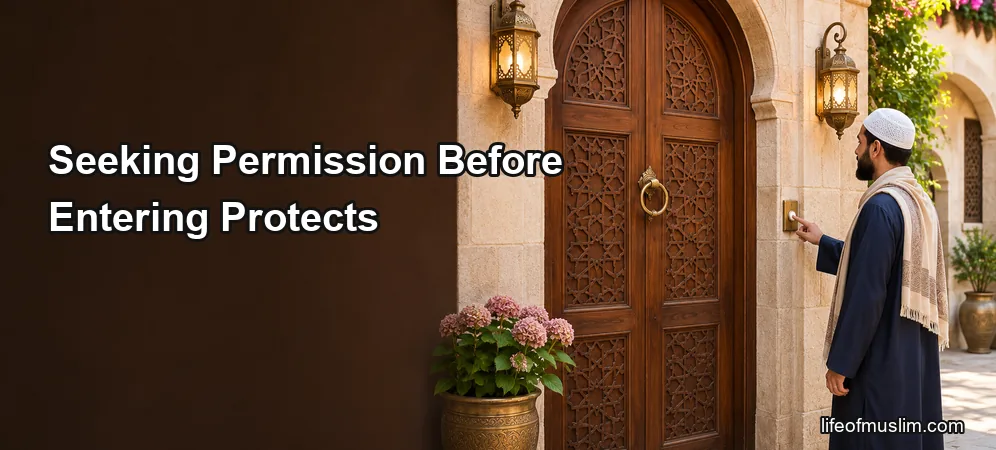
A home is a place of rest, family life, and personal dignity. Islam protects that peace by teaching visitors not to assume that familiarity creates automatic access. Love, friendship, and kinship are strengthened when privacy is respected.
Quran 24:27 tells believers not to enter homes other than their own until they have asked permission and greeted the occupants. The order places courtesy before convenience. A visitor announces their presence, waits for a clear welcome, and allows the household to choose whether the moment is suitable.
Ask Clearly and Wait Calmly
Seeking permission should be simple and unpressured. Knock, ring, call, or send a message in the manner the household normally uses. Then wait at a respectful distance. Do not repeatedly demand attention, peer through windows, test a door, or interpret silence as permission.
If a visit is expected, arrival still does not cancel the need to announce yourself. Plans change, someone may be resting, or the family may need a moment to prepare. Patient waiting turns a small pause into an act of good manners.
Greeting Creates Safety and Warmth
The verse connects permission with greeting. A clear salam identifies the visitor and begins the meeting with peace. Where practical, give your name rather than leaving the occupants to guess who is outside. This is especially helpful at night, in shared buildings, or when children and older people are at home.
Digital access also deserves courtesy. A message, video call, shared location, family group, or smart door camera should not become a way to monitor people without consent. Ask before adding someone to a call, sharing a household image, or forwarding private information.
Respect an Unavailable Household
Permission is meaningful only when the answer can genuinely be no. If there is no response or the household says that the time is unsuitable, leave without resentment. Their decision may have reasons that they are not required to explain.
Hosts should also communicate kindly when possible. A brief message suggesting another time can preserve warmth. Guests and hosts both contribute to peaceful relationships when neither entitlement nor embarrassment controls the exchange.
Teach Children Through Consistent Practice
Children learn privacy by watching adults. Teach them to knock before entering bedrooms, wait for an answer, and keep family conversations confidential. Adults should model the same respect toward children and teenagers according to their age and safety needs.
This habit helps a family understand that boundaries are not rejection. They are a form of care that protects rest, modesty, trust, and emotional safety.
Conclusion
Quran 24:27 turns an ordinary doorway into a place of mindfulness. Asking permission, offering salam, waiting without pressure, and accepting an unsuitable time protect both privacy and affection. When access is requested rather than assumed, homes remain peaceful and relationships become more trustworthy.
رازداری کا آغاز دروازے سے ہوتا ہے
گھر آرام، خاندانی زندگی اور ذاتی عزت کی جگہ ہے۔ اسلام اس سکون کی حفاظت کے لیے سکھاتا ہے کہ قربت خودکار اجازت نہیں بن جاتی۔ محبت، دوستی اور رشتہ داری اس وقت زیادہ مضبوط ہوتی ہیں جب ایک دوسرے کی رازداری کا احترام کیا جائے۔
سورۃ النور کی آیت 27 اہل ایمان کو حکم دیتی ہے کہ اپنے گھروں کے سوا دوسرے گھروں میں اجازت لیے اور اہل خانہ کو سلام کیے بغیر داخل نہ ہوں۔ یہ ترتیب سہولت سے پہلے ادب رکھتی ہے۔ آنے والا اپنی موجودگی ظاہر کرتا، واضح استقبال کا انتظار کرتا اور گھر والوں کو یہ طے کرنے دیتا ہے کہ وقت مناسب ہے یا نہیں۔
واضح اجازت مانگیں اور سکون سے انتظار کریں
اجازت مانگنے کا طریقہ سادہ اور دباؤ سے پاک ہونا چاہیے۔ گھر کے معمول کے مطابق دستک دیں، گھنٹی بجائیں، فون کریں یا پیغام بھیجیں، پھر مناسب فاصلے پر انتظار کریں۔ بار بار توجہ کا مطالبہ نہ کریں، کھڑکی سے نہ جھانکیں، دروازہ آزمانے کی کوشش نہ کریں اور خاموشی کو اجازت نہ سمجھیں۔
اگر ملاقات پہلے سے طے ہو تب بھی پہنچنے کی اطلاع دینا ضروری ہے۔ منصوبہ بدل سکتا ہے، کوئی آرام کر رہا ہو سکتا ہے یا گھر والوں کو تیاری کے لیے کچھ وقت چاہیے۔ صبر سے انتظار کرنا ایک چھوٹے وقفے کو اچھے اخلاق میں بدل دیتا ہے۔
سلام تحفظ اور اپنائیت پیدا کرتا ہے
آیت اجازت کے ساتھ سلام کو بھی جوڑتی ہے۔ واضح سلام آنے والے کی شناخت اور ملاقات کا آغاز امن سے کرتا ہے۔ جہاں ممکن ہو اپنا نام بھی بتائیں تاکہ گھر والوں کو اندازہ نہ لگانا پڑے کہ باہر کون ہے۔ رات، مشترکہ عمارت یا بچوں اور بزرگوں والے گھر میں یہ خاص طور پر مفید ہے۔
ڈیجیٹل رسائی میں بھی یہی ادب ضروری ہے۔ پیغام، ویڈیو کال، مشترکہ مقام، خاندانی گروپ یا سمارٹ دروازہ لوگوں کو ان کی رضا کے بغیر دیکھنے کا ذریعہ نہ بنے۔ کسی کو کال میں شامل کرنے، گھر کی تصویر بانٹنے یا نجی معلومات آگے بھیجنے سے پہلے اجازت لیں۔
گھر والوں کی عدم دستیابی کا احترام کریں
اجازت اسی وقت حقیقی ہوتی ہے جب جواب انکار بھی ہو سکتا ہو۔ اگر جواب نہ آئے یا گھر والے کہیں کہ وقت مناسب نہیں تو ناراضی کے بغیر واپس چلے جائیں۔ ان کے پاس ایسی وجوہ ہو سکتی ہیں جن کی وضاحت کرنا ان پر لازم نہیں۔
میزبان بھی ممکن ہو تو نرمی سے اطلاع دے۔ دوسرے وقت کی مختصر تجویز تعلق کی گرمجوشی قائم رکھ سکتی ہے۔ مہمان اور میزبان دونوں اس وقت پُرامن رشتہ بناتے ہیں جب نہ حق جتانا گفتگو پر غالب ہو اور نہ غیر ضروری شرمندگی۔
بچوں کو مستقل عمل سے سکھائیں
بچے بڑوں کو دیکھ کر رازداری سیکھتے ہیں۔ انہیں سکھائیں کہ کمرے میں داخل ہونے سے پہلے دستک دیں، جواب کا انتظار کریں اور گھر کی نجی گفتگو محفوظ رکھیں۔ بالغ افراد بھی عمر اور حفاظتی ضرورت کے مطابق بچوں اور نوجوانوں کے ساتھ یہی احترام دکھائیں۔
یہ عادت خاندان کو سمجھاتی ہے کہ حدود رد کرنا نہیں بلکہ خیال رکھنے کی ایک صورت ہیں۔ ان سے آرام، پردہ، اعتماد اور جذباتی تحفظ قائم رہتا ہے۔
خلاصہ
سورۃ النور کی آیت 27 عام دروازے کو شعور کی جگہ بنا دیتی ہے۔ اجازت مانگنا، سلام کرنا، دباؤ کے بغیر انتظار کرنا اور نامناسب وقت کو قبول کرنا رازداری اور محبت دونوں کی حفاظت کرتے ہیں۔ جب رسائی فرض کرنے کے بجائے مانگی جائے تو گھر پُرسکون اور تعلقات زیادہ قابل اعتماد رہتے ہیں۔