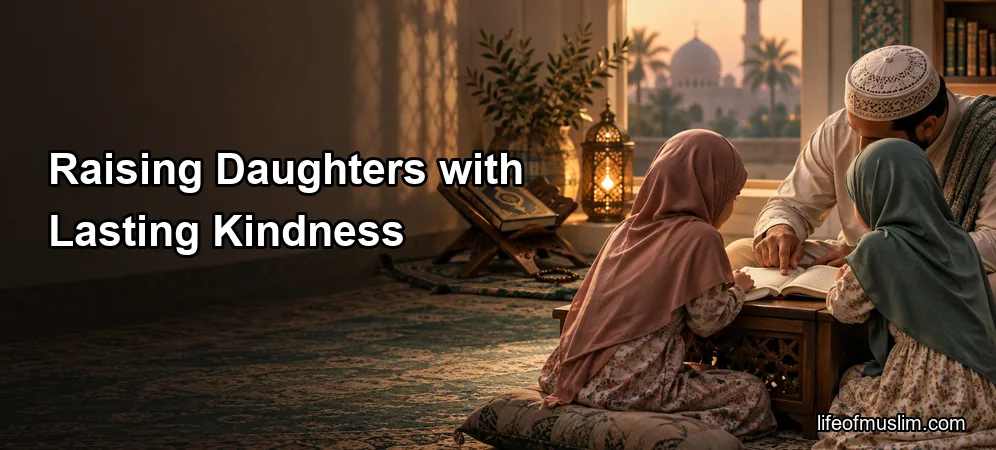
Raising daughters is a trust that requires more than providing food and shelter. Children need kindness that continues as they grow, respectful listening, sound education, protection, and dependable care. A Prophetic teaching gives great honour to a father who treats his daughters well throughout the years they remain with him.
A Prophetic Promise for Kind Care
Ibn Abbas reported that the Messenger of Allah ﷺ said: “There is no man whose two daughters reach the age of puberty and he treats them kindly for the time they are together, but they will gain him admittance to Paradise.” (Sunan Ibn Majah 3670)
The hadith emphasizes continuing kindness, not a single generous moment. Care remains important as daughters mature, develop opinions, face new responsibilities, and prepare for adult life.
Let Kindness Grow with Their Age
A young child may need hands-on help, while an older daughter may need patient conversation, trustworthy advice, and appropriate independence. Good care changes with age without withdrawing affection or responsibility.
Notice each daughter’s temperament, strengths, and concerns. Avoid assuming that the same approach will suit every child. Fair care can respond to different needs while preserving equal dignity and love.
Speak with Respect and Listen Carefully
Kindness is heard in the tone used at home. Correct mistakes without humiliation, sarcasm, or comparisons. Give a daughter time to explain what happened before reaching a judgment.
Listening does not require approving every request. A parent can set clear boundaries while explaining the reason and protecting the child’s dignity. Respectful firmness builds trust more effectively than unpredictable anger.
Support Beneficial Learning
Help daughters gain sound Islamic knowledge, useful education, practical skills, and confidence to make responsible decisions. Ask about their learning, provide appropriate resources, and recognize sincere effort rather than praising results alone.
Education also includes character. Model honesty, prayer, responsibility, mercy, and respectful disagreement. Children learn family values most deeply when those values are visible in adults.
Protect Without Controlling
Parents should take safety seriously, know the people and environments affecting their children, and respond promptly to genuine concerns. Protection should be guided by responsibility rather than suspicion or public embarrassment.
As daughters mature, include them in age-appropriate decisions. Teach them how to recognize risk, ask for help, protect privacy, and seek qualified guidance. Wise protection prepares a child to act responsibly instead of leaving her unable to decide.
Provide Consistent Emotional and Practical Care
Dependable care includes keeping promises, spending within ability, making time for conversation, and being present during difficulty. Do not make affection depend on grades, appearance, obedience in optional matters, or comparison with siblings.
If a parent makes a mistake, a sincere apology teaches accountability. A safe family is not one without errors; it is one where harm is acknowledged and repaired.
Conclusion
Sunan Ibn Majah 3670 honours sustained kindness toward daughters and connects it with entry into Paradise. Treat daughters well as they grow, listen respectfully, support beneficial learning, protect wisely, and remain dependable. Patient care given consistently can strengthen faith, confidence, and trust throughout family life.
بیٹیوں کی مستقل نرمی، احترام اور صبر سے پرورش
بیٹیوں کی پرورش ایسی امانت ہے جو صرف خوراک اور رہائش سے زیادہ چاہتی ہے۔ بچوں کو عمر کے ساتھ جاری رہنے والی نرمی، احترام سے سننا، اچھی تعلیم، حفاظت اور قابلِ اعتماد دیکھ بھال درکار ہوتی ہے۔ ایک نبوی تعلیم اس باپ کے لیے بڑی فضیلت بیان کرتی ہے جو اپنی بیٹیوں کے ساتھ ان کے ساتھ رہنے کے تمام برسوں میں اچھا سلوک کرتا ہے۔
اچھی دیکھ بھال کے لیے نبوی وعدہ
حضرت ابن عباس رضی اللہ عنہما سے روایت ہے کہ رسول اللہ ﷺ نے فرمایا: جس شخص کی دو بیٹیاں بلوغت کو پہنچیں اور وہ ان کے ساتھ رہنے کے دوران ان سے اچھا سلوک کرے تو وہ دونوں اسے جنت میں داخل کرائیں گی۔ (سنن ابن ماجہ 3670)
حدیث ایک موقع کی سخاوت کے بجائے مسلسل حسنِ سلوک پر زور دیتی ہے۔ بیٹیاں بڑی ہوں، اپنی رائے قائم کریں، نئی ذمہ داریوں کا سامنا کریں اور بالغ زندگی کی تیاری کریں تو بھی دیکھ بھال اہم رہتی ہے۔
نرمی کو عمر کے ساتھ بڑھنے دیں
چھوٹے بچے کو عملی مدد درکار ہو سکتی ہے، جبکہ بڑی بیٹی کو صبر والی گفتگو، قابلِ اعتماد مشورہ اور مناسب خود مختاری کی ضرورت ہو سکتی ہے۔ اچھی دیکھ بھال عمر کے ساتھ طریقہ بدلتی ہے مگر محبت اور ذمہ داری واپس نہیں لیتی۔
ہر بیٹی کی طبیعت، خوبیوں اور فکروں کو سمجھیں۔ یہ فرض نہ کریں کہ ایک ہی طریقہ ہر بچے کے لیے مناسب ہوگا۔ منصفانہ دیکھ بھال برابر عزت اور محبت محفوظ رکھتے ہوئے مختلف ضرورتوں کا جواب دے سکتی ہے۔
احترام سے بات کریں اور غور سے سنیں
نرمی گھر کے لہجے میں سنائی دیتی ہے۔ غلطی کی اصلاح ذلت، طنز یا موازنہ کے بغیر کریں۔ فیصلہ کرنے سے پہلے بیٹی کو واقعہ سمجھانے کا وقت دیں۔
سننے کا مطلب ہر درخواست قبول کرنا نہیں۔ والدین واضح حدود رکھ سکتے ہیں مگر وجہ بتائیں اور بچے کی عزت محفوظ رکھیں۔ احترام والی مضبوطی غیر متوقع غصے سے بہتر اعتماد بناتی ہے۔
فائدہ مند تعلیم کی حمایت کریں
بیٹیوں کو درست اسلامی علم، مفید تعلیم، عملی مہارت اور ذمہ دار فیصلوں کا اعتماد حاصل کرنے میں مدد دیں۔ ان کی تعلیم کے بارے میں پوچھیں، مناسب وسائل مہیا کریں اور صرف نتیجے کے بجائے مخلص کوشش کی قدر کریں۔
تعلیم میں کردار بھی شامل ہے۔ سچائی، نماز، ذمہ داری، رحم اور احترام والے اختلاف کی مثال بنیں۔ بچے خاندانی اقدار اس وقت زیادہ گہرائی سے سیکھتے ہیں جب وہ بڑوں میں نظر آئیں۔
حفاظت کریں مگر قابو نہ پائیں
والدین حفاظت کو سنجیدگی سے لیں، بچوں پر اثر ڈالنے والے لوگوں اور ماحول کو جانیں اور حقیقی تشویش پر بروقت عمل کریں۔ حفاظت ذمہ داری سے ہونی چاہیے، شک یا سب کے سامنے شرمندگی سے نہیں۔
بیٹیاں بڑی ہوں تو انہیں عمر کے مطابق فیصلوں میں شامل کریں۔ خطرہ پہچاننے، مدد مانگنے، رازداری محفوظ رکھنے اور اہل رہنمائی حاصل کرنے کا طریقہ سکھائیں۔ حکمت والی حفاظت بچے کو ذمہ دار عمل کے لیے تیار کرتی ہے، فیصلہ کرنے سے محروم نہیں کرتی۔
جذباتی اور عملی دیکھ بھال جاری رکھیں
قابلِ اعتماد دیکھ بھال میں وعدہ پورا کرنا، استطاعت کے مطابق خرچ، گفتگو کے لیے وقت اور مشکل میں موجودگی شامل ہے۔ محبت کو نمبر، شکل، اختیاری معاملات میں اطاعت یا بہن بھائیوں سے موازنے پر منحصر نہ کریں۔
والد یا والدہ سے غلطی ہو تو مخلص معذرت ذمہ داری سکھاتی ہے۔ محفوظ خاندان وہ نہیں جہاں غلطی کبھی نہ ہو، بلکہ وہ ہے جہاں نقصان تسلیم اور درست کیا جائے۔
خلاصہ
سنن ابن ماجہ 3670 بیٹیوں کے ساتھ مسلسل نرمی کو بڑی فضیلت دیتی اور اسے جنت میں داخلے سے جوڑتی ہے۔ بیٹیوں کی عمر بڑھنے کے ساتھ اچھا سلوک کریں، احترام سے سنیں، فائدہ مند تعلیم کی حمایت کریں، حکمت سے حفاظت کریں اور قابلِ اعتماد رہیں۔ صبر سے دی گئی مستقل دیکھ بھال خاندانی زندگی میں ایمان، اعتماد اور بھروسے کو مضبوط کر سکتی ہے۔
References
Sunan Ibn Majah — Book 33 (Etiquette), Chapter 3, Hadith 14; Reference 3670



![Tell Your Wives, Daughters & Women of the Believers to Bring Down Over Themselves [part] of their Outer Garments](https://www.lifeofmuslim.com/wp-content/uploads/2020/08/Surat2BAl-Ahzab2B59.jpg "Tell Your Wives, Daughters & Women of the Believers to Bring Down Over Themselves [part] of their Outer Garments")