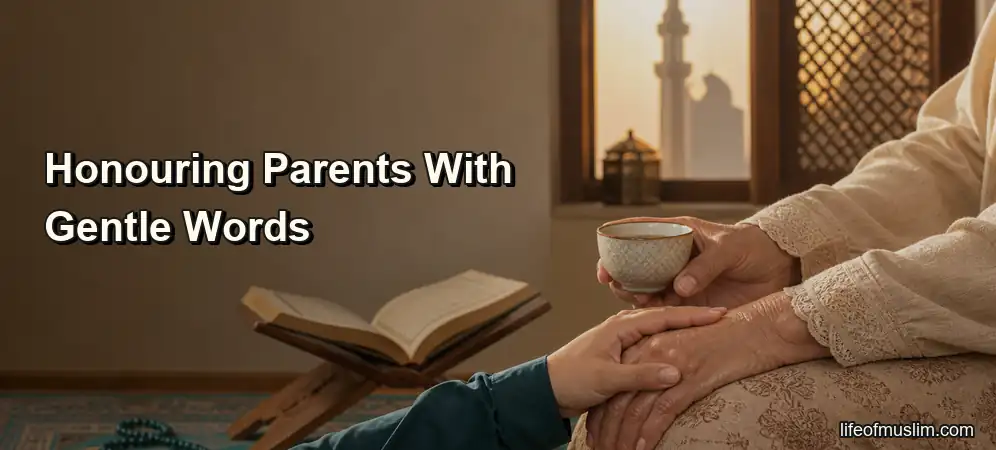
Respect for parents is expressed through ordinary choices: how we speak, how patiently we listen, whether we notice their needs, and how consistently we offer help. Grand gestures may be memorable, but gentle words and dependable daily care often reveal our character more clearly.
As parents grow older, tasks may take longer and conversations may be repeated. These moments call for calmness, dignity, and mercy. The Islamic guidance on parents reaches beyond avoiding obvious harm; it teaches a high standard of respectful companionship.
Speak to Parents with Respect
“And honour your parents. If one or both of them reach old age in your care, never say to them even ‘ugh,’ nor yell at them. Rather, address them respectfully.”
In Surah Al-Isra 17:23, Allah places respectful treatment of parents immediately after the command to worship Him alone. The verse pays attention even to a small expression of irritation. It then directs believers toward respectful speech, especially when parents reach old age.
Gentle speech includes the words we choose, our tone, and the patience to let a parent finish speaking. A correct point can still be delivered badly; honour requires both truthfulness and good manners.
Give Parents Your Best Companionship
Abu Hurairah reported that a man asked the Messenger of Allah ﷺ who was most entitled to his best companionship. The Prophet ﷺ replied, “Your mother” three times, and then said, “Your father.”
This hadith emphasizes the exceptional care owed to mothers while affirming the father’s right to good companionship. Companionship is active: it includes presence, attention, service, and concern rather than respect in words alone.
Practical Ways to Offer Daily Care
Check in consistently. A short, attentive conversation can be more valuable than an occasional long visit made without focus.
Listen without rushing. Put distractions aside and allow parents time to explain what they need.
Help before being asked repeatedly. Notice household tasks, transport needs, appointments, shopping, or technology that may have become difficult.
Protect their dignity. Offer assistance privately and respectfully rather than making them feel incapable or burdensome.
Choose gentle words during disagreement. Lower the voice, avoid sarcasm, and return to the conversation calmly if emotions rise.
Care Requires Patience
Age, illness, tiredness, or worry can affect how a parent communicates. Patience does not mean ignoring every difficulty; it means responding without humiliation or cruelty. When a practical concern needs discussion, choose an appropriate time and speak in a way that preserves respect.
Conclusion
Honouring parents is a daily pattern, not a single event. Respectful speech, patient listening, regular contact, and thoughtful service turn love into visible action. Begin with one concrete step today: make a call, complete a task, listen carefully, or offer a gentle word without waiting to be asked.
والدین کی عزت روزمرہ کے رویّے سے ظاہر ہوتی ہے
والدین کا احترام عام فیصلوں سے ظاہر ہوتا ہے: ہم ان سے کس طرح بات کرتے ہیں، کتنے صبر سے سنتے ہیں، ان کی ضرورت کو پہچانتے ہیں یا نہیں، اور کتنی باقاعدگی سے مدد پیش کرتے ہیں۔ بڑے کام یادگار ہو سکتے ہیں، لیکن نرم الفاظ اور قابلِ اعتماد روزانہ خدمت اکثر ہمارے کردار کو زیادہ واضح کرتی ہے۔
جب والدین عمر رسیدہ ہوتے ہیں تو بعض کاموں میں زیادہ وقت لگ سکتا ہے اور گفتگو دہرائی جا سکتی ہے۔ ایسے لمحات سکون، وقار اور رحمت کا تقاضا کرتے ہیں۔ اسلام کی تعلیم صرف واضح تکلیف سے بچنے تک محدود نہیں بلکہ والدین کے ساتھ باعزت رفاقت کا بلند معیار پیش کرتی ہے۔
والدین سے احترام کے ساتھ بات کریں
مفہوم: “والدین کے ساتھ حسنِ سلوک کرو۔ اگر ان میں سے ایک یا دونوں تمہارے پاس بڑھاپے کو پہنچ جائیں تو انہیں اُف تک نہ کہو، نہ انہیں جھڑکو، بلکہ ان سے ادب کے ساتھ بات کرو۔”
سورۃ الاسراء 17:23 میں اللہ تعالیٰ نے اپنی عبادت کے حکم کے فوراً بعد والدین کے ساتھ حسنِ سلوک کا ذکر فرمایا ہے۔ آیت ناراضی کے ایک معمولی اظہار تک سے روکتی اور خاص طور پر بڑھاپے میں باادب گفتگو کی ہدایت دیتی ہے۔
نرم گفتگو میں الفاظ، لہجہ اور والدین کو اپنی بات مکمل کرنے کا وقت دینا شامل ہے۔ صحیح بات بھی غلط انداز میں کہی جا سکتی ہے؛ عزت کا تقاضا ہے کہ سچائی کے ساتھ اچھا اخلاق بھی ہو۔
والدین کو بہترین رفاقت دیں
حضرت ابو ہریرہ رضی اللہ عنہ سے روایت ہے کہ ایک شخص نے رسول اللہ ﷺ سے پوچھا کہ میرے بہترین حسنِ سلوک کا سب سے زیادہ حق دار کون ہے؟ نبی ﷺ نے تین مرتبہ فرمایا: “تمہاری ماں”، پھر فرمایا: “تمہارا باپ۔”
یہ حدیث ماں کے غیر معمولی حقِ خدمت پر زور دیتی ہے اور باپ کے ساتھ بہترین رفاقت کے حق کو بھی واضح کرتی ہے۔ رفاقت ایک عملی رویّہ ہے جس میں موجودگی، توجہ، خدمت اور فکر شامل ہیں، صرف احترام کے الفاظ نہیں۔
روزانہ خدمت کے عملی طریقے
• باقاعدگی سے خیریت پوچھیں۔ توجہ کے ساتھ مختصر گفتگو کبھی کبھار کی بے توجہ طویل ملاقات سے زیادہ قیمتی ہو سکتی ہے۔
• جلدی کیے بغیر سنیں۔ توجہ ہٹانے والی چیزیں ایک طرف رکھیں اور والدین کو اپنی ضرورت بیان کرنے کا وقت دیں۔
• بار بار کہنے سے پہلے مدد کریں۔ گھر کے کام، آمدورفت، ملاقات کے اوقات، خریداری یا ٹیکنالوجی سے متعلق مشکل کو خود محسوس کریں۔
• ان کے وقار کی حفاظت کریں۔ مدد اس انداز سے پیش کریں کہ انہیں بے بس یا بوجھ محسوس نہ ہو۔
• اختلاف میں نرم الفاظ چنیں۔ آواز پست رکھیں، طنز سے بچیں اور جذبات بڑھ جائیں تو سکون کے بعد بات کریں۔
خدمت صبر چاہتی ہے
عمر، بیماری، تھکن یا پریشانی والدین کے اندازِ گفتگو پر اثر ڈال سکتی ہے۔ صبر کا مطلب ہر مشکل کو نظر انداز کرنا نہیں، بلکہ توہین اور سختی کے بغیر جواب دینا ہے۔ جب کسی عملی مسئلے پر بات ضروری ہو تو مناسب وقت منتخب کریں اور احترام برقرار رکھنے والا انداز اپنائیں۔
خلاصہ
والدین کی عزت ایک روزانہ معمول ہے، صرف ایک موقع کا کام نہیں۔ باادب گفتگو، صبر سے سننا، باقاعدہ رابطہ اور سوچ سمجھ کر خدمت محبت کو عملی صورت دیتے ہیں۔ آج ایک واضح قدم اٹھائیں: فون کریں، کوئی کام مکمل کریں، پوری توجہ سے سنیں یا کہے بغیر نرم بات پیش کریں۔
References
Quran — Surah Al-Isra, 17:23
Sahih al-Bukhari — Book 78, Chapter 2, Hadith 5971 (in-book Hadith 2)