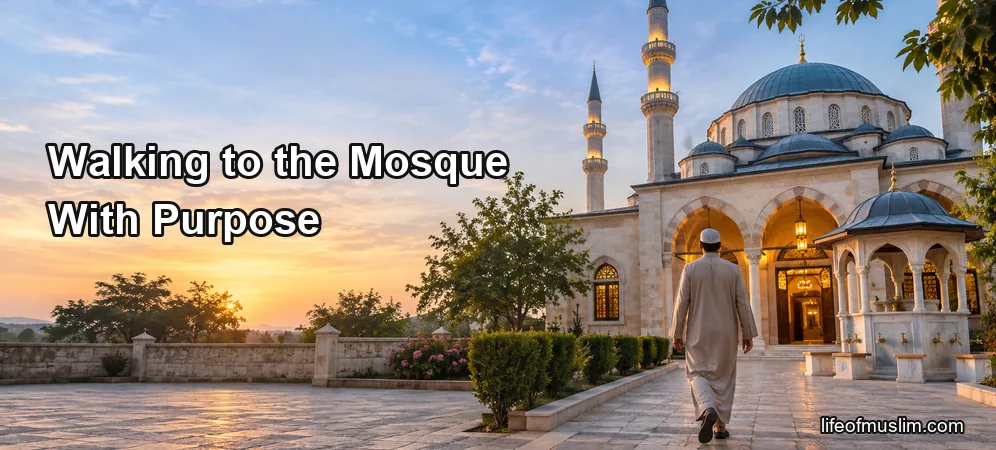
Walking to an obligatory prayer can look like an ordinary part of the day. Sahih Muslim 666 shows that sincere preparation and each step toward a house of Allah carry spiritual meaning: sins are removed and a person’s status is raised.
Every Step Can Carry Reward
Abu Huraira reported that the Messenger of Allah, peace and blessings be upon him, described a person who purifies himself at home and walks to a house of Allah to perform an obligatory prayer. Of the person’s two steps, one removes a sin and the other raises a degree.
The hadith connects three clear actions: purification at home, walking to the mosque, and intending an obligatory prayer. It transforms the journey from empty movement into worship directed toward Allah.
Begin Before Leaving Home
Preparation for congregational prayer begins before the mosque door. Make wudu carefully, wear clean and suitable clothing, and leave with enough time to walk calmly. Rushing at the last moment can disturb attention and create unnecessary risk.
Renew the intention quietly. The goal is not to be seen walking to the mosque or to count achievements with pride. The believer goes to fulfil an obligation, join the worshippers, and seek Allah’s acceptance.
Walk With Calmness and Consideration
Use a safe route, observe traffic rules, and avoid blocking neighbours, driveways, or pavements. Keep the voice and phone quiet near homes, especially at Fajr and Isha. A journey to worship should not become a source of disturbance or harm.
Walk at a steady pace that suits your health. The reward described in the hadith does not require careless speed or unnecessary hardship. If walking is unsafe or medically difficult, use an appropriate means of transport and continue seeking reward through sincere obedience.
Let the Journey Prepare the Heart
Use the walk to move away from distraction. Avoid arguments, gossip, and aimless scrolling. Remember Allah, review the prayer you are about to perform, and ask for forgiveness. Arriving with a settled mind can help a person stand in prayer with greater attention.
If you meet others, greet them warmly without turning the path into loud social activity. The mosque journey can strengthen brotherhood while preserving the calm and dignity of worship.
Respect Different Circumstances
Not everyone lives within a safe walking distance of a mosque. Age, disability, illness, weather, work duties, caring responsibilities, and local safety conditions differ. Do not use this hadith to shame people whose circumstances are not visible to you.
Encourage accessible entrances, safe paths, considerate parking, and practical help for those who need it. The spirit of mosque attendance includes making worship easier for the community rather than creating judgment.
Carry the Lesson Beyond the Walk
The hadith teaches that small repeated actions can have great value when joined to purification, obligation, and sincere purpose. Apply this lesson after returning home. Guard the prayer’s effect by speaking honestly, respecting rights, and avoiding the sins from which you asked to be cleansed.
On days when motivation feels low, focus on the next faithful step: make wudu, prepare calmly, leave safely, and continue toward the prayer. Consistency grows through manageable acts.
Conclusion
Sahih Muslim 666 gives hope to every sincere step toward an obligatory prayer at the mosque. Prepare at home, walk with purpose and safety, protect neighbours from disturbance, and let the journey settle the heart. What appears ordinary can become a path of forgiveness and raised rank by Allah’s mercy.
مقصد اور امید کے ساتھ مسجد کی طرف چلنا
فرض نماز کے لیے مسجد تک پیدل جانا روزمرہ کا ایک عام کام دکھائی دے سکتا ہے۔ صحیح مسلم 666 بتاتی ہے کہ خلوص کے ساتھ تیاری اور اللہ کے گھر کی طرف ہر قدم روحانی معنی رکھتا ہے: گناہ مٹتے ہیں اور درجات بلند ہوتے ہیں۔
ہر قدم اجر کا سبب بن سکتا ہے
ابو ہریرہ رضی اللہ عنہ سے روایت ہے کہ رسول اللہ صلی اللہ علیہ وسلم نے اس شخص کا ذکر فرمایا جو اپنے گھر میں پاکی حاصل کرے اور اللہ کے گھروں میں سے کسی گھر کی طرف فرض نماز ادا کرنے کے لیے چلے۔ اس کے دو قدموں میں سے ایک گناہ مٹاتا ہے اور دوسرا درجہ بلند کرتا ہے۔
حدیث تین واضح اعمال کو جوڑتی ہے: گھر میں طہارت، مسجد کی طرف پیدل چلنا، اور فرض نماز کی نیت۔ اس طرح سفر محض حرکت نہیں رہتا بلکہ اللہ کے لیے عبادت بن جاتا ہے۔
گھر سے نکلنے سے پہلے آغاز کریں
جماعت کی نماز کی تیاری مسجد کے دروازے سے پہلے شروع ہوتی ہے۔ وضو احتیاط سے کریں، صاف اور مناسب لباس پہنیں، اور اتنا وقت لے کر نکلیں کہ سکون سے چل سکیں۔ آخری وقت میں جلدی توجہ کو متاثر اور غیر ضروری خطرہ پیدا کر سکتی ہے۔
خاموشی سے نیت تازہ کریں۔ مقصد یہ نہ ہو کہ لوگ مسجد جاتے ہوئے دیکھیں یا انسان فخر سے اپنے اعمال گنے۔ مومن فرض ادا کرنے، نمازیوں کے ساتھ شامل ہونے اور اللہ کی قبولیت مانگنے کے لیے جاتا ہے۔
سکون اور دوسروں کے خیال کے ساتھ چلیں
محفوظ راستہ اختیار کریں، ٹریفک قوانین کی پابندی کریں، اور پڑوسیوں کے راستے، گاڑیوں کے داخلی مقامات یا فٹ پاتھ بند نہ کریں۔ خاص طور پر فجر اور عشاء کے وقت گھروں کے قریب آواز اور فون کو خاموش رکھیں۔ عبادت کا سفر کسی کے لیے تکلیف یا نقصان کا سبب نہ بنے۔
اپنی صحت کے مطابق معتدل رفتار سے چلیں۔ حدیث میں بیان کردہ اجر کے لیے بے احتیاط رفتار یا غیر ضروری مشقت لازم نہیں۔ اگر پیدل چلنا غیر محفوظ یا طبی طور پر مشکل ہو تو مناسب سواری استعمال کریں اور خلوص کے ساتھ اطاعت سے اجر کی امید رکھیں۔
سفر سے دل کو نماز کے لیے تیار کریں
راستے کو غفلت سے نکلنے کا ذریعہ بنائیں۔ جھگڑے، غیبت اور بے مقصد فون دیکھنے سے بچیں۔ اللہ کو یاد کریں، آنے والی نماز کا خیال رکھیں اور مغفرت مانگیں۔ پُرسکون ذہن کے ساتھ پہنچنا نماز میں زیادہ توجہ کے لیے مددگار ہو سکتا ہے۔
راستے میں ملنے والوں کو اچھے انداز سے سلام کریں لیکن سفر کو بلند آواز کی مجلس نہ بنائیں۔ مسجد کا راستہ عبادت کے سکون اور وقار کے ساتھ بھائی چارہ بھی مضبوط کر سکتا ہے۔
مختلف حالات کا احترام کریں
ہر شخص ایسی جگہ نہیں رہتا جہاں مسجد محفوظ پیدل فاصلے پر ہو۔ عمر، معذوری، بیماری، موسم، کام کی ذمہ داریاں، کسی کی دیکھ بھال اور مقامی حفاظت کے حالات مختلف ہوتے ہیں۔ اس حدیث کو ایسے لوگوں کو شرمندہ کرنے کے لیے استعمال نہ کریں جن کے حالات آپ کو معلوم نہیں۔
آسان داخلی راستوں، محفوظ گزرگاہوں، ذمہ دارانہ پارکنگ اور ضرورت مند افراد کے لیے عملی مدد کی حوصلہ افزائی کریں۔ مسجد حاضری کی روح میں برادری کے لیے عبادت آسان بنانا شامل ہے، لوگوں پر فیصلہ لگانا نہیں۔
چلنے کے بعد بھی سبق باقی رکھیں
حدیث سکھاتی ہے کہ طہارت، فرض اور خالص مقصد کے ساتھ جڑے چھوٹے اور بار بار ہونے والے اعمال بڑی قدر رکھتے ہیں۔ گھر واپس آنے کے بعد بھی اس سبق پر عمل کریں۔ سچ بول کر، حقوق کا احترام کر کے اور ان گناہوں سے بچ کر نماز کے اثر کی حفاظت کریں جن سے پاکی کی امید رکھتے ہیں۔
جس دن ہمت کم محسوس ہو اس دن اگلے وفادار قدم پر توجہ دیں: وضو کریں، سکون سے تیار ہوں، محفوظ انداز سے نکلیں، اور نماز کی طرف بڑھتے رہیں۔ پابندی چھوٹے قابلِ عمل کاموں سے بنتی ہے۔
نتیجہ
صحیح مسلم 666 مسجد میں فرض نماز کی طرف اٹھنے والے ہر مخلص قدم کے لیے امید دیتی ہے۔ گھر میں تیاری کریں، مقصد اور حفاظت کے ساتھ چلیں، پڑوسیوں کو تکلیف سے بچائیں، اور سفر کو دل کے سکون کا ذریعہ بنائیں۔ اللہ کی رحمت سے ایک بظاہر عام کام مغفرت اور بلندیِ درجات کا راستہ بن سکتا ہے۔
References
Sahih Muslim – Book 5: The Book of Mosques and Places of Prayer – Chapter 51: Walking to prayer erases sins and raises one in status – Hadith 666 (Book 5, Hadith 354)