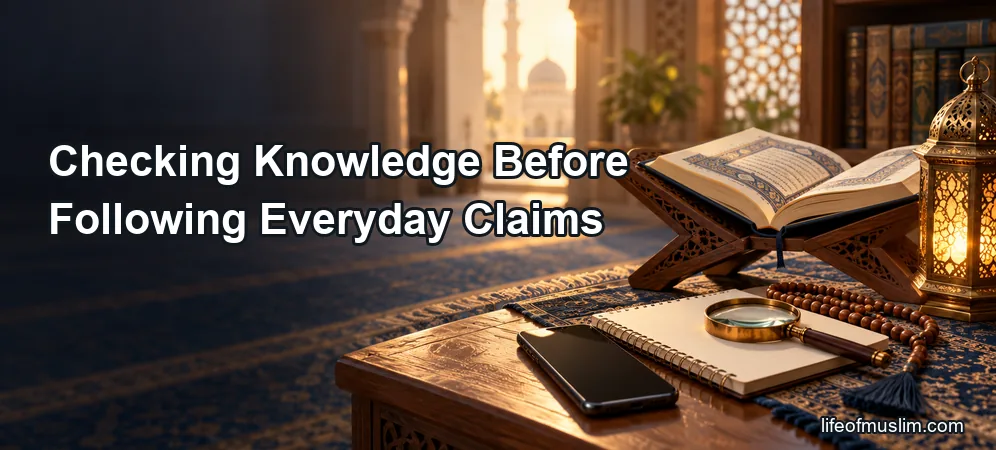
Information reaches us quickly through conversations, messages, videos, and social media. A claim may sound convincing because it is repeated often, spoken confidently, or shared by someone we trust. Islamic guidance teaches a more careful habit: do not follow what has not been established with knowledge.
A Quranic Rule for Responsible Knowledge
Allah says: “Do not follow what you have no sure knowledge of. Indeed, all will be called to account for their hearing, sight, and intellect.” (Quran 17:36)
This verse connects knowledge with responsibility. What we listen to, what we watch, and what we accept in our hearts are not insignificant. A believer should not allow speed, curiosity, or group pressure to replace honest verification.
Following Is More Than Believing
Following an unverified claim can include repeating it, forwarding it, judging another person by it, or making a decision upon it. Even when we add words such as “I am not sure,” sharing a harmful allegation may still give it a wider audience. Carefulness begins before the send button is pressed.
The verse does not discourage learning or asking questions. It teaches us to distinguish confirmed knowledge from assumption. Saying “I do not know” can be a sign of honesty, while pretending to know can mislead both ourselves and others.
Pause Before You Accept or Share
When a claim matters, identify where it came from. Read the original statement rather than relying only on a screenshot or shortened quotation. Consider whether important context is missing. If the matter concerns religion, health, finances, reputation, or family decisions, consult a qualified and trustworthy person instead of guessing.
Emotional reactions deserve special care. Anger, fear, and excitement can make weak information feel urgent. A short pause allows the mind to separate evidence from emotion. It also protects us from apologising later for words that should never have been spread.
Use Hearing, Sight, and Intellect With Gratitude
Hearing and sight bring information to us, while the intellect helps us examine it. These gifts should work together. Listening carefully, reading beyond a headline, comparing reliable evidence, and noticing uncertainty are practical forms of responsibility.
This approach also improves everyday relationships. We become slower to assume bad motives, less willing to pass on gossip, and more prepared to ask respectful questions. Verification is not cold suspicion; it is a way of protecting truth and people’s dignity.
Make Careful Knowledge a Daily Habit
Before sharing, ask whether the claim is true, whether its source is clear, and whether passing it on is beneficial. If the evidence is weak, leave it. If correction is needed, correct gently and accurately. If certainty is unavailable, speak with appropriate caution or remain silent.
Conclusion
Quran 17:36 gives a lasting standard for an age of constant information. Do not build belief, speech, or judgment on what has not been established. By pausing, checking original sources, consulting qualified people, and admitting uncertainty, we use Allah’s gifts of hearing, sight, and intellect more faithfully.
دعویٰ ماننے، پھیلانے یا فیصلہ کرنے سے پہلے علم کی تحقیق
گفتگو، پیغامات، ویڈیوز اور سوشل میڈیا کے ذریعے معلومات بہت تیزی سے ہم تک پہنچتی ہیں۔ کوئی بات اس لیے درست محسوس ہو سکتی ہے کہ اسے بار بار دہرایا گیا ہو، پورے اعتماد سے کہا گیا ہو، یا کسی ایسے شخص نے شیئر کیا ہو جس پر ہم بھروسا کرتے ہیں۔ اسلامی رہنمائی ہمیں زیادہ محتاط عادت سکھاتی ہے: جس بات کا پختہ علم نہ ہو اس کی پیروی نہ کریں۔
ذمہ دار علم کے لیے قرآنی اصول
اللہ تعالیٰ فرماتا ہے: ”کسی ایسی چیز کے پیچھے نہ لگو جس کا تمہیں علم نہ ہو، یقیناً آنکھ، کان اور دل سب ہی کی باز پرس ہونی ہے۔“ (القرآن 17:36)
یہ آیت علم کو ذمہ داری کے ساتھ جوڑتی ہے۔ ہم کیا سنتے ہیں، کیا دیکھتے ہیں، اور اپنے دل میں کس بات کو قبول کرتے ہیں، یہ معمولی امور نہیں۔ مومن کو رفتار، تجسس یا لوگوں کے دباؤ کو دیانت دارانہ تحقیق کا بدل نہیں بنانا چاہیے۔
پیروی صرف یقین کرنے کا نام نہیں
کسی غیر مصدقہ دعوے کی پیروی میں اسے دہرانا، آگے بھیجنا، اس کی بنیاد پر کسی شخص کے بارے میں فیصلہ کرنا، یا کوئی اہم قدم اٹھانا بھی شامل ہو سکتا ہے۔ اگر ہم یہ کہہ بھی دیں کہ ”مجھے یقین نہیں“ تو نقصان دہ الزام شیئر کرنے سے وہ مزید لوگوں تک پہنچ سکتا ہے۔ احتیاط بھیجنے کا بٹن دبانے سے پہلے شروع ہوتی ہے۔
یہ آیت سیکھنے یا سوال کرنے سے نہیں روکتی۔ یہ ہمیں ثابت شدہ علم اور گمان کے درمیان فرق کرنا سکھاتی ہے۔ ”مجھے معلوم نہیں“ کہنا دیانت داری کی علامت ہو سکتا ہے، جبکہ علم کا دکھاوا خود ہمیں اور دوسروں کو گمراہ کر سکتا ہے۔
قبول یا شیئر کرنے سے پہلے رکیں
جب کوئی دعویٰ اہم ہو تو اس کا اصل ماخذ تلاش کریں۔ صرف اسکرین شاٹ یا مختصر اقتباس پر انحصار کرنے کے بجائے اصل بیان پڑھیں۔ دیکھیں کہ کہیں ضروری سیاق و سباق تو غائب نہیں۔ اگر معاملہ دین، صحت، مالیات، عزت یا خاندان کے فیصلوں سے متعلق ہو تو اندازہ لگانے کے بجائے کسی قابل اور قابل اعتماد شخص سے رجوع کریں۔
جذباتی ردعمل میں خاص احتیاط کی ضرورت ہوتی ہے۔ غصہ، خوف اور جوش کمزور معلومات کو فوری اور اہم محسوس کرا سکتے ہیں۔ تھوڑا سا توقف ذہن کو دلیل اور جذبات میں فرق کرنے کا موقع دیتا ہے۔ یہ ہمیں بعد میں ان الفاظ پر معافی مانگنے سے بھی بچاتا ہے جنہیں کبھی پھیلانا ہی نہیں چاہیے تھا۔
سماعت، بصارت اور عقل کو شکر کے ساتھ استعمال کریں
کان اور آنکھ معلومات ہم تک پہنچاتے ہیں، جبکہ عقل ان کا جائزہ لینے میں مدد دیتی ہے۔ ان نعمتوں کو مل کر کام کرنا چاہیے۔ توجہ سے سننا، سرخی سے آگے پڑھنا، معتبر شواہد کا موازنہ کرنا اور غیر یقینی بات کو پہچاننا ذمہ داری کی عملی صورتیں ہیں۔
یہ طرز عمل روزمرہ تعلقات کو بھی بہتر بناتا ہے۔ ہم دوسروں کی نیت کے بارے میں جلد بدگمان نہیں ہوتے، غیبت یا افواہ آگے بڑھانے سے بچتے ہیں، اور ادب سے سوال کرنے کے لیے تیار رہتے ہیں۔ تحقیق سرد مہری یا ہر ایک پر شک کرنا نہیں؛ یہ سچائی اور لوگوں کی عزت کی حفاظت کا طریقہ ہے۔
محتاط علم کو روزانہ کی عادت بنائیں
کسی بات کو شیئر کرنے سے پہلے سوچیں کہ کیا یہ درست ہے، کیا اس کا ماخذ واضح ہے، اور کیا اسے آگے پہنچانا فائدہ مند ہے۔ اگر دلیل کمزور ہو تو اسے چھوڑ دیں۔ اگر اصلاح ضروری ہو تو نرمی اور درستگی کے ساتھ کریں۔ اگر یقین ممکن نہ ہو تو مناسب احتیاط سے بات کریں یا خاموش رہیں۔
نتیجہ
سورۃ الاسراء کی آیت 36 مسلسل معلومات کے اس دور کے لیے ایک دائمی معیار دیتی ہے۔ اپنے یقین، گفتگو یا فیصلے کو ایسی بات پر قائم نہ کریں جو ثابت نہ ہو۔ توقف، اصل ماخذ کی تحقیق، اہل لوگوں سے مشورہ اور اپنی لاعلمی کا اعتراف ہمیں سماعت، بصارت اور عقل کی نعمتوں کو زیادہ وفاداری سے استعمال کرنا سکھاتا ہے۔