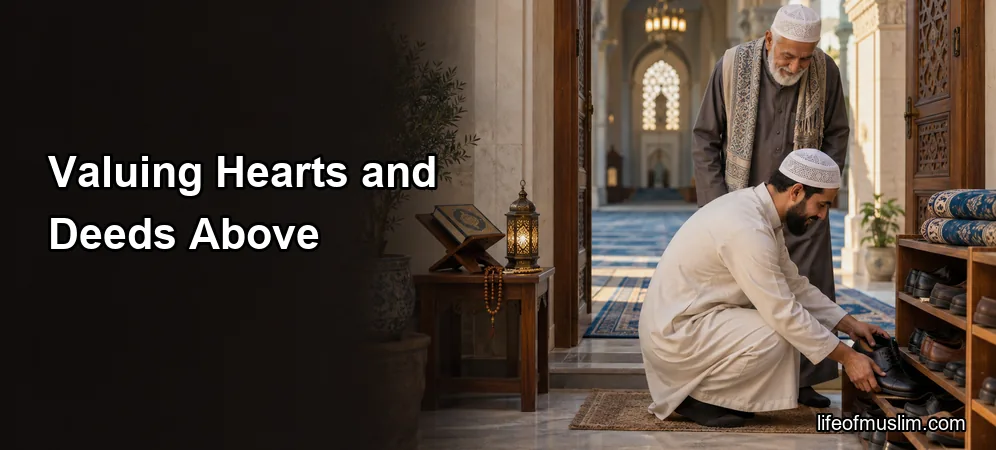
People are often judged quickly by clothing, appearance, income, or social position. These visible measures can shape attention, praise, and opportunity, yet they do not reveal the full moral condition of a person. Islam directs attention toward the heart and the deeds that flow from it.
Allah Looks at Hearts and Deeds
Abu Huraira reported that the Prophet Muhammad (peace and blessings be upon him) said: “Allah does not look to your faces and your wealth but He looks to your heart and to your deeds.” This teaching is recorded in Sahih Muslim 2564c.
The hadith does not make outward responsibilities unimportant. Cleanliness, lawful earning, and appropriate presentation still matter. It corrects the belief that beauty or wealth proves greater worth before Allah.
Examine What the Heart Is Seeking
Two people may perform a similar action while seeking different things. One may want Allah’s pleasure and genuine benefit; another may mainly want admiration. Renew intention before worship, charity, study, family service, or public work.
Intention should not become an excuse for poor conduct. A good claim about the heart must be supported by honest, beneficial deeds. The hadith joins the heart with actions rather than separating them.
Do Not Rank People by Wealth or Appearance
Welcome people respectfully regardless of clothing, profession, age, physical features, or income. Do not reserve attention only for those who appear influential. Someone with little public status may possess sincerity, patience, and excellent character that others cannot see.
Avoid mocking bodies, accents, simple belongings, or visible limitations. Families and communities should make space for participation based on ability and trustworthiness, not image alone.
Build Deeds That Improve the Heart
Quiet worship, honest work, private charity, apologising after a mistake, helping without recognition, and controlling harmful speech all train the heart. Regular self-review can reveal where pride, envy, or the desire for praise is influencing conduct.
Ask whether a deed remains worthwhile when no one notices it. Hidden good actions are a useful way to practise sincerity, although a public action may also be beneficial when it encourages others without showing off.
Offer Respect Without Pretending to Know Hearts
Only Allah fully knows what hearts contain. Muslims should not claim certainty about another person’s sincerity or hidden motives. Judge practical matters by reliable evidence while leaving ultimate inner judgment to Allah.
Conclusion
Faces and wealth are visible, but they are not the measure described in this hadith. Care for the heart, strengthen sincere intention, and follow it with sound deeds. Treat others with dignity and resist a culture that confuses appearance with true worth.
دولت، چہرے اور ظاہری شکل سے بڑھ کر دل اور اعمال کی قدر
لوگوں کو اکثر لباس، شکل، آمدنی یا سماجی مقام سے جلد جانچا جاتا ہے۔ یہ ظاہری پیمانے توجہ، تعریف اور مواقع پر اثر ڈال سکتے ہیں، مگر کسی شخص کی مکمل اخلاقی حالت ظاہر نہیں کرتے۔ اسلام توجہ کو دل اور اس سے نکلنے والے اعمال کی طرف لے جاتا ہے۔
اللہ دلوں اور اعمال کو دیکھتا ہے
حضرت ابو ہریرہ رضی اللہ عنہ سے روایت ہے کہ نبی محمد صلی اللہ علیہ وسلم نے فرمایا کہ اللہ تمہارے چہروں اور مال کو نہیں بلکہ تمہارے دلوں اور اعمال کو دیکھتا ہے۔ یہ تعلیم صحیح مسلم 2564c میں درج ہے۔
حدیث ظاہری ذمہ داریوں کو غیر اہم نہیں بناتی۔ صفائی، حلال کمائی اور مناسب پیشکش اپنی جگہ اہم ہیں۔ یہ اس خیال کی اصلاح کرتی ہے کہ حسن یا دولت اللہ کے سامنے زیادہ قدر ثابت کرتی ہے۔
دیکھیں دل کیا چاہتا ہے
دو لوگ ایک جیسا عمل کرتے ہوئے مختلف مقصد رکھ سکتے ہیں۔ ایک اللہ کی رضا اور حقیقی فائدہ چاہتا ہے، دوسرا زیادہ تر تعریف چاہتا ہے۔ عبادت، صدقہ، تعلیم، خاندانی خدمت یا عوامی کام سے پہلے نیت تازہ کریں۔
نیت خراب کردار کا بہانہ نہیں بننی چاہیے۔ دل کے بارے میں اچھے دعوے کو ایماندار اور فائدہ مند عمل سہارا دے۔ حدیث دل کو اعمال کے ساتھ جوڑتی ہے، ان سے الگ نہیں کرتی۔
لوگوں کو دولت یا شکل سے درجہ نہ دیں
لباس، پیشہ، عمر، جسمانی خصوصیات یا آمدنی سے قطع نظر لوگوں کا احترام کریں۔ توجہ صرف بااثر دکھائی دینے والوں کے لیے محفوظ نہ رکھیں۔ کم عوامی مقام والا شخص ایسا اخلاص، صبر اور بہترین کردار رکھ سکتا ہے جو دوسروں کو نظر نہیں آتا۔
جسم، لہجے، سادہ سامان یا نمایاں کمزوری کا مذاق نہ اڑائیں۔ خاندان اور برادری شرکت کے مواقع صرف ظاہری شکل نہیں بلکہ صلاحیت اور قابل اعتماد کردار کے مطابق دیں۔
ایسے اعمال بنائیں جو دل بہتر کریں
خاموش عبادت، ایماندار کام، پوشیدہ صدقہ، غلطی کے بعد معافی، تعریف کے بغیر مدد اور نقصان دہ زبان کو روکنا دل کی تربیت کرتے ہیں۔ باقاعدہ جائزہ واضح کر سکتا ہے کہ غرور، حسد یا تعریف کی خواہش کہاں رویے کو متاثر کر رہی ہے۔
پوچھیں کہ اگر کوئی نہ دیکھے تو بھی عمل قابل قدر رہے گا یا نہیں۔ پوشیدہ نیکیاں اخلاص کی اچھی مشق ہیں، اگرچہ دکھاوے کے بغیر دوسروں کو ترغیب دینے والا علانیہ عمل بھی مفید ہو سکتا ہے۔
دلوں کا دعویٰ کیے بغیر احترام کریں
دلوں کی حقیقت صرف اللہ جانتا ہے۔ مسلمان کو دوسرے کے اخلاص یا چھپی نیت پر قطعی دعویٰ نہیں کرنا چاہیے۔ عملی معاملات قابل اعتماد دلیل سے جانچیں اور آخری باطنی فیصلہ اللہ پر چھوڑ دیں۔
خلاصہ
چہرے اور دولت نظر آتے ہیں، مگر یہ اس حدیث کا بیان کردہ پیمانہ نہیں۔ دل کی نگہداشت کریں، مخلص نیت مضبوط کریں اور اسے درست اعمال کے ساتھ پورا کریں۔ دوسروں سے عزت کے ساتھ پیش آئیں اور ظاہری شکل کو حقیقی قدر سمجھنے والی سوچ سے بچیں۔
References
Sahih Muslim — The Book of Virtue, Enjoining Good Manners, and Joining of the Ties of Kinship — Chapter: The Prohibition of Wronging, Forsaking, or Despising a Muslim and the Inviolability of His Blood, Honor and Wealth — Hadith 2564c — Book 45, Hadith 42