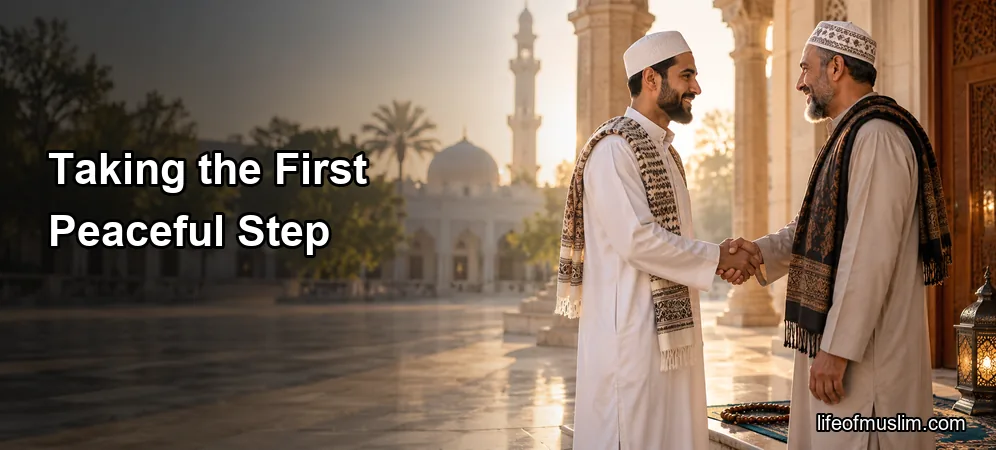
Personal disagreements can continue long after the original issue has become small. Pride, embarrassment, and fear of rejection may keep two Muslims turning away from one another. Sahih al-Bukhari 6077 teaches that prolonged personal estrangement is not acceptable and that the better person is the one who begins with salam.
Do Not Let Distance Become a Habit
The Prophet Muhammad ﷺ said that a Muslim should not desert his Muslim brother for more than three nights. He described two people meeting and turning away from each other, then said that the better of them is the one who begins the greeting (Sahih al-Bukhari 6077).
The hadith addresses a recognisable pattern: silence becomes easier each day, while reconciliation feels increasingly difficult. Islam interrupts this pattern by giving a simple first action.
Begin With Salam
Starting with salam does not require a long speech. A sincere greeting can reopen a door that pride kept closed. Say it clearly, with a calm tone and without sarcasm. Do not attach an accusation to the greeting.
If meeting in person is not possible, a respectful message or call may help prepare the way. The aim is not to perform reconciliation publicly but to restore a basic bond with sincerity.
Prepare Your Heart Before Contact
Before reaching out, ask Allah for protection from pride and angry speech. Review your own contribution to the disagreement. Decide what you can apologise for without immediately listing the other person’s faults.
Keep the first contact simple. Trying to settle every detail in the opening minute can bring the argument back. Establish peace first, then choose an appropriate time for a fuller conversation if one is needed.
Listen Without Keeping Score
When the matter is discussed, allow the other person to explain. Do not interrupt only to defend yourself. Repeat the main concern in your own words so both sides know it was understood.
A useful apology names the wrong action and its effect. Avoid phrases that shift all blame back to the hurt person. Where practical, agree on one clear change that can prevent the same problem from returning.
Seek Wise Help When Needed
Some disagreements involve family rights, money, safety, or serious harm and cannot be solved by a greeting alone. Seek help from a trustworthy scholar, responsible elder, qualified counsellor, or appropriate authority according to the issue. Do not use this hadith to pressure someone into an unsafe private meeting.
Even when careful boundaries are necessary, avoid unnecessary mockery, gossip, or revenge. Complex circumstances need wisdom, justice, and reliable guidance.
Conclusion
Sahih al-Bukhari 6077 teaches Muslims not to allow ordinary personal estrangement to continue and praises the person who begins with salam. Take the first peaceful step, prepare the heart, apologise honestly, and listen carefully. A simple sincere greeting can become the beginning of repaired trust.
ذاتی ناراضی ختم کرنے کے لیے پہلا پُرامن قدم اٹھانا
ذاتی اختلاف اصل مسئلہ چھوٹا ہو جانے کے بعد بھی جاری رہ سکتا ہے۔ غرور، شرمندگی اور رد کیے جانے کا خوف دو مسلمانوں کو ایک دوسرے سے منہ موڑنے پر قائم رکھ سکتا ہے۔ صحیح بخاری 6077 سکھاتی ہے کہ طویل ذاتی قطع تعلق درست نہیں اور بہتر شخص وہ ہے جو سلام میں پہل کرے۔
دوری کو عادت نہ بننے دیں
نبی محمد ﷺ نے فرمایا کہ کسی مسلمان کے لیے اپنے مسلمان بھائی سے تین راتوں سے زیادہ قطع تعلق جائز نہیں۔ آپ ﷺ نے ایسے دو لوگوں کا ذکر فرمایا جو ملیں تو ایک دوسرے سے منہ موڑ لیں، پھر فرمایا کہ ان میں بہتر وہ ہے جو سلام میں پہل کرے (صحیح بخاری 6077)۔
حدیث ایک عام رویے کی نشاندہی کرتی ہے: ہر دن خاموشی آسان اور صلح مشکل ہوتی جاتی ہے۔ اسلام ایک سادہ پہلے عمل کے ذریعے اس سلسلے کو روکتا ہے۔
سلام سے آغاز کریں
سلام میں پہل کے لیے لمبی تقریر ضروری نہیں۔ مخلصانہ سلام وہ دروازہ دوبارہ کھول سکتا ہے جسے غرور نے بند رکھا تھا۔ واضح، پرسکون اور طنز سے پاک انداز میں سلام کریں۔ سلام کے ساتھ الزام نہ جوڑیں۔
اگر سامنے ملنا ممکن نہ ہو تو باادب پیغام یا رابطہ راستہ تیار کر سکتا ہے۔ مقصد عوام کے سامنے صلح کا مظاہرہ نہیں بلکہ خلوص کے ساتھ بنیادی تعلق بحال کرنا ہے۔
رابطے سے پہلے دل تیار کریں
رابطہ کرنے سے پہلے اللہ سے غرور اور غصے والی گفتگو سے حفاظت مانگیں۔ اختلاف میں اپنے کردار کا جائزہ لیں۔ طے کریں کہ دوسرے کی غلطیوں کی فہرست فوراً پیش کیے بغیر آپ کس بات پر معذرت کر سکتے ہیں۔
پہلا رابطہ سادہ رکھیں۔ ابتدائی لمحے میں ہر تفصیل حل کرنے کی کوشش جھگڑا واپس لا سکتی ہے۔ پہلے امن قائم کریں، پھر ضرورت ہو تو تفصیلی گفتگو کے لیے مناسب وقت چنیں۔
حساب رکھے بغیر سنیں
معاملہ زیر گفتگو آئے تو دوسرے شخص کو وضاحت کا موقع دیں۔ صرف اپنا دفاع کرنے کے لیے بات نہ کاٹیں۔ اس کی اہم پریشانی اپنے الفاظ میں دہرائیں تاکہ دونوں جان سکیں کہ بات سمجھی گئی ہے۔
مفید معذرت غلط عمل اور اس کے اثر کو واضح کرتی ہے۔ ایسے جملوں سے بچیں جو سارا الزام دوبارہ دکھی شخص پر ڈال دیں۔ جہاں ممکن ہو ایک واضح تبدیلی پر اتفاق کریں جو وہی مسئلہ دوبارہ آنے سے روکے۔
ضرورت پر سمجھ دار مدد لیں
بعض اختلافات خاندانی حقوق، مال، حفاظت یا سنگین نقصان سے متعلق ہوتے ہیں اور صرف سلام سے حل نہیں ہوتے۔ معاملے کے مطابق معتبر عالم، ذمہ دار بزرگ، قابل مشیر یا مناسب ادارے سے مدد لیں۔ اس حدیث کو کسی پر غیر محفوظ تنہائی کی ملاقات کے لیے دباؤ ڈالنے میں استعمال نہ کریں۔
ضروری حدود کے باوجود غیر ضروری مذاق، غیبت یا بدلہ لینے سے بچیں۔ پیچیدہ حالات حکمت، انصاف اور معتبر رہنمائی چاہتے ہیں۔
نتیجہ
صحیح بخاری 6077 مسلمانوں کو سکھاتی ہے کہ عام ذاتی ناراضی کو جاری نہ رہنے دیں اور سلام میں پہل کرنے والے کی تعریف کرتی ہے۔ پہلا پُرامن قدم اٹھائیں، دل تیار کریں، دیانت سے معذرت کریں اور توجہ سے سنیں۔ ایک سادہ مخلصانہ سلام اعتماد کی بحالی کا آغاز بن سکتا ہے۔
References
Sahih al-Bukhari — Book 78, Good Manners and Form (Al-Adab); Chapter 62, Al-Hijra; Hadith 6077; in-book reference Book 78, Hadith 105