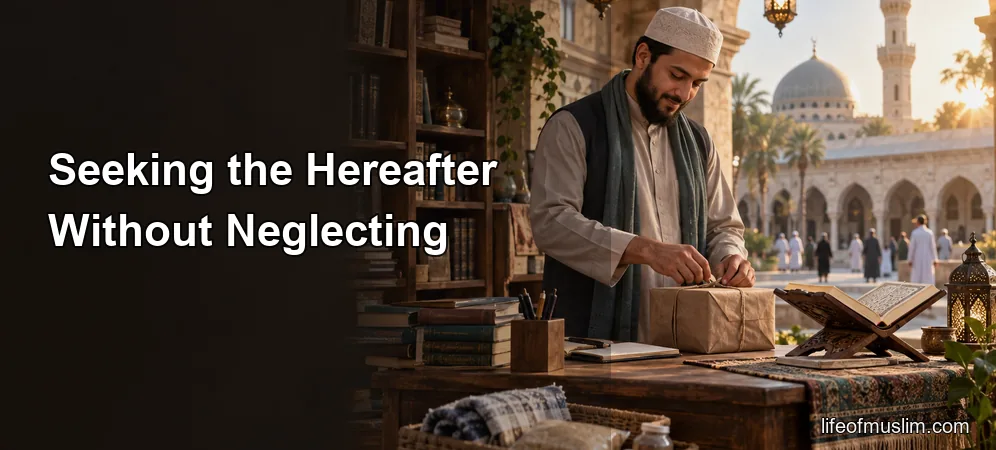
Islam does not teach believers to separate worship from every worldly responsibility. Wealth, time, skills, family duties, and daily work can all be directed toward the Hereafter when they are used lawfully and with good purpose.
Seek the Hereafter with What Allah Has Given
Allah says in Surah Al-Qasas: “Seek the reward of the Hereafter by means of what Allah has granted you, without forgetting your share of this world.” The verse continues by commanding goodness and forbidding corruption.
This guidance gives worldly blessings a clear direction. What we possess is not only for display or personal competition. It can support worship, family responsibilities, honest work, charity, learning, and service to others.
Do Not Forget Your Responsible Share
Remembering the Hereafter does not require neglecting lawful needs. A Muslim may earn, rest, eat well, care for health, provide for dependants, and enjoy permissible blessings with gratitude. These responsibilities should be managed without allowing them to replace obedience to Allah.
Balance is not achieved by giving every activity equal time. It means giving each duty its proper place. Prayer has its time, family members have rights, work requires honesty, and the body needs reasonable care.
Turn Resources into Lasting Good
Ask how your current blessings can serve a higher purpose. Professional skill can solve a community problem. Income can support dependants and charity. A home can welcome guests. Free time can be used for Quran, learning, or helping someone in need.
Begin with what is already available rather than waiting for greater wealth or influence. Consistent use of modest resources can create real benefit and train the heart to see blessings as a trust.
Be Good as Allah Has Been Good to You
The verse connects receiving goodness with extending goodness. Gratitude is therefore more than a feeling. It becomes visible when we deal fairly, share responsibly, and avoid using power or wealth to harm others.
Goodness also includes the manner in which help is offered. Protect dignity, avoid reminders that humiliate, and do not make generosity a tool for control. The goal is to use Allah’s gifts in a way that pleases Him.
Avoid Corruption in Daily Decisions
Seeking worldly success never justifies dishonesty, exploitation, waste, or damage. Before pursuing an opportunity, examine both the goal and the method. A profitable result does not make a forbidden or harmful path acceptable.
Review habits that consume resources without benefit. Simplifying expenses, correcting an unfair practice, or refusing deceptive work can protect both faith and the rights of others.
Conclusion
The believer seeks the Hereafter through the blessings and responsibilities of this world. Lawful work, family care, personal needs, generosity, and worship can support one another when guided by sincere intention. Use what Allah has given, continue doing good, and refuse success that depends on corruption.
آخرت کی طلب کے ساتھ دنیا کی ذمہ دارانہ ضروریات پوری کرنا
اسلام مومن کو یہ تعلیم نہیں دیتا کہ عبادت کو دنیا کی ہر ذمہ داری سے الگ کر دیا جائے۔ مال، وقت، صلاحیت، خاندانی فرائض اور روزمرہ کام سب آخرت کی طرف لے جانے والے بن سکتے ہیں جب انہیں جائز طریقے اور اچھی نیت کے ساتھ استعمال کیا جائے۔
اللہ کی عطا سے آخرت تلاش کریں
اللہ تعالیٰ سورۃ القصص میں ارشاد فرماتا ہے کہ جو کچھ اللہ نے تمہیں عطا کیا ہے اس کے ذریعے آخرت کا گھر تلاش کرو اور دنیا میں اپنا حصہ نہ بھولو۔ آیت آگے نیکی کا حکم اور فساد سے ممانعت کرتی ہے۔
یہ رہنمائی دنیاوی نعمتوں کو واضح سمت دیتی ہے۔ ہماری ملکیت صرف نمائش یا ذاتی مقابلے کے لیے نہیں۔ یہ عبادت، خاندانی ذمہ داری، دیانت دارانہ کام، صدقہ، علم اور دوسروں کی خدمت میں مدد دے سکتی ہے۔
اپنا ذمہ دارانہ حصہ نہ بھولیں
آخرت کو یاد رکھنے کا مطلب جائز ضروریات نظر انداز کرنا نہیں۔ مسلمان کما سکتا ہے، آرام کر سکتا ہے، اچھی غذا لے سکتا ہے، صحت کی نگہداشت، اہلِ خانہ کی کفالت اور جائز نعمتوں سے شکر کے ساتھ فائدہ اٹھا سکتا ہے۔ ان ذمہ داریوں کو اس طرح سنبھالا جائے کہ وہ اللہ کی اطاعت کی جگہ نہ لے لیں۔
توازن ہر کام کو برابر وقت دینے سے نہیں بنتا بلکہ ہر فرض کو اس کا درست مقام دینے سے بنتا ہے۔ نماز کا وقت ہے، گھر والوں کے حقوق ہیں، کام میں دیانت ضروری ہے اور جسم کو مناسب نگہداشت چاہیے۔
وسائل کو باقی رہنے والی نیکی بنائیں
سوچیں کہ موجود نعمتیں بلند مقصد کے لیے کیسے استعمال ہو سکتی ہیں۔ پیشہ ورانہ صلاحیت کسی اجتماعی مسئلے کا حل دے سکتی ہے۔ آمدنی گھر والوں اور صدقہ میں خرچ ہو سکتی ہے۔ گھر مہمان کا استقبال کر سکتا ہے۔ فارغ وقت قرآن، علم یا ضرورت مند کی مدد میں لگ سکتا ہے۔
زیادہ دولت یا اثر کا انتظار کرنے کے بجائے موجود وسائل سے آغاز کریں۔ معمولی وسائل کا پابندی سے اچھا استعمال حقیقی فائدہ پیدا کرتا اور دل کو نعمت امانت سمجھنا سکھاتا ہے۔
جیسے اللہ نے بھلائی کی ویسے بھلائی کریں
آیت اللہ کی عطا کردہ بھلائی کو دوسروں کے ساتھ بھلائی کرنے سے جوڑتی ہے۔ اس لیے شکر صرف احساس نہیں بلکہ منصفانہ معاملے، ذمہ دارانہ تقسیم اور طاقت یا مال سے دوسروں کو نقصان نہ پہنچانے میں ظاہر ہوتا ہے۔
بھلائی میں مدد کا طریقہ بھی شامل ہے۔ عزتِ نفس کی حفاظت کریں، ذلیل کرنے والے احسان نہ جتائیں اور سخاوت کو قابو پانے کا ذریعہ نہ بنائیں۔ مقصد اللہ کی عطا کو اس کی رضا کے مطابق استعمال کرنا ہے۔
روزمرہ فیصلوں میں فساد سے بچیں
دنیاوی کامیابی کی خواہش دھوکے، استحصال، فضول خرچی یا نقصان کو جائز نہیں بناتی۔ کسی موقع کے پیچھے جانے سے پہلے مقصد اور طریقہ دونوں دیکھیں۔ منافع بخش نتیجہ حرام یا نقصان دہ راستے کو درست نہیں کرتا۔
ان عادات کا جائزہ لیں جو فائدے کے بغیر وسائل ضائع کرتی ہیں۔ اخراجات سادہ بنانا، ناانصاف طریقہ درست کرنا یا دھوکے والے کام سے انکار ایمان اور دوسروں کے حقوق کی حفاظت کر سکتا ہے۔
خلاصہ
مومن اسی دنیا کی نعمتوں اور ذمہ داریوں کے ذریعے آخرت تلاش کرتا ہے۔ جائز کام، خاندان کی نگہداشت، ذاتی ضروریات، سخاوت اور عبادت مخلص نیت کے ساتھ ایک دوسرے کی مدد کر سکتے ہیں۔ اللہ کی عطا استعمال کریں، نیکی جاری رکھیں اور ایسی کامیابی سے انکار کریں جو فساد پر قائم ہو۔