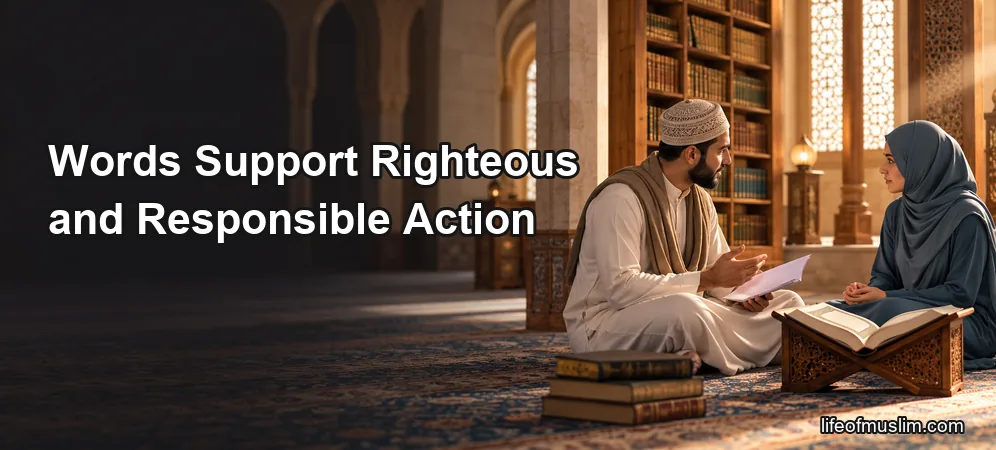
Words shape decisions, relationships, and the actions that follow. A truthful sentence can repair confusion, while a careless or misleading sentence can send many people in the wrong direction. Islam therefore treats speech as a matter of taqwa and responsibility, not merely personal style.
Say What Is Right
In Surah Al-Ahzab, Allah commands believers to remain mindful of Him and say what is right. Quran 33:70–71 then connects this upright speech with the blessing of corrected deeds, forgiveness of sins, and true success through obedience to Allah and His Messenger.
This connection teaches that speech and action should support one another. Right words clarify duties, make promises understandable, admit mistakes, and guide the next step toward what is good.
Choose Accuracy Before Confidence
Speaking firmly does not make a statement true. Before making a claim, separate what you know from what you assume. Check the original source, date, context, and relevant evidence. When certainty is limited, say so plainly instead of hiding uncertainty behind a confident tone.
In religious matters, quote accurately and consult qualified scholarship for difficult questions. In medical, legal, financial, or safety matters, use appropriate professional guidance. Responsible speech includes recognising when another person has stronger expertise.
Make Promises Clear and Realistic
Upright speech is especially important when other people will plan around our words. State what you can do, what you cannot do, and when you expect to finish. Do not agree quickly merely to avoid discomfort and then leave another person carrying the consequences.
If circumstances change, communicate early. Explain the relevant facts without excuses, propose a realistic correction, and fulfil any remaining obligation. Honest updates protect trust better than silence followed by a last-minute surprise.
Correct Without Humiliating
Truth does not require cruelty. Choose a suitable place, address the specific issue, and explain what needs to change. Avoid insults, mockery, public exposure, and claims about hidden intentions. A private correction often gives the person a better opportunity to listen and respond.
Gentle language should not conceal serious danger or injustice. When safety or rights are at risk, speak clearly and involve the responsible people. Accuracy, proportion, and a lawful process help firm speech remain fair.
Let Good Words Produce Good Action
A useful conversation should end with a clear next step. Record an agreement, return a right, apologise, verify missing information, complete a duty, or seek qualified help. Repeating admirable ideas without acting on them can weaken trust.
Review your own speech at the end of the day. Ask whether you exaggerated, omitted an important fact, promised too much, or spoke harshly. Correct what can still be corrected, seek forgiveness, and prepare a better response for the next similar situation.
Conclusion
Quran 33:70–71 joins mindfulness of Allah with speech that is right and constructive. Believers can apply this guidance by verifying claims, stating uncertainty honestly, making realistic promises, correcting with dignity, and following words with responsible action. Upright speech becomes most valuable when it helps deeds become upright too.
دیانت دار گفتگو نیک اور ذمہ دار عمل کی رہنمائی کرتی ہے
الفاظ فیصلوں، تعلقات اور بعد میں ہونے والے اعمال پر اثر ڈالتے ہیں۔ ایک سچی بات الجھن دور کر سکتی ہے، جبکہ لاپرواہ یا گمراہ کن بات بہت سے لوگوں کو غلط سمت میں لے جا سکتی ہے۔ اسی لیے اسلام گفتگو کو صرف ذاتی انداز نہیں بلکہ تقویٰ اور ذمہ داری کا معاملہ قرار دیتا ہے۔
درست بات کہو
سورۃ الاحزاب میں اللہ تعالیٰ مومنوں کو تقویٰ اختیار کرنے اور درست بات کہنے کا حکم دیتا ہے۔ قرآن 33:70–71 پھر اس سیدھی گفتگو کو اعمال کی اصلاح، گناہوں کی بخشش اور اللہ و رسول کی اطاعت سے حاصل ہونے والی بڑی کامیابی سے جوڑتا ہے۔
یہ تعلق سکھاتا ہے کہ گفتگو اور عمل ایک دوسرے کی تائید کریں۔ درست الفاظ ذمہ داری واضح کرتے، وعدے سمجھنے میں آسان بناتے، غلطی تسلیم کرتے اور اگلا قدم نیکی کی طرف لے جاتے ہیں۔
اعتماد سے پہلے درستگی منتخب کریں
مضبوط لہجے میں بولنے سے کوئی بات سچی نہیں ہو جاتی۔ دعویٰ کرنے سے پہلے معلوم حقیقت اور گمان میں فرق کریں۔ اصل ماخذ، تاریخ، سیاق اور متعلقہ ثبوت دیکھیں۔ اگر یقین محدود ہو تو اسے صاف بتائیں، پراعتماد لہجے کے پیچھے غیر یقینی بات نہ چھپائیں۔
دینی معاملات میں درست حوالہ دیں اور مشکل سوالات کے لیے مستند اہل علم سے رجوع کریں۔ طبی، قانونی، مالی یا حفاظتی معاملات میں مناسب ماہر کی رہنمائی لیں۔ ذمہ دار گفتگو میں یہ تسلیم کرنا بھی شامل ہے کہ کسی دوسرے شخص کے پاس زیادہ مہارت ہو سکتی ہے۔
وعدے واضح اور حقیقت پسندانہ رکھیں
جب دوسرے لوگ ہماری بات پر منصوبہ بنائیں تو سیدھی گفتگو اور بھی اہم ہو جاتی ہے۔ واضح کریں کہ آپ کیا کر سکتے ہیں، کیا نہیں کر سکتے اور کام کب مکمل ہونے کی توقع ہے۔ صرف وقتی بے آرامی سے بچنے کے لیے جلدی ہاں نہ کہیں اور پھر نتائج کا بوجھ دوسرے پر نہ چھوڑیں۔
حالات بدل جائیں تو جلد اطلاع دیں۔ بہانے کے بغیر متعلقہ حقائق بتائیں، حقیقت پسندانہ اصلاح پیش کریں اور باقی ذمہ داری پوری کریں۔ دیانت دار بروقت اطلاع خاموشی اور آخری لمحے کی حیرت سے بہتر طور پر اعتماد بچاتی ہے۔
اصلاح کریں، تذلیل نہیں
سچائی کے لیے سخت دلی ضروری نہیں۔ مناسب جگہ منتخب کریں، مخصوص مسئلے پر بات کریں اور واضح کریں کہ کیا بدلنا چاہیے۔ گالی، مذاق، عوامی رسوائی اور پوشیدہ نیتوں کے دعووں سے بچیں۔ نجی اصلاح اکثر سامنے والے کو سننے اور جواب دینے کا بہتر موقع دیتی ہے۔
نرم زبان کو سنگین خطرہ یا ناانصافی چھپانے کے لیے استعمال نہ کریں۔ جب حفاظت یا حقوق خطرے میں ہوں تو صاف بات کریں اور ذمہ دار افراد کو شامل کریں۔ درستگی، تناسب اور جائز طریقہ مضبوط گفتگو کو منصفانہ رکھتے ہیں۔
اچھے الفاظ کو اچھے عمل تک پہنچائیں
مفید گفتگو کا اختتام واضح اگلے قدم پر ہونا چاہیے۔ معاہدہ لکھیں، حق واپس کریں، معذرت کریں، نامکمل معلومات کی تصدیق کریں، ذمہ داری پوری کریں یا مستند مدد لیں۔ اچھی باتیں بار بار کہنا مگر ان پر عمل نہ کرنا اعتماد کو کمزور کر سکتا ہے۔
دن کے آخر میں اپنی گفتگو کا جائزہ لیں۔ دیکھیں کہ کہیں مبالغہ، اہم حقیقت کا اخفا، حد سے زیادہ وعدہ یا سخت لہجہ تو نہیں ہوا۔ جس بات کی اصلاح ممکن ہو اسے درست کریں، معافی مانگیں اور اگلی ملتی جلتی صورت حال کے لیے بہتر جواب تیار کریں۔
نتیجہ
قرآن 33:70–71 اللہ کے تقویٰ کو درست اور تعمیری گفتگو سے جوڑتا ہے۔ مومن دعووں کی جانچ، غیر یقینی بات کی دیانت دار وضاحت، حقیقت پسندانہ وعدوں، باعزت اصلاح اور الفاظ کے بعد ذمہ دار عمل سے اس رہنمائی پر چل سکتے ہیں۔ سیدھی گفتگو اس وقت زیادہ قیمتی بنتی ہے جب وہ اعمال کو بھی درست بنائے۔