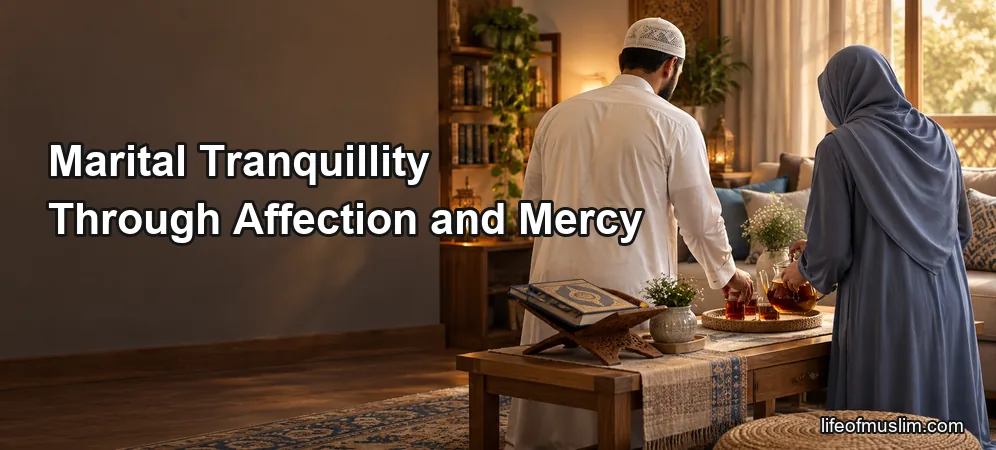
Marriage is not sustained by affection as a feeling alone. Daily choices—how spouses speak, listen, share responsibilities, manage disagreement, and protect one another’s dignity—can either strengthen or disturb the tranquillity of the home. Quranic guidance joins comfort with affection, mercy, and thoughtful reflection.
Marriage Is Among Allah’s Signs
Quran 30:21 describes spouses as a sign of Allah. It says that spouses were created so that comfort may be found with them, and that affection and mercy were placed between them. The verse closes by calling people to reflect.
This does not mean every day will feel easy or that differences disappear. It gives marriage a direction: the relationship should be cultivated as a place of reassurance, caring attachment, and merciful conduct.
Build Comfort Through Emotional Safety
A peaceful home allows both spouses to speak without expecting ridicule, threats, or humiliation. Listen before preparing a defence. Ask what the other person understood, acknowledge genuine effort, and choose a suitable time for difficult subjects.
Privacy also protects comfort. Do not publish disagreements, share intimate details, or turn relatives and friends into an audience. When advice is necessary, choose a trustworthy qualified person and disclose only what is needed.
Make Affection Visible in Ordinary Life
Affection grows through attention: a warm greeting, sincere appreciation, a considerate message, shared time, appropriate tenderness, or remembering something important to the other person. Small, repeated expressions often matter more than occasional dramatic gestures.
Do not measure love only by gifts or public display. People communicate care differently. Discuss what helps each spouse feel respected and supported, then act on that knowledge without using affection as leverage or reward for obedience.
Practise Mercy When Weakness Appears
Mercy recognises tiredness, illness, grief, financial pressure, mistakes, and different levels of ability. It gives room for apology and improvement while keeping responsibilities clear. Speak about a specific behaviour rather than attacking the other person’s entire character.
Mercy does not require accepting abuse, violence, coercion, or continuing danger. Seek safety and qualified support when harm is present. Reconciliation should not be forced before protection, accountability, and rights are properly addressed.
Share Responsibility With Fairness
Discuss household tasks, childcare, finances, appointments, family commitments, worship, and rest. Consider each person’s time, health, paid work, and caregiving load. Review the arrangement when circumstances change instead of allowing silent resentment to grow.
Financial transparency matters. Agree on priorities, disclose obligations that affect the household, avoid secret harmful spending, and make major decisions through calm consultation. Responsible planning can protect affection from preventable confusion.
Repair Disagreements Constructively
Lower the intensity before solving the issue. State the problem accurately, avoid reopening every past mistake, and propose a clear next step. If you were wrong, apologise without adding blame. If trust was damaged, accept that rebuilding it may require consistent action over time.
For persistent conflict, seek competent counselling and reliable Islamic guidance. Asking for help is not failure; it can be a responsible way to protect the relationship and the wellbeing of everyone in the home.
Conclusion
Quran 30:21 presents marital comfort, affection, and mercy as signs worthy of reflection. Spouses can nurture these qualities through emotional safety, visible care, merciful correction, fair responsibility, financial honesty, and constructive repair. A tranquil marriage is built through sincere habits that make dignity and compassion present every day.
محبت، رحمت اور ذمہ داری سے ازدواجی سکون بنائیں
شادی صرف محبت کے احساس سے قائم نہیں رہتی۔ روزانہ کے فیصلے—میاں بیوی کیسے گفتگو کرتے، سنتے، ذمہ داریاں بانٹتے، اختلاف سنبھالتے اور ایک دوسرے کی عزت کی حفاظت کرتے ہیں—گھر کے سکون کو مضبوط یا کمزور کر سکتے ہیں۔ قرآنی رہنمائی سکون کو محبت، رحمت اور غور و فکر سے جوڑتی ہے۔
شادی اللہ کی نشانیوں میں سے ہے
قرآن 30:21 میاں بیوی کو اللہ کی نشانی قرار دیتا ہے۔ آیت بتاتی ہے کہ جوڑے اس لیے بنائے گئے کہ ان کے پاس سکون ملے، اور ان کے درمیان محبت اور رحمت رکھی گئی۔ آیت آخر میں غور کرنے کی دعوت دیتی ہے۔
اس کا مطلب یہ نہیں کہ ہر دن آسان ہوگا یا اختلاف ختم ہو جائے گا۔ یہ شادی کو ایک سمت دیتی ہے: رشتہ اطمینان، محبت بھری وابستگی اور رحمت والے رویے کی جگہ بنے۔
جذباتی تحفظ سے سکون بنائیں
پرسکون گھر میں دونوں شریک حیات مذاق، دھمکی یا تذلیل کے خوف کے بغیر بات کر سکتے ہیں۔ دفاع تیار کرنے سے پہلے سنیں۔ پوچھیں کہ دوسرے نے کیا سمجھا، حقیقی کوشش کا اعتراف کریں اور مشکل موضوع کے لیے مناسب وقت منتخب کریں۔
رازداری بھی سکون کی حفاظت کرتی ہے۔ اختلافات عام نہ کریں، نجی تفصیلات نہ پھیلائیں اور رشتہ داروں یا دوستوں کو تماشائی نہ بنائیں۔ مشورہ ضروری ہو تو قابل اعتماد اور مستند شخص منتخب کریں اور صرف ضروری بات بیان کریں۔
محبت کو روزمرہ زندگی میں ظاہر کریں
محبت توجہ سے بڑھتی ہے: گرم جوشی سے سلام، سچی تعریف، خیال رکھنے والا پیغام، مشترک وقت، مناسب شفقت یا دوسرے کے لیے اہم بات یاد رکھنا۔ چھوٹے مگر مسلسل اظہار اکثر کبھی کبھار کے بڑے مظاہرے سے زیادہ اہم ہوتے ہیں۔
محبت کو صرف تحفے یا عوامی اظہار سے نہ ناپیں۔ لوگ خیال مختلف انداز میں ظاہر کرتے ہیں۔ اس بات پر گفتگو کریں کہ ہر شریک حیات کس طرح احترام اور مدد محسوس کرتا ہے، پھر اس علم پر عمل کریں اور محبت کو دباؤ یا اطاعت کے انعام کے طور پر استعمال نہ کریں۔
کمزوری کے وقت رحمت اختیار کریں
رحمت تھکن، بیماری، غم، مالی دباؤ، غلطی اور صلاحیت کے فرق کو پہچانتی ہے۔ یہ معذرت اور بہتری کی گنجائش دیتی ہے، جبکہ ذمہ داریاں واضح رکھتی ہے۔ پورے کردار پر حملہ کرنے کے بجائے مخصوص رویے پر بات کریں۔
رحمت کا مطلب زیادتی، تشدد، جبر یا جاری خطرہ قبول کرنا نہیں۔ نقصان موجود ہو تو حفاظت اور مستند مدد لیں۔ تحفظ، جواب دہی اور حقوق درست طور پر پورے ہونے سے پہلے صلح پر مجبور نہیں کرنا چاہیے۔
انصاف سے ذمہ داریاں بانٹیں
گھر کے کام، بچوں کی دیکھ بھال، مالیات، ملاقاتوں، خاندانی ذمہ داریوں، عبادت اور آرام پر گفتگو کریں۔ ہر شخص کے وقت، صحت، ملازمت اور نگہداشت کے بوجھ کو دیکھیں۔ حالات بدلیں تو انتظام کا دوبارہ جائزہ لیں اور خاموش ناراضی بڑھنے نہ دیں۔
مالی شفافیت بھی اہم ہے۔ ترجیحات پر اتفاق کریں، گھر پر اثر ڈالنے والی ذمہ داریاں بتائیں، نقصان دہ خفیہ خرچ سے بچیں اور بڑے فیصلے پرسکون مشورے سے کریں۔ ذمہ دار منصوبہ بندی محبت کو قابل اجتناب الجھن سے بچا سکتی ہے۔
اختلافات کی تعمیری اصلاح کریں
مسئلہ حل کرنے سے پہلے شدت کم کریں۔ مسئلے کو درست بیان کریں، ہر پرانی غلطی نہ کھولیں اور واضح اگلا قدم تجویز کریں۔ غلطی آپ کی ہو تو الزام شامل کیے بغیر معذرت کریں۔ اعتماد ٹوٹا ہو تو مانیں کہ اسے بحال کرنے کے لیے وقت کے ساتھ مسلسل عمل چاہیے۔
مسلسل تنازع کی صورت میں ماہر مشاورت اور معتبر اسلامی رہنمائی حاصل کریں۔ مدد مانگنا ناکامی نہیں؛ یہ رشتے اور گھر کے تمام افراد کی خیریت کی حفاظت کا ذمہ دار طریقہ ہو سکتا ہے۔
نتیجہ
قرآن 30:21 ازدواجی سکون، محبت اور رحمت کو غور کے لائق نشانیاں قرار دیتا ہے۔ میاں بیوی جذباتی تحفظ، نمایاں خیال، رحمت بھری اصلاح، منصفانہ ذمہ داری، مالی دیانت اور تعمیری تلافی سے ان صفات کو بڑھا سکتے ہیں۔ پرسکون شادی ان مخلص عادتوں سے بنتی ہے جو ہر دن عزت اور شفقت کو موجود رکھیں۔