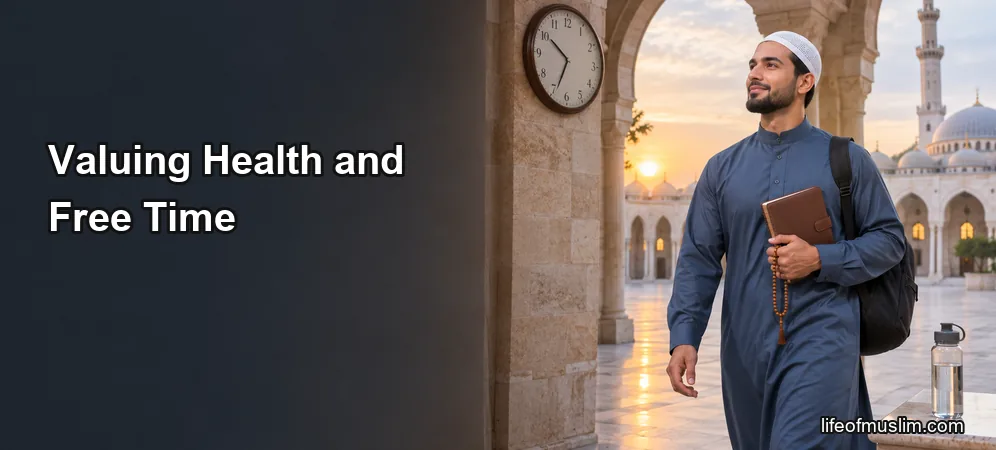
Health and available time often feel ordinary while we possess them. Their value becomes clearer when illness, responsibility, or an unexpected change limits what we can do. Islamic guidance invites us to notice these blessings before opportunity passes.
In Sahih al-Bukhari 6412, the Prophet Muhammad ﷺ identified health and free time as two blessings that many people lose through misjudgment. The hadith is not a call to constant busyness. It is a warning against allowing useful capacity and open moments to disappear without gratitude, worship, benefit, or needed rest.
Steward Health Without Worshipping Productivity
Caring for health supports prayer, family duties, work, learning, and service. Choose sustainable habits such as sufficient sleep, nourishing food, appropriate movement, preventive care, and timely professional advice when something is wrong. Small consistent choices are usually more realistic than dramatic plans.
Health differs from person to person. Illness, disability, fatigue, and age are not signs of spiritual failure. Stewardship means using the capacity Allah has given today, accepting genuine limits, and seeking help without shame.
Give Free Time a Clear Purpose
An open hour can be swallowed by indecision or endless scrolling. Before free time arrives, choose a short menu of worthwhile options: an act of worship, a family responsibility, beneficial reading, exercise suited to your condition, service, or deliberate rest.
Purposeful rest is not waste. Rest can restore attention and patience when it is chosen wisely. The problem is not every quiet moment; it is losing repeated hours without either renewal or meaningful benefit.
Protect the First Useful Minutes
Do not wait for a perfect afternoon. Use the first ten or fifteen available minutes for the action that matters most. Read a page, make a necessary call, prepare for prayer, walk briefly, or complete one neglected duty. A small beginning reduces the friction that keeps good intentions postponed.
Place distractions out of reach during that short block. When the time ends, decide consciously whether to continue or stop. This keeps a useful habit flexible instead of turning it into an unrealistic burden.
Balance Personal Benefit and Service
Health and time are personal blessings with social consequences. Energy can be used to help at home, visit someone appropriately, teach a useful skill, or support community work. Yet service should not ignore family rights, recovery, or safety.
Review the week with three questions: what restored me, what benefited others, and what repeatedly consumed time without value? Adjust one pattern at a time. Gratitude becomes visible when a blessing is directed with wisdom.
Conclusion
Sahih al-Bukhari 6412 teaches us to recognise health and free time before their opportunities narrow. We can respond with realistic care, purposeful rest, small acts of worship, and useful service. The goal is not frantic activity, but grateful and deliberate use of whatever capacity and time Allah has provided.
دو نعمتیں آسانی سے نظر انداز ہو سکتی ہیں
صحت اور دستیاب وقت ہمارے پاس ہوں تو اکثر معمولی محسوس ہوتے ہیں۔ ان کی قدر اس وقت زیادہ واضح ہوتی ہے جب بیماری، ذمہ داری یا اچانک تبدیلی ہماری استطاعت محدود کر دے۔ اسلامی رہنمائی ہمیں موقع گزرنے سے پہلے ان نعمتوں کو پہچاننے کی دعوت دیتی ہے۔
صحیح بخاری 6412 میں نبی کریم ﷺ نے صحت اور فراغت کو دو ایسی نعمتیں بتایا جن کے بارے میں بہت سے لوگ نقصان اٹھاتے ہیں۔ یہ حدیث ہر وقت مصروف رہنے کا حکم نہیں دیتی بلکہ اس بات سے خبردار کرتی ہے کہ مفید طاقت اور خالی وقت شکر، عبادت، فائدے یا ضروری آرام کے بغیر ضائع نہ ہو جائیں۔
پیداواری صلاحیت کو معبود بنائے بغیر صحت سنبھالیں
صحت کی دیکھ بھال نماز، گھر کی ذمہ داری، روزگار، علم اور خدمت میں مدد دیتی ہے۔ مناسب نیند، غذائیت والی خوراک، حالت کے مطابق حرکت، احتیاطی معائنہ اور مسئلہ ہونے پر بروقت ماہر مشورہ جیسی پائیدار عادتیں اپنائیں۔ چھوٹے مستقل قدم عموماً بڑے اچانک منصوبوں سے زیادہ حقیقت پسندانہ ہوتے ہیں۔
ہر شخص کی صحت مختلف ہوتی ہے۔ بیماری، معذوری، تھکن اور عمر روحانی ناکامی کی علامت نہیں۔ امانت داری یہ ہے کہ آج اللہ کی دی ہوئی استطاعت استعمال کی جائے، حقیقی حدود قبول کی جائیں اور مدد لینے میں شرمندگی محسوس نہ کی جائے۔
فراغت کو واضح مقصد دیں
خالی گھنٹہ بے فیصلہ رہنے یا مسلسل اسکرین دیکھنے میں گزر سکتا ہے۔ وقت آنے سے پہلے چند مفید انتخاب طے کر لیں: عبادت، خاندانی ذمہ داری، فائدہ مند مطالعہ، اپنی حالت کے مطابق ورزش، خدمت یا شعوری آرام۔
مقصد کے ساتھ آرام ضیاع نہیں۔ دانش مندی سے منتخب آرام توجہ اور صبر واپس لا سکتا ہے۔ مسئلہ ہر خاموش لمحہ نہیں بلکہ بار بار وقت کا ایسے گزرنا ہے جس سے نہ تازگی ملے اور نہ کوئی مفید نتیجہ۔
پہلے مفید منٹ محفوظ کریں
کامل دوپہر کا انتظار نہ کریں۔ پہلے دستیاب دس یا پندرہ منٹ سب سے اہم عمل کے لیے رکھیں۔ ایک صفحہ پڑھیں، ضروری فون کریں، نماز کی تیاری کریں، مختصر چہل قدمی کریں یا ایک مؤخر ذمہ داری پوری کریں۔ چھوٹی ابتدا اس رکاوٹ کو کم کرتی ہے جو نیک ارادے کو مسلسل ملتوی رکھتی ہے۔
اس مختصر وقت میں توجہ بٹانے والی چیزیں دور رکھیں۔ وقت پورا ہو تو شعوری فیصلہ کریں کہ جاری رکھنا ہے یا رکنا۔ اس طرح مفید عادت لچک دار رہتی ہے اور غیر حقیقی بوجھ نہیں بنتی۔
ذاتی فائدے اور خدمت میں توازن رکھیں
صحت اور وقت ذاتی نعمتیں ہیں مگر ان کے اجتماعی اثرات بھی ہیں۔ توانائی گھر میں مدد، مناسب ملاقات، مفید مہارت سکھانے یا معاشرتی کام میں لگ سکتی ہے۔ تاہم خدمت کے نام پر گھر کے حقوق، صحت یابی یا حفاظت کو نظر انداز نہیں کرنا چاہیے۔
ہر ہفتے تین سوالات دیکھیں: کس چیز نے مجھے بحال کیا، کس عمل سے دوسروں کو فائدہ ہوا، اور کون سی چیز مسلسل وقت لے کر کوئی قدر نہ دے سکی؟ ایک وقت میں ایک عادت درست کریں۔ نعمت کو حکمت سے استعمال کرنا عملی شکر ہے۔
خلاصہ
صحیح بخاری 6412 ہمیں صحت اور فراغت کی قدر اس سے پہلے پہچاننا سکھاتی ہے کہ ان کے مواقع محدود ہو جائیں۔ ہم حقیقت پسندانہ دیکھ بھال، مقصد والے آرام، چھوٹی عبادتوں اور مفید خدمت سے جواب دے سکتے ہیں۔ مقصد بے چین مصروفیت نہیں بلکہ اللہ کی دی ہوئی طاقت اور وقت کا شکر گزار اور شعوری استعمال ہے۔
References
Sahih al-Bukhari — Book 81, To Make the Heart Tender (Ar-Riqaq), Chapter 1, Hadith 6412 (in-book Hadith 1)