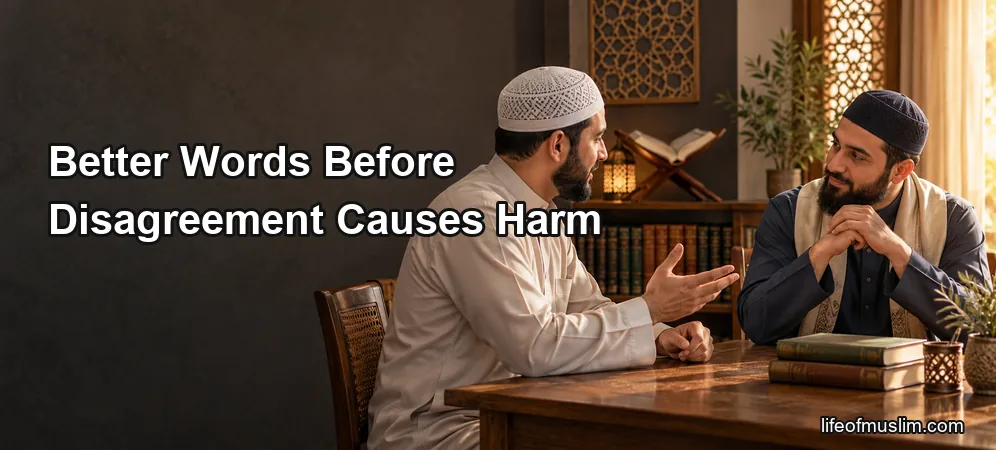
Many disagreements become more damaging because of the words chosen during the first tense moments. A concern may be genuine, yet sarcasm, exaggeration, public embarrassment, or a harsh message can turn one problem into several. Quran 17:53 teaches believers to choose the best available words and warns that Satan seeks to create discord between people.
Allah Commands Believers to Say What Is Best
Quran 17:53 says: “Tell My believing servants to say only what is best. Satan certainly seeks to sow discord among them.” The verse does not merely tell believers to avoid obvious abuse. It directs them toward the better expression—the wording most likely to preserve truth, dignity, and peace.
The warning about discord is practical. A careless phrase can be repeated, misunderstood, saved in a message, or carried to other people. Choosing words carefully closes doors through which resentment and suspicion can grow.
Pause Before the First Harsh Sentence
When emotion rises, delay the reply long enough to understand what actually happened. Breathe, lower your voice, and ask a clarifying question. If the conversation is becoming unsafe or unproductive, agree to return to it at a specific time rather than disappearing or continuing in anger.
A pause is not permission to avoid responsibility. Its purpose is to prevent harm so the issue can be addressed accurately. Return when you can describe the concern without insults, threats, or sweeping claims such as “you always” and “you never.”
Describe the Problem Without Attacking the Person
Speak about the specific action, its effect, and the change you are requesting. “The payment was submitted late, so the account incurred a fee; please tell me earlier if a delay is likely” is clearer than attacking someone’s character. Accuracy makes correction possible.
Do not use private weaknesses as weapons. Avoid mockery, humiliating nicknames, and comparisons designed to wound. Even when a firm boundary is necessary, it can be stated without contempt.
Choose the Right Place and Medium
Correct sensitive matters privately whenever possible. Public arguments invite defensiveness and can damage reputations beyond the original issue. In workplaces and families, include only the people who genuinely need to help resolve the matter.
Text messages are easily misread when tone is tense. For complex issues, a calm conversation may be better. If written communication is necessary, reread it before sending and remove accusations, unclear jokes, and language you would be ashamed to hear repeated publicly.
Listen for Meaning, Not Just a Mistake
Good speech includes good listening. Summarise what you heard and ask whether you understood correctly. A person may have used clumsy wording while trying to express fear, pressure, disappointment, or a practical need.
Listening does not require agreeing with every claim. It helps separate facts from assumptions and gives both sides a fair chance to correct misunderstandings before they harden into conflict.
Repair Words That Caused Harm
If you spoke unjustly, apologise clearly. Name the harmful words, acknowledge their effect, correct any false statement, and commit to a better response. If the harm was public, the correction may also need to reach those who heard it.
Forgiveness should not be demanded immediately, and serious patterns may require mediation, counselling, safeguarding, or formal accountability. Better speech supports justice; it does not conceal abuse or prevent someone from seeking protection.
Conclusion
Quran 17:53 connects excellent speech with protection from discord. Believers can apply this guidance by pausing before harsh words, describing problems precisely, choosing privacy, listening carefully, and repairing harm honestly. The best words are not always the easiest words, but they are the words most faithful to truth, dignity, and responsible peace.
اختلاف کو نقصان بننے سے پہلے بہتر الفاظ چنیں
بہت سے اختلافات اس لیے زیادہ نقصان دہ بن جاتے ہیں کہ ابتدائی تناؤ کے لمحات میں غلط الفاظ چن لیے جاتے ہیں۔ مسئلہ حقیقی ہو سکتا ہے، لیکن طنز، مبالغہ، سب کے سامنے شرمندہ کرنا یا سخت پیغام ایک مسئلے کو کئی مسائل میں بدل سکتا ہے۔ قرآن 17:53 اہل ایمان کو بہترین الفاظ اختیار کرنے کی ہدایت دیتا اور خبردار کرتا ہے کہ شیطان لوگوں کے درمیان فساد پیدا کرنا چاہتا ہے۔
اللہ اہل ایمان کو بہترین بات کہنے کا حکم دیتا ہے
قرآن 17:53 کا مفہوم ہے کہ اللہ کے مومن بندے وہی بات کہیں جو سب سے بہتر ہو، کیونکہ شیطان ان کے درمیان اختلاف پیدا کرنے کی کوشش کرتا ہے۔ آیت صرف کھلی بدزبانی سے بچنے کا حکم نہیں دیتی بلکہ اس انداز کی طرف رہنمائی کرتی ہے جو حق، عزت اور امن کی بہتر حفاظت کرے۔
فساد کی تنبیہ نہایت عملی ہے۔ ایک لاپرواہ جملہ دہرایا جا سکتا ہے، غلط سمجھا جا سکتا ہے، پیغام میں محفوظ رہ سکتا ہے یا دوسرے لوگوں تک پہنچ سکتا ہے۔ سوچ سمجھ کر بولنا ناراضی اور بدگمانی بڑھنے کے راستے بند کرتا ہے۔
پہلے سخت جملے سے قبل توقف کریں
جذبات بڑھیں تو جواب دینے سے پہلے اتنا وقت لیں کہ اصل صورت حال سمجھ سکیں۔ سانس معمول پر لائیں، آواز پست رکھیں اور وضاحت طلب سوال کریں۔ گفتگو غیر محفوظ یا بے فائدہ ہو رہی ہو تو غائب ہونے یا غصے میں جاری رکھنے کے بجائے کسی متعین وقت پر دوبارہ بات کرنے پر اتفاق کریں۔
توقف ذمہ داری سے بچنے کی اجازت نہیں۔ اس کا مقصد نقصان روکنا ہے تاکہ مسئلہ درست طور پر حل ہو۔ واپس آ کر توہین، دھمکی اور “تم ہمیشہ” یا “تم کبھی نہیں” جیسے عمومی دعووں کے بغیر بات کریں۔
شخصیت پر حملے کے بغیر مسئلہ بیان کریں
مخصوص عمل، اس کے اثر اور مطلوب تبدیلی پر بات کریں۔ یہ کہنا کہ ادائیگی دیر سے ہوئی، فیس لگی اور آئندہ ممکنہ تاخیر پہلے بتائی جائے، کسی کے پورے کردار پر حملہ کرنے سے زیادہ واضح ہے۔ درست بیان اصلاح کو ممکن بناتا ہے۔
نجی کمزوریوں کو ہتھیار نہ بنائیں۔ مذاق، ذلیل کرنے والے نام اور تکلیف پہنچانے والی موازنہ آرائی سے بچیں۔ مضبوط حد مقرر کرنا ضروری ہو تب بھی اسے تحقیر کے بغیر بیان کیا جا سکتا ہے۔
درست جگہ اور ذریعہ منتخب کریں
حساس معاملے کی اصلاح حتی الامکان نجی طور پر کریں۔ عوامی جھگڑا دفاعی رویہ بڑھاتا اور اصل مسئلے سے کہیں زیادہ شہرت کو نقصان پہنچا سکتا ہے۔ گھر یا کام میں صرف انہی لوگوں کو شامل کریں جن کی مدد واقعی ضروری ہو۔
تناؤ کے وقت تحریری پیغام کا لہجہ آسانی سے غلط سمجھا جاتا ہے۔ پیچیدہ مسئلے کے لیے پرسکون گفتگو بہتر ہو سکتی ہے۔ لکھنا ضروری ہو تو بھیجنے سے پہلے دوبارہ پڑھیں اور الزام، مبہم مذاق اور ایسا کلام نکال دیں جسے سب کے سامنے دہرایا جانا آپ کو شرمندہ کرے۔
صرف غلطی نہیں، مطلب بھی سنیں
اچھی گفتگو میں اچھا سننا بھی شامل ہے۔ جو سمجھا اسے مختصر طور پر بیان کریں اور پوچھیں کہ سمجھ درست ہے یا نہیں۔ ممکن ہے کسی نے خوف، دباؤ، مایوسی یا عملی ضرورت بیان کرنے کی کوشش میں نامناسب الفاظ استعمال کیے ہوں۔
سننے کا مطلب ہر دعوے سے اتفاق نہیں۔ یہ حقیقت اور گمان کو الگ کرتا اور دونوں طرف کو موقع دیتا ہے کہ غلط فہمی تنازع بننے سے پہلے درست ہو جائے۔
نقصان پہنچانے والے الفاظ کی تلافی کریں
ناانصافی سے بات ہوئی ہو تو واضح معذرت کریں۔ نقصان دہ الفاظ کا نام لیں، ان کے اثر کو تسلیم کریں، غلط بیان درست کریں اور بہتر ردعمل کا عزم کریں۔ نقصان عوامی ہو تو تصحیح ان لوگوں تک بھی پہنچنی چاہیے جنہوں نے وہ بات سنی تھی۔
فوری معافی کا مطالبہ نہ کریں۔ سنگین یا بار بار ہونے والے رویے کے لیے ثالثی، مشاورت، حفاظت یا باقاعدہ جواب دہی ضروری ہو سکتی ہے۔ بہتر گفتگو انصاف کی مدد کرتی ہے؛ یہ زیادتی چھپانے یا کسی کو تحفظ حاصل کرنے سے روکنے کا ذریعہ نہیں۔
نتیجہ
قرآن 17:53 بہترین گفتگو کو فساد سے حفاظت کے ساتھ جوڑتا ہے۔ اہل ایمان سخت الفاظ سے پہلے توقف، مسئلے کا درست بیان، نجی اصلاح، توجہ سے سننے اور دیانت دار تلافی کے ذریعے اس رہنمائی پر عمل کر سکتے ہیں۔ بہترین الفاظ ہمیشہ آسان نہیں ہوتے، مگر وہ حق، عزت اور ذمہ دار امن کے زیادہ قریب ہوتے ہیں۔