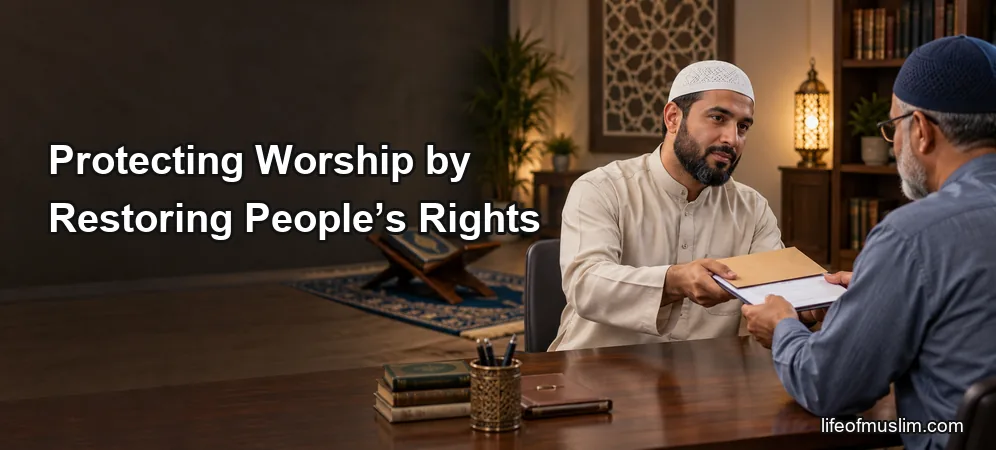
Prayer, fasting, and charity are precious acts of worship, but worship does not give a person permission to insult, defame, assault, or take another person’s wealth. Sahih Muslim 2581 gives a serious warning about arriving in the Hereafter with acts of worship while still carrying unresolved violations of other people’s rights.
The Hadith of the Truly Bankrupt Person
In Sahih Muslim 2581, the Prophet asked his Companions about the bankrupt person. They described someone without money or property. He then explained that a person from his community may arrive on the Day of Resurrection with prayer, fasting, and zakat, yet have abused people, made false accusations, consumed wealth unlawfully, shed blood, or beaten others.
The narration explains that the wronged people receive from the offender’s good deeds. If those deeds are exhausted before the claims are settled, the victims’ sins are placed upon the offender. The hadith is recorded under the chapter prohibiting oppression.
Do Not Separate Worship From Conduct
Regular worship should produce greater honesty, restraint, and respect for human dignity. A person should not use visible religious practice to avoid questions about unpaid debts, cruel speech, workplace exploitation, family abuse, or dishonest business.
This warning is not an invitation to judge everyone’s final standing with Allah. It is a reason to examine one’s own conduct, stop ongoing harm, and treat the rights of people as a serious religious responsibility.
Identify Rights That Need Restoration
Review debts, borrowed property, wages, shared funds, damaged belongings, broken agreements, false statements, private information, and harms caused online or in person. Write down specific obligations so that vague regret can become practical correction.
Do not contact someone in a way that creates danger, harassment, or renewed trauma. When direct contact is unsafe or legally restricted, seek qualified guidance on appropriate restitution, mediation, documentation, and safeguarding.
Return Wealth and Correct Falsehood
Repay what is owed and return property promptly. If immediate payment is impossible, disclose the situation honestly, propose a realistic schedule, and keep records. Do not hide assets, delay without reason, or pressure the other person to forgive a financial right.
If you spread a false claim, correct it with the people who received it as far as reasonably possible without creating greater harm. An apology is important, but it does not replace returning money, correcting a record, repairing property, or accepting appropriate accountability.
Apologise Without Demanding Comfort
A responsible apology names the wrong, avoids excuses, acknowledges impact, explains the repair being made, and commits to changed behaviour. The harmed person is not required to reassure the offender or restore trust immediately.
Some consequences remain even after sincere repentance and restitution. Accept lawful boundaries and allow the other person space. Where serious harm occurred, involve competent authorities, safeguarding professionals, or qualified counsellors as appropriate.
Prevent New Claims Through Better Systems
Use written agreements, receipts, clear job expectations, transparent family finances, careful privacy settings, and calm review before publishing accusations. Good systems do not replace character, but they reduce confusion and make responsibilities visible.
Before sleeping or during regular self-review, ask whether anyone’s money, dignity, safety, or trust was harmed that day. Correct small wrongs quickly before pride, delay, and repeated behaviour make them more difficult.
Conclusion
Sahih Muslim 2581 warns that acts of worship do not erase unresolved oppression against other people. Protect worship by stopping harm, identifying claims, returning wealth, correcting falsehood, apologising responsibly, and accepting accountability. Sincere devotion includes both turning to Allah and taking practical steps to restore the rights of His servants.
دوسروں کے حقوق واپس کر کے عبادت کو دیوالیہ پن سے بچائیں
نماز، روزہ اور صدقہ قیمتی عبادات ہیں، مگر عبادت کسی کو توہین، بہتان، تشدد یا دوسرے کا مال لینے کی اجازت نہیں دیتی۔ صحیح مسلم 2581 اس شخص کے بارے میں سخت تنبیہ کرتی ہے جو عبادات لے کر آخرت میں آئے مگر لوگوں کے پامال شدہ حقوق اس کے ذمے باقی ہوں۔
حقیقی مفلس کی حدیث
صحیح مسلم 2581 میں نبی کریم صلی اللہ علیہ وسلم نے صحابہ سے مفلس کے بارے میں پوچھا۔ انہوں نے اسے وہ شخص بتایا جس کے پاس مال نہ ہو۔ آپ نے سمجھایا کہ امت کا ایک شخص قیامت کے دن نماز، روزہ اور زکوٰۃ کے ساتھ آئے گا، لیکن اس نے لوگوں کو گالی دی، ان پر جھوٹا الزام لگایا، ان کا مال ناحق کھایا، خون بہایا یا مارا ہوگا۔
روایت بتاتی ہے کہ مظلوم لوگوں کو اس کی نیکیاں دی جائیں گی۔ دعوے پورے ہونے سے پہلے نیکیاں ختم ہو جائیں تو مظلوموں کے گناہ اس پر ڈالے جائیں گے۔ یہ حدیث ظلم کی حرمت کے باب میں درج ہے۔
عبادت کو کردار سے الگ نہ کریں
باقاعدہ عبادت سے دیانت، ضبط اور انسانی عزت کا احترام بڑھنا چاہیے۔ ظاہری دینداری کو قرض، ظالمانہ گفتگو، کام کی جگہ استحصال، گھریلو زیادتی یا کاروباری بددیانتی سے بچنے کا ذریعہ نہیں بنانا چاہیے۔
یہ تنبیہ دوسروں کے آخری انجام کا فیصلہ کرنے کی دعوت نہیں۔ یہ اپنے عمل کا جائزہ لینے، جاری نقصان روکنے اور لوگوں کے حقوق کو سنجیدہ دینی ذمہ داری سمجھنے کی وجہ ہے۔
وہ حقوق پہچانیں جو واپس کرنے ہیں
قرض، ادھار کی چیز، اجرت، مشترک مال، خراب کیا ہوا سامان، توڑا ہوا معاہدہ، جھوٹا بیان، نجی معلومات اور آن لائن یا براہ راست پہنچائے گئے نقصان کا جائزہ لیں۔ مخصوص ذمہ داریاں لکھیں تاکہ مبہم پشیمانی عملی اصلاح بن سکے۔
کسی سے ایسے رابطہ نہ کریں جو خطرہ، ہراسانی یا دوبارہ صدمہ پیدا کرے۔ براہ راست رابطہ غیر محفوظ یا قانوناً ممنوع ہو تو مناسب تلافی، ثالثی، دستاویز اور حفاظت کے لیے مستند رہنمائی لیں۔
مال واپس کریں اور جھوٹ درست کریں
واجب رقم ادا کریں اور چیز فوراً واپس کریں۔ فوری ادائیگی ممکن نہ ہو تو صورت حال سچائی سے بتائیں، حقیقت پسندانہ منصوبہ پیش کریں اور ریکارڈ رکھیں۔ مال نہ چھپائیں، بلا وجہ تاخیر نہ کریں اور دوسرے پر مالی حق معاف کرنے کا دباؤ نہ ڈالیں۔
جھوٹا دعویٰ پھیلایا ہو تو حتی الامکان ان لوگوں کے سامنے اسے درست کریں جنہوں نے سنا تھا، مگر زیادہ نقصان پیدا نہ کریں۔ معذرت اہم ہے، لیکن یہ رقم واپس کرنے، ریکارڈ درست کرنے، سامان کی مرمت یا مناسب جواب دہی کا بدل نہیں۔
تسلی کا مطالبہ کیے بغیر معذرت کریں
ذمہ دار معذرت غلطی کو واضح کرتی، بہانے سے بچتی، اثر تسلیم کرتی، تلافی کا قدم بتاتی اور بدلے ہوئے رویے کا عزم کرتی ہے۔ متاثرہ شخص پر لازم نہیں کہ وہ فوراً تسلی دے یا اعتماد بحال کرے۔
مخلص توبہ اور تلافی کے بعد بھی بعض نتائج باقی رہتے ہیں۔ جائز حدود قبول کریں اور دوسرے کو جگہ دیں۔ سنگین نقصان میں ضرورت کے مطابق مستند حکام، حفاظتی ماہرین یا اہل مشاورت کو شامل کریں۔
بہتر نظام سے نئے دعوے روکیں
تحریری معاہدے، رسیدیں، واضح کام کی توقعات، شفاف گھریلو مالیات، محتاط رازداری اور الزام شائع کرنے سے پہلے پرسکون جائزہ اختیار کریں۔ اچھا نظام کردار کا بدل نہیں، مگر الجھن کم اور ذمہ داری واضح کرتا ہے۔
سونے سے پہلے یا باقاعدہ محاسبے میں پوچھیں کہ آج کسی کے مال، عزت، حفاظت یا اعتماد کو نقصان تو نہیں پہنچا۔ چھوٹی غلطی کو جلد درست کریں، اس سے پہلے کہ تکبر، تاخیر اور تکرار اسے مشکل بنا دیں۔
نتیجہ
صحیح مسلم 2581 خبردار کرتی ہے کہ عبادات لوگوں پر کیے گئے حل طلب ظلم کو خود بخود ختم نہیں کرتیں۔ نقصان روک کر، دعوے پہچان کر، مال واپس کر کے، جھوٹ درست کر کے، ذمہ داری سے معذرت اور جواب دہی قبول کر کے عبادت کی حفاظت کریں۔ سچی بندگی میں اللہ کی طرف رجوع اور اس کے بندوں کے حقوق لوٹانے کے عملی قدم دونوں شامل ہیں۔
References
Sahih Muslim — Book 45: The Book of Virtue, Enjoining Good Manners, and Joining of the Ties of Kinship — Chapter: The Prohibition of Oppression — Hadith 2581 (Book 45, Hadith 77)