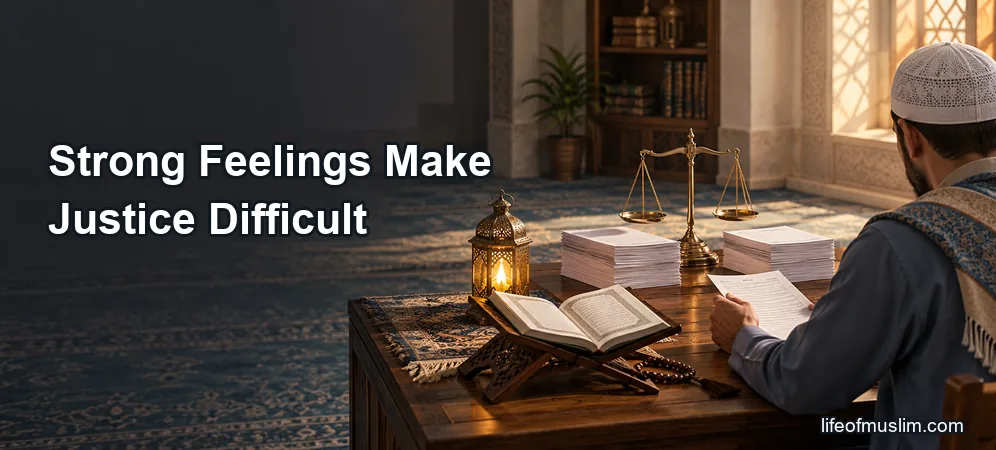
Fairness is easiest when we feel calm and comfortable with everyone involved. The real test appears when anger, disappointment, loyalty, or dislike becomes strong. Quranic guidance requires justice to remain steady even when emotions pull us toward another direction.
Justice Is an Act of Faith
Allah says: “O believers! Stand firm for Allah and bear true testimony. Do not let the hatred of a people lead you to injustice. Be just! That is closer to righteousness.” (Quran 5:8)
The verse connects justice with standing for Allah, truthful testimony, and taqwa. Fairness is not merely a social preference. It is a responsibility before Allah, Who is fully aware of what we do.
Strong Feelings Can Distort Judgment
Anger can make one mistake appear larger than it is. Loyalty can make us excuse behaviour we would condemn in someone else. Dislike can cause us to ignore a person’s rights or dismiss accurate information simply because we do not like its source.
Emotions are real, but they are not always reliable judges. Before deciding, separate what happened from how it made you feel. Name the facts, identify what remains uncertain, and avoid adding assumptions about motives.
Use the Same Standard for Everyone
A fair standard should not change according to friendship, family connection, status, or disagreement. Ask whether you would apply the same rule if the people exchanged places. Listen to each side without interruption, check original evidence, and correct inaccurate summaries.
When you are personally involved, invite a trustworthy and impartial person to help. Consultation can reveal blind spots and protect everyone from a decision made under pressure.
Justice Does Not Remove Wise Boundaries
Being fair does not require approving wrongdoing or remaining in an unsafe situation. Harm may need to be stopped, responsibilities enforced, and suitable help requested. The Quranic command is that even these steps must not become an excuse for exaggeration, humiliation, revenge, or denying another person’s established rights.
Use proportionate responses. Address the actual wrong, protect private information, and avoid spreading an issue beyond those who need to know. A firm boundary can still be truthful and dignified.
Practise Fairness in Ordinary Situations
At home, hear children or relatives before assigning blame. At work, give credit accurately and apply expectations consistently. Online, do not share accusations before checking their source. In disagreement, quote another person fairly rather than presenting the weakest version of their words.
If emotion is too strong, pause when delay will not cause harm. Make wudu, step away from the argument, write the facts privately, and return when you can speak more carefully. A short pause can prevent a lasting injustice.
Conclusion
Quran 5:8 teaches that justice must survive strong feelings. Stand for truth, apply consistent standards, seek impartial help, and keep necessary boundaries free from revenge. Fairness when it is difficult is closer to taqwa and shows that obedience to Allah is stronger than personal dislike.
شدید جذبات کے باوجود روزمرہ زندگی میں عدل قائم رکھنا
انصاف اس وقت آسان ہوتا ہے جب ہم پرسکون ہوں اور معاملے میں شامل سب لوگوں کے ساتھ راحت محسوس کریں۔ اصل امتحان اس وقت آتا ہے جب غصہ، مایوسی، وابستگی یا ناپسندیدگی بڑھ جائے۔ قرآنی رہنمائی کا تقاضا ہے کہ جذبات کسی اور طرف کھینچیں تب بھی عدل قائم رہے۔
عدل ایمان کا عمل ہے
اللہ تعالیٰ فرماتا ہے: ”اے لوگو جو ایمان لائے ہو! اللہ کی خاطر راستی پر قائم رہنے والے اور انصاف کی گواہی دینے والے بنو۔ کسی گروہ کی دُشمنی تم کو اتنا مشتعل نہ کردے کہ انصاف سے پھر جاؤ۔ عدل کرو، یہ خدا ترسی سے زیادہ مناسبت رکھتا ہے۔“ (القرآن 5:8)
یہ آیت عدل کو اللہ کے لیے قائم رہنے، سچی گواہی اور تقویٰ سے جوڑتی ہے۔ انصاف صرف سماجی پسند نہیں بلکہ اللہ کے سامنے ذمہ داری ہے، اور وہ ہمارے ہر عمل سے پوری طرح باخبر ہے۔
شدید جذبات فیصلے کو بگاڑ سکتے ہیں
غصہ ایک غلطی کو اس کی حقیقت سے بڑا بنا سکتا ہے۔ وابستگی ہمیں ایسے عمل کا عذر پیش کرنے پر آمادہ کر سکتی ہے جسے ہم کسی دوسرے میں برا کہتے۔ ناپسندیدگی کسی کے حقوق نظر انداز کرنے یا صرف ماخذ کی وجہ سے درست بات رد کرنے کا سبب بن سکتی ہے۔
جذبات حقیقی ہیں، لیکن وہ ہمیشہ قابل اعتماد منصف نہیں ہوتے۔ فیصلہ کرنے سے پہلے واقعے اور اپنے احساس کو الگ کریں۔ حقائق لکھیں، غیر یقینی بات پہچانیں، اور نیتوں کے بارے میں اندازے شامل نہ کریں۔
سب کے لیے ایک ہی معیار رکھیں
منصفانہ معیار دوستی، خاندانی تعلق، مرتبے یا اختلاف کے مطابق تبدیل نہیں ہونا چاہیے۔ سوچیں کہ اگر دونوں افراد کی جگہ بدل جائے تو کیا آپ یہی اصول لگائیں گے۔ ہر فریق کو بات مکمل کرنے دیں، اصل دلیل دیکھیں اور غلط خلاصے درست کریں۔
جب آپ خود معاملے میں شامل ہوں تو کسی قابل اعتماد اور غیر جانب دار شخص سے مدد لیں۔ مشورہ چھپی ہوئی کمزوریاں دکھا سکتا ہے اور دباؤ میں کیے گئے فیصلے سے سب کی حفاظت کرتا ہے۔
عدل مناسب حدود ختم نہیں کرتا
منصف ہونے کا مطلب غلط کام قبول کرنا یا غیر محفوظ حالت میں رہنا نہیں۔ نقصان روکنا، ذمہ داریاں نافذ کرنا اور مناسب مدد لینا ضروری ہو سکتا ہے۔ قرآنی حکم یہ ہے کہ یہ اقدامات مبالغہ، ذلت، بدلے یا دوسرے کے ثابت شدہ حقوق چھیننے کا بہانہ نہ بنیں۔
متناسب ردعمل اختیار کریں۔ اصل غلطی پر بات کریں، نجی معلومات محفوظ رکھیں، اور معاملہ صرف ان لوگوں تک محدود رکھیں جنہیں جاننے کی ضرورت ہے۔ مضبوط حد بھی سچی اور باوقار ہو سکتی ہے۔
عام حالات میں انصاف کی مشق کریں
گھر میں الزام لگانے سے پہلے بچوں یا رشتہ داروں کی بات سنیں۔ کام پر درست شخص کو اس کی محنت کا اعتراف دیں اور توقعات یکساں رکھیں۔ آن لائن کسی الزام کا ماخذ دیکھے بغیر اسے نہ پھیلائیں۔ اختلاف میں دوسرے کی بات کا کمزور ترین روپ پیش کرنے کے بجائے اسے درست طور پر بیان کریں۔
اگر جذبات بہت شدید ہوں اور توقف سے نقصان نہ ہو تو کچھ دیر رکیں۔ وضو کریں، بحث سے ہٹیں، حقائق الگ لکھیں، اور اس وقت واپس آئیں جب احتیاط سے بات کر سکیں۔ مختصر توقف دیرپا ناانصافی روک سکتا ہے۔
نتیجہ
سورۃ المائدہ 5:8 سکھاتی ہے کہ عدل شدید جذبات میں بھی قائم رہنا چاہیے۔ سچ پر قائم رہیں، یکساں معیار لگائیں، غیر جانب دار مدد لیں، اور ضروری حدود کو بدلے سے پاک رکھیں۔ مشکل وقت میں انصاف تقویٰ کے زیادہ قریب ہے اور دکھاتا ہے کہ اللہ کی اطاعت ذاتی ناپسندیدگی سے مضبوط ہے۔