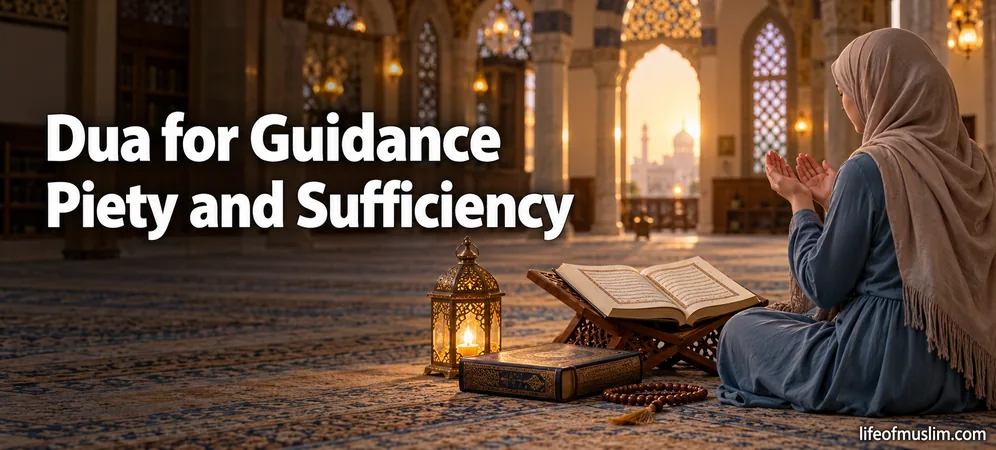
A concise dua can gather needs that affect an entire life. Sahih Muslim 2721a records a supplication in which the Prophet Muhammad ﷺ asked Allah for guidance, piety, chastity, and freedom from want. These four requests offer a balanced way to seek direction, protection, purity, and contentment.
Learn the Complete Prophetic Request
The Prophet ﷺ used to supplicate: “O Allah, I ask You for guidance, piety, chastity, and freedom from want” (Sahih Muslim 2721a). The Arabic wording is: Allahumma inni as’alukal-huda wat-tuqa wal-‘afafa wal-ghina.
The dua is short enough to learn gradually, yet broad enough to accompany decisions, worship, family life, work, and personal struggles. Recite it with attention rather than treating the words as a hurried formula.
Ask Allah for Guidance
Guidance includes needing the correct direction and the ability to follow it. Ask Allah to guide beliefs, intentions, decisions, and conduct. When facing a choice, combine dua with reliable information, consultation, and honest examination of the available options.
Do not use personal desire as the only measure of guidance. Learn the relevant Islamic principles from trustworthy sources and remain willing to correct a preferred plan when clearer evidence appears.
Ask for Piety and Protection From Wrong
Piety means living with awareness of Allah and guarding the limits He has set. The translated wording on Sunnah.com also expresses a request for protection from evils. This makes the dua both hopeful and practical: ask for protection, then avoid the paths that repeatedly lead toward wrongdoing.
Identify vulnerable moments, such as anger, loneliness, pressure, praise, or financial temptation. Prepare a lawful alternative before the test becomes intense.
Ask for Chastity
Chastity protects private conduct, relationships, sight, speech, and digital behaviour. Asking Allah for chastity should be joined with responsible boundaries. Avoid content, conversations, and private situations that weaken those boundaries.
Where marriage, family, or personal concerns require guidance, seek it respectfully from trustworthy and qualified people. Do not expose private details unnecessarily.
Ask for Freedom From Want
The dua ends with al-ghina, translated here as freedom from want. This request turns the heart toward sufficiency from Allah rather than restless comparison with people. It does not forbid lawful work or responsible planning.
Earn lawfully, budget carefully, avoid needless display, and distinguish genuine needs from habits of comparison. Contentment grows when a person notices existing blessings while continuing responsible effort.
Make the Dua Part of Daily Worship
Learn one phrase at a time, check the pronunciation from a reliable teacher, and understand what each request means. Recite the dua after prayer or during another appropriate time for supplication, without claiming a special time or fixed number not established by the cited hadith.
Review the four requests during the day. Ask whether your next action supports guidance, piety, chastity, and sufficiency or moves away from them.
Conclusion
Sahih Muslim 2721a preserves a concise Prophetic dua for guidance, piety, chastity, and freedom from want. Learning its meaning and joining the request with responsible choices can make it a practical companion for daily life. A few sincere words can remind the believer what truly deserves to be sought from Allah.
ہدایت، تقویٰ، پاکدامنی اور کفایت کے لیے نبوی دعا
مختصر دعا پوری زندگی کو متاثر کرنے والی ضرورتیں جمع کر سکتی ہے۔ صحیح مسلم 2721a ایک دعا نقل کرتی ہے جس میں نبی محمد ﷺ نے اللہ سے ہدایت، تقویٰ، پاکدامنی اور محتاجی سے آزادی مانگی۔ یہ چار درخواستیں سمت، حفاظت، پاکیزگی اور قناعت طلب کرنے کا متوازن طریقہ پیش کرتی ہیں۔
مکمل نبوی درخواست سیکھیں
نبی ﷺ یہ دعا فرمایا کرتے تھے: ”اے اللہ! میں تجھ سے ہدایت، تقویٰ، پاکدامنی اور محتاجی سے آزادی مانگتا ہوں“ (صحیح مسلم 2721a)۔ عربی الفاظ ہیں: اللهم إني أسألك الهدى والتقى والعفاف والغنى۔
دعا اتنی مختصر ہے کہ آہستہ آہستہ یاد کی جا سکتی ہے، مگر فیصلوں، عبادت، خاندان، کام اور ذاتی جدوجہد کو شامل کرنے کے لیے وسیع ہے۔ الفاظ کو جلدی کا معمول بنانے کے بجائے توجہ سے پڑھیں۔
اللہ سے ہدایت مانگیں
ہدایت میں درست سمت اور اس پر چلنے کی صلاحیت دونوں کی ضرورت شامل ہے۔ اللہ سے عقیدے، نیت، فیصلوں اور کردار کی رہنمائی مانگیں۔ انتخاب کے وقت دعا کو معتبر معلومات، مشورے اور دستیاب راستوں کے دیانت دارانہ جائزے کے ساتھ جوڑیں۔
ذاتی خواہش کو ہدایت کا واحد معیار نہ بنائیں۔ متعلقہ اسلامی اصول معتبر ذرائع سے سیکھیں اور واضح دلیل سامنے آئے تو پسندیدہ منصوبہ درست کرنے کے لیے تیار رہیں۔
تقویٰ اور برائی سے حفاظت مانگیں
تقویٰ اللہ کی آگاہی کے ساتھ جینا اور اس کی مقرر کردہ حدود کی حفاظت کرنا ہے۔ Sunnah.com کی انگریزی ترجمانی میں برائیوں سے حفاظت کی درخواست بھی ظاہر ہوتی ہے۔ یوں دعا امید اور عمل دونوں بنتی ہے: حفاظت مانگیں، پھر ان راستوں سے بچیں جو بار بار غلطی کی طرف لے جاتے ہیں۔
غصہ، تنہائی، دباؤ، تعریف یا مالی لالچ جیسے کمزور لمحات پہچانیں۔ آزمائش شدید ہونے سے پہلے جائز متبادل تیار کریں۔
پاکدامنی مانگیں
پاکدامنی نجی کردار، تعلقات، نظر، گفتگو اور ڈیجیٹل رویے کی حفاظت کرتی ہے۔ اللہ سے پاکدامنی مانگنے کے ساتھ ذمہ دارانہ حدود قائم کریں۔ ایسے مواد، گفتگو اور نجی حالات سے بچیں جو حدود کمزور کریں۔
شادی، خاندان یا ذاتی مسئلے میں رہنمائی درکار ہو تو معتبر اور اہل لوگوں سے احترام کے ساتھ رجوع کریں۔ غیر ضروری طور پر نجی تفصیلات ظاہر نہ کریں۔
محتاجی سے آزادی مانگیں
دعا کا اختتام الغنیٰ پر ہوتا ہے، جس کا یہاں ترجمہ محتاجی سے آزادی ہے۔ یہ درخواست دل کو لوگوں سے بے چین موازنے کے بجائے اللہ کی عطا کردہ کفایت کی طرف موڑتی ہے۔ یہ جائز محنت یا ذمہ دارانہ منصوبہ بندی سے نہیں روکتی۔
حلال کمائیں، بجٹ احتیاط سے بنائیں، غیر ضروری دکھاوے سے بچیں اور حقیقی ضرورت کو موازنے کی عادت سے الگ کریں۔ انسان موجود نعمتوں کو دیکھتے ہوئے ذمہ دارانہ کوشش جاری رکھے تو قناعت بڑھتی ہے۔
دعا کو روزمرہ عبادت کا حصہ بنائیں
ایک وقت میں ایک حصہ یاد کریں، معتبر استاد سے تلفظ درست کریں اور ہر درخواست کا مطلب سمجھیں۔ نماز کے بعد یا دعا کے کسی دوسرے مناسب وقت میں اسے پڑھیں، مگر مذکورہ حدیث سے ثابت نہ ہونے والے خاص وقت یا مقررہ تعداد کا دعویٰ نہ کریں۔
دن کے دوران چاروں درخواستوں کا جائزہ لیں۔ دیکھیں کہ اگلا عمل ہدایت، تقویٰ، پاکدامنی اور کفایت کو مضبوط کرتا ہے یا ان سے دور لے جاتا ہے۔
نتیجہ
صحیح مسلم 2721a ہدایت، تقویٰ، پاکدامنی اور محتاجی سے آزادی کی مختصر نبوی دعا محفوظ کرتی ہے۔ اس کا مطلب سیکھنا اور درخواست کو ذمہ دارانہ فیصلوں کے ساتھ جوڑنا اسے روزمرہ زندگی کا عملی ساتھی بنا سکتا ہے۔ چند مخلص الفاظ مومن کو یاد دلاتے ہیں کہ اللہ سے حقیقتاً کیا مانگنا چاہیے۔
References
Sahih Muslim — Book 48, The Book Pertaining to the Remembrance of Allah, Supplication, Repentance and Seeking Forgiveness; Chapter 18, “Supplications of the Prophet”; Hadith 2721a; in-book reference Book 48, Hadith 97