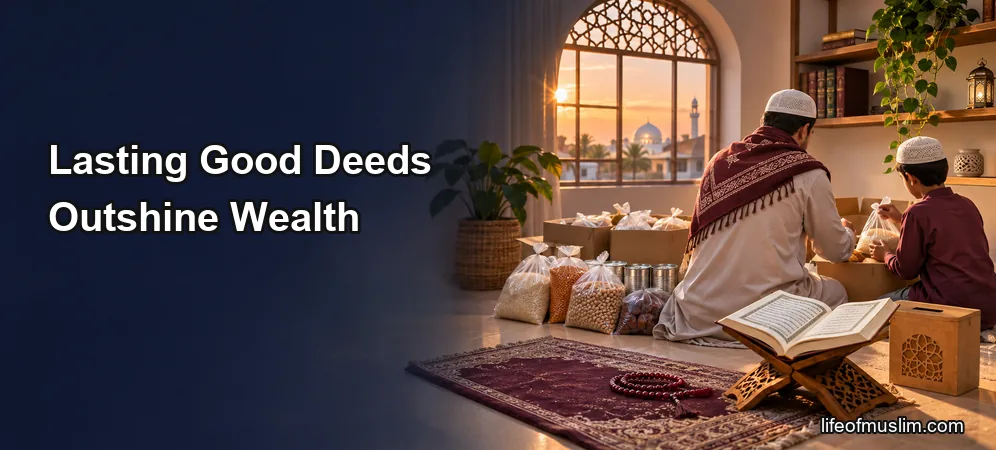
Wealth and family are meaningful blessings, but they are not permanent measures of a successful life. Quran 18:46 says, “Wealth and children are the adornment of this worldly life,” then directs attention toward what lasts: “the everlasting good deeds are far better with your Lord in reward and in hope.”
The verse does not condemn lawful wealth or loving one’s children. It places them in perspective. Adornment can be appreciated and cared for, but it should not distract us from deeds that remain valuable before Allah after possessions, recognition, and worldly roles have changed.
Receive Worldly Blessings Without Making Them the Goal
Money can provide food, shelter, education, health care, and relief for others. Children can bring love, responsibility, and joy. A believer should thank Allah for these blessings, protect them responsibly, and use them in lawful ways.
The danger begins when possessions or family status become the main source of identity. Comparing homes, income, schools, achievements, or children can quietly turn gratitude into competition. Ask whether a blessing is helping you obey Allah and serve people, or whether maintaining its appearance is consuming your attention.
Understand What Makes a Deed Last
Lasting good deeds include sincere acts of worship and every lawful action done for Allah’s pleasure that leaves beneficial fruit. Prayer, remembrance, truthful work, teaching useful knowledge, raising children with faith, helping a person in need, and repairing a damaged relationship can all shape a life of enduring goodness.
A deed does not need to be public or dramatic to matter. A private prayer, an honest correction, a small regular charity, or patient care for a dependent person may be unseen by people while remaining fully known to Allah. Sincerity gives ordinary responsibilities a higher purpose.
Use Wealth as a Tool for Good
Instead of treating wealth as proof of worth, treat it as a trust. Meet essential obligations, support dependants fairly, repay debts, avoid waste, and reserve a realistic portion for generosity. Good financial records and clear family planning can help prevent rights from being forgotten.
Giving does not require neglecting legitimate needs. Responsible generosity considers the recipient’s dignity and the giver’s duties. Offer useful help without reminders, pressure, or a search for praise. When money is limited, time, skill, transport, listening, and practical assistance can also become valuable service.
Guide Children Without Turning Them Into Status Symbols
Children should be loved as persons entrusted to our care, not displayed as evidence of parental success. Teach prayer and character patiently, make space for questions, correct mistakes without humiliation, and recognise sincere effort rather than only visible achievement.
Do not compare one child’s grades, appearance, confidence, or religious progress with another’s. Parents are responsible for wise care and example, but guidance and outcomes belong to Allah. The goal is not a perfect public image; it is a home where faith, honesty, mercy, and responsibility can grow.
Build a Daily Record of Enduring Good
Choose small deeds that can continue through changing circumstances. Guard the obligatory prayers. Read and apply a manageable portion of the Quran. Keep one private act of charity. Make a regular call to a relative, teach a useful skill, or remove a recurring source of harm.
Review the day before sleeping. Notice a blessing without boasting, identify a right that needs attention, seek forgiveness for a wrong, and choose one good action for tomorrow. This short review helps worldly demands remain in their proper place.
Conclusion
Quran 18:46 teaches a balanced view of wealth and children: appreciate these adornments, care for them responsibly, and never mistake them for what lasts. The better hope lies in enduring good deeds performed with faith and sincerity. Use blessings as tools for obedience, serve without display, nurture family character, and keep adding quiet deeds to the record you hope to meet with Allah.
دائمی نیک اعمال دولت، اولاد اور عارضی دنیاوی مقام سے بہتر ہیں
دولت اور خاندان اہم نعمتیں ہیں، لیکن کامیاب زندگی کا مستقل معیار نہیں۔ قرآن 18:46 بتاتا ہے کہ مال اور اولاد دنیاوی زندگی کی زینت ہیں، پھر اس چیز کی طرف توجہ دلاتا ہے جو باقی رہتی ہے: ہمیشہ قائم رہنے والی نیکیاں آپ کے رب کے ہاں اجر اور امید کے لحاظ سے کہیں بہتر ہیں۔
آیت حلال دولت یا اولاد سے محبت کی مذمت نہیں کرتی بلکہ انہیں درست مقام دیتی ہے۔ زینت کی قدر اور حفاظت کی جا سکتی ہے، مگر اسے ایسے اعمال سے غافل نہیں کرنا چاہیے جو مال، شہرت اور دنیاوی کردار بدل جانے کے بعد بھی اللہ کے ہاں قیمتی رہیں۔
دنیاوی نعمتوں کو مقصد بنائے بغیر قبول کریں
مال خوراک، رہائش، تعلیم، علاج اور دوسروں کی مدد کا ذریعہ بن سکتا ہے۔ اولاد محبت، ذمہ داری اور خوشی لا سکتی ہے۔ مومن کو ان نعمتوں پر اللہ کا شکر ادا کرنا، ذمہ داری سے ان کی حفاظت کرنا اور انہیں حلال طریقے سے استعمال کرنا چاہیے۔
خطرہ اس وقت شروع ہوتا ہے جب مال یا خاندانی مقام انسان کی بنیادی پہچان بن جائے۔ گھروں، آمدنی، اسکول، کامیابیوں یا بچوں کا موازنہ خاموشی سے شکر کو مقابلے میں بدل سکتا ہے۔ خود سے پوچھیں کہ نعمت اللہ کی اطاعت اور لوگوں کی خدمت میں مدد دے رہی ہے یا اس کی ظاہری شان برقرار رکھنا آپ کی پوری توجہ لے رہا ہے۔
سمجھیں کہ نیک عمل کو باقی رہنے والا کیا بناتا ہے
باقی رہنے والی نیکیوں میں مخلص عبادات اور اللہ کی رضا کے لیے کیا گیا ہر حلال عمل شامل ہے جو فائدہ مند اثر چھوڑے۔ نماز، ذکر، دیانت دارانہ کام، مفید علم سکھانا، بچوں کی ایمانی تربیت، ضرورت مند کی مدد اور خراب تعلق کی اصلاح سب دائمی بھلائی والی زندگی بنا سکتے ہیں۔
کسی عمل کے قیمتی ہونے کے لیے اس کا نمایاں یا غیر معمولی ہونا ضروری نہیں۔ پوشیدہ نماز، دیانت دارانہ اصلاح، تھوڑا مگر باقاعدہ صدقہ یا محتاج فرد کی صبر سے دیکھ بھال لوگوں سے چھپی رہ سکتی ہے، مگر اللہ اسے پوری طرح جانتا ہے۔ اخلاص عام ذمہ داریوں کو بلند مقصد دیتا ہے۔
دولت کو نیکی کا ذریعہ بنائیں
دولت کو اپنی قدر کا ثبوت بنانے کے بجائے امانت سمجھیں۔ ضروری ذمہ داریاں پوری کریں، زیر کفالت افراد کا انصاف سے خیال رکھیں، قرض ادا کریں، فضول خرچی سے بچیں اور سخاوت کے لیے مناسب حصہ مقرر کریں۔ درست مالی ریکارڈ اور واضح گھریلو منصوبہ بندی حقوق بھولنے سے بچا سکتی ہے۔
سخاوت کا مطلب جائز ضروریات نظر انداز کرنا نہیں۔ ذمہ دارانہ عطیہ لینے والے کی عزت اور دینے والے کی ذمہ داریوں دونوں کا خیال رکھتا ہے۔ احسان جتائے، دباؤ ڈالے یا تعریف چاہے بغیر مفید مدد دیں۔ رقم کم ہو تو وقت، مہارت، سواری، توجہ سے سننا اور عملی تعاون بھی قیمتی خدمت بن سکتے ہیں۔
بچوں کو مقام کی علامت بنائے بغیر رہنمائی دیں
بچوں سے ایسے انسانوں کی طرح محبت کی جائے جو ہماری نگہداشت میں امانت ہیں، نہ کہ والدین کی کامیابی کے ثبوت کے طور پر انہیں دکھایا جائے۔ نماز اور کردار صبر سے سکھائیں، سوال کی گنجائش دیں، غلطی پر ذلیل کیے بغیر اصلاح کریں اور صرف نمایاں کامیابی کے بجائے مخلص کوشش کی قدر کریں۔
ایک بچے کے نمبر، شکل، اعتماد یا دینی ترقی کا دوسرے سے موازنہ نہ کریں۔ والدین حکمت بھری نگہداشت اور مثال کے ذمہ دار ہیں، مگر ہدایت اور نتیجہ اللہ کے اختیار میں ہے۔ مقصد کامل عوامی تصویر نہیں بلکہ ایسا گھر ہے جہاں ایمان، سچائی، رحمت اور ذمہ داری بڑھ سکیں۔
دائمی نیکی کا روزانہ ریکارڈ بنائیں
ایسے چھوٹے اعمال چنیں جو حالات بدلنے کے باوجود جاری رہ سکیں۔ فرض نمازوں کی حفاظت کریں۔ قرآن کا قابل عمل حصہ پڑھیں اور اس پر عمل کریں۔ ایک پوشیدہ صدقہ مقرر رکھیں۔ کسی رشتہ دار کو باقاعدہ فون کریں، مفید ہنر سکھائیں یا بار بار ہونے والے نقصان کو دور کریں۔
سونے سے پہلے دن کا جائزہ لیں۔ کسی نعمت کو فخر کے بغیر پہچانیں، توجہ طلب حق معلوم کریں، غلطی پر معافی مانگیں اور کل کے لیے ایک نیک عمل چنیں۔ یہ مختصر جائزہ دنیاوی مطالبات کو ان کے مناسب مقام پر رکھتا ہے۔
خلاصہ
قرآن 18:46 مال اور اولاد کے بارے میں متوازن نظریہ سکھاتا ہے: ان زینتوں کی قدر کریں، ذمہ داری سے نگہداشت کریں اور انہیں دائمی چیز نہ سمجھیں۔ بہتر امید ایمان اور اخلاص کے ساتھ کیے گئے باقی رہنے والے نیک اعمال میں ہے۔ نعمتوں کو اطاعت کا ذریعہ بنائیں، دکھاوے کے بغیر خدمت کریں، گھر میں کردار کی پرورش کریں اور اپنے نامہ اعمال میں خاموش نیکیاں بڑھاتے رہیں۔