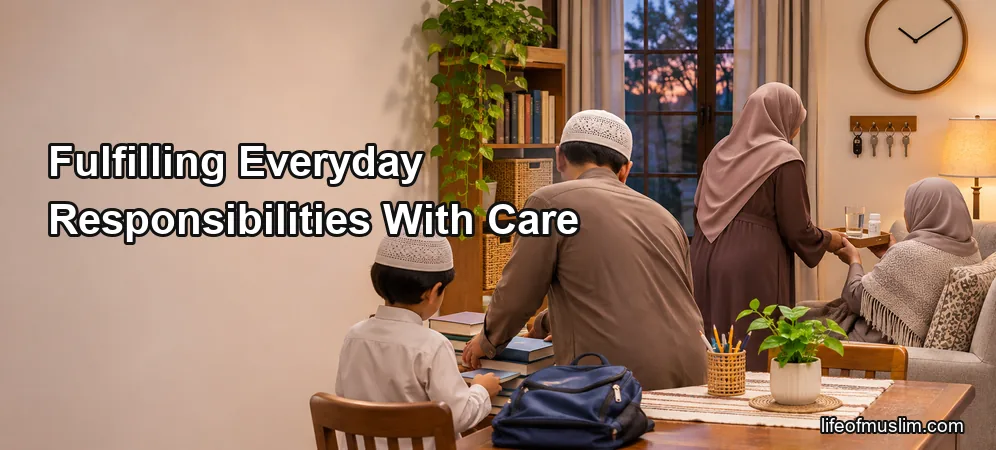
Responsibility in Islam is not limited to public leaders. Sahih al-Bukhari 7138 teaches that every person entrusted with people, a household, work, or property will be answerable for that trust. The hadith turns ordinary care into a serious moral duty.
Everyone Carries a Trust
Abdullah ibn Umar reported that Allah’s Messenger, peace and blessings be upon him, said, “Everyone of you is a guardian and is responsible for his charges.” The hadith then mentions a ruler, a man with his household, a woman with her husband’s home and children, and a servant entrusted with his master’s property.
The repeated message is accountability. Authority, access, and influence are not personal possessions to use carelessly. They are trusts that must be handled with fairness and attention.
Care Begins With Knowing What Is Needed
A responsible person listens before deciding. Ask what family members, colleagues, students, customers, or community members genuinely need. Notice safety, food, education, rest, privacy, accessibility, and emotional wellbeing instead of assuming that silence means everything is fine.
Some needs require qualified help. Seek medical, educational, legal, safeguarding, or financial advice when the matter is beyond your knowledge. Responsibility includes recognising limits.
Plan Duties Instead of Relying on Memory
Use a clear routine for essential tasks: prayer times, school needs, medicine, bills, maintenance, work deadlines, and agreed family duties. Share information with the people involved, prepare backups for emergencies, and review unfinished matters before they become harm.
Planning is not controlling every detail. It is reducing preventable neglect. A simple calendar, written agreement, reminder, or handover can protect people and property.
Use Authority Without Humiliation
The hadith does not permit harshness, abuse, or domination. A guardian is accountable for care, not entitled to ignore another person’s dignity. Give instructions clearly, explain reasons when appropriate, and make space for respectful questions and concerns.
Never use religion to silence reports of harm. If someone may be unsafe, take the concern seriously and involve appropriate trusted or professional support. Protecting reputation cannot come before protecting people.
Share Work Fairly
Household and workplace responsibilities should not become invisible burdens carried by one exhausted person. Discuss tasks openly, consider health and ability, and divide work fairly. Appreciation matters, but practical help matters too.
Children can learn age-appropriate responsibility without being given adult burdens. Older people and persons with disabilities should be included in decisions affecting them and supported without having their independence dismissed.
Protect Property and Resources
Being responsible for property includes money, equipment, keys, documents, data, working hours, and shared spaces. Use them only for their proper purpose, keep accurate records, report damage honestly, and return what was entrusted.
Small misuse can become a habit. Do not treat another person’s time, subscription, vehicle, device, or confidential information as if it were yours simply because access is easy.
Review and Repair
Set aside time each week to ask what has been neglected, who needs follow-up, and whether decisions were fair. Invite feedback from those affected. Accountability grows stronger when people can speak without fear.
When a duty was missed, acknowledge it, address immediate harm, apologise without excuses, and change the system that allowed the failure. Sincere repair is better than protecting an image of perfection.
Conclusion
Sahih al-Bukhari 7138 teaches that every trust brings responsibility. Care for people, organise duties, use authority fairly, protect property, and review shortcomings honestly. Everyday stewardship becomes worship when it is carried with sincerity, justice, and awareness that Allah will ask how each trust was handled.
روزمرہ ذمہ داریاں نگہداشت، انصاف اور جواب دہی سے پوری کریں
اسلام میں ذمہ داری صرف عوامی رہنماؤں تک محدود نہیں۔ صحیح بخاری 7138 سکھاتی ہے کہ جس شخص کو لوگوں، گھر، کام یا مال کی ذمہ داری دی گئی وہ اس امانت کے بارے میں جواب دہ ہوگا۔ یہ حدیث عام دیکھ بھال کو ایک سنجیدہ اخلاقی فرض بنا دیتی ہے۔
ہر شخص کے پاس ایک امانت ہے
عبداللہ بن عمر رضی اللہ عنہما سے روایت ہے کہ رسول اللہ صلی اللہ علیہ وسلم نے فرمایا: ”تم میں سے ہر شخص نگہبان ہے اور اپنی رعیت کے بارے میں جواب دہ ہے۔“ پھر حدیث حاکم، اپنے گھر کے ذمہ دار مرد، شوہر کے گھر اور بچوں کی ذمہ دار عورت، اور کسی کے مال کے امین خادم کا ذکر کرتی ہے۔
بار بار آنے والا پیغام جواب دہی ہے۔ اختیار، رسائی اور اثر ذاتی ملکیت نہیں کہ انہیں لاپرواہی سے استعمال کیا جائے۔ یہ امانتیں ہیں جنہیں انصاف اور توجہ سے سنبھالنا چاہیے۔
نگہداشت ضرورت جاننے سے شروع ہوتی ہے
ذمہ دار شخص فیصلہ کرنے سے پہلے سنتا ہے۔ پوچھیں کہ گھر والوں، ساتھیوں، طلبہ، گاہکوں یا برادری کے افراد کو حقیقت میں کیا چاہیے۔ حفاظت، خوراک، تعلیم، آرام، رازداری، رسائی اور جذباتی کیفیت پر توجہ دیں، یہ فرض نہ کریں کہ خاموشی کا مطلب سب ٹھیک ہے۔
کچھ ضروریات میں اہل مدد درکار ہوتی ہے۔ اگر معاملہ علم سے باہر ہو تو طبی، تعلیمی، قانونی، حفاظتی یا مالی مشورہ لیں۔ ذمہ داری میں اپنی حد پہچاننا بھی شامل ہے۔
یادداشت پر چھوڑنے کے بجائے فرائض کی منصوبہ بندی کریں
ضروری کاموں کے لیے واضح معمول بنائیں: نماز کے اوقات، اسکول کی ضروریات، دوا، بل، مرمت، کام کی مدت اور طے شدہ گھریلو فرائض۔ متعلقہ لوگوں کے ساتھ معلومات بانٹیں، ہنگامی صورت کے لیے متبادل تیار کریں، اور ادھورے معاملات نقصان بننے سے پہلے دیکھیں۔
منصوبہ بندی ہر تفصیل کو قابو کرنا نہیں، بلکہ قابلِ بچاؤ غفلت کم کرنا ہے۔ سادہ کیلنڈر، تحریری اتفاق، یاد دہانی یا ذمہ داری کی منتقلی لوگوں اور مال کی حفاظت کر سکتی ہے۔
اختیار کو ذلت کے بغیر استعمال کریں
حدیث سختی، بدسلوکی یا غلبے کی اجازت نہیں دیتی۔ نگہبان دیکھ بھال کا جواب دہ ہے، اسے دوسرے کی عزت نظر انداز کرنے کا حق نہیں۔ ہدایات واضح دیں، مناسب ہو تو وجہ سمجھائیں، اور باادب سوال و تشویش کی جگہ رکھیں۔
نقصان کی خبر خاموش کرنے کے لیے دین استعمال نہ کریں۔ اگر کوئی شخص غیر محفوظ ہو سکتا ہے تو بات کو سنجیدہ لیں اور مناسب قابلِ اعتماد یا پیشہ ورانہ مدد شامل کریں۔ عزت بچانے کا دعویٰ لوگوں کی حفاظت سے پہلے نہیں آ سکتا۔
کام منصفانہ تقسیم کریں
گھر اور کام کی ذمہ داریاں کسی ایک تھکے ہوئے شخص کا پوشیدہ بوجھ نہ بنیں۔ کام پر کھل کر بات کریں، صحت اور صلاحیت دیکھیں، اور ذمہ داریاں منصفانہ تقسیم کریں۔ تعریف اہم ہے، مگر عملی مدد بھی اہم ہے۔
بچوں کو عمر کے مطابق ذمہ داری سکھائی جا سکتی ہے، لیکن ان پر بڑوں کا بوجھ نہ ڈالیں۔ بزرگوں اور معذور افراد کو ان سے متعلق فیصلوں میں شامل کریں اور ان کی خودمختاری ختم کیے بغیر مدد دیں۔
مال اور وسائل کی حفاظت کریں
مال کی ذمہ داری میں رقم، آلات، چابیاں، دستاویزات، معلومات، کام کے اوقات اور مشترکہ جگہیں شامل ہیں۔ انہیں صرف درست مقصد کے لیے استعمال کریں، صحیح ریکارڈ رکھیں، نقصان دیانت سے بتائیں، اور امانت واپس کریں۔
چھوٹا غلط استعمال عادت بن سکتا ہے۔ دوسرے کے وقت، رکنیت، گاڑی، آلے یا خفیہ معلومات کو صرف آسان رسائی کی وجہ سے اپنا نہ سمجھیں۔
جائزہ اور اصلاح کریں
ہر ہفتے وقت نکال کر پوچھیں کہ کیا نظر انداز ہوا، کس سے دوبارہ رابطہ ضروری ہے، اور فیصلے منصفانہ تھے یا نہیں۔ متاثرہ لوگوں سے رائے لیں۔ جواب دہی تب مضبوط ہوتی ہے جب لوگ خوف کے بغیر بات کر سکیں۔
فرض رہ گیا تو اسے تسلیم کریں، فوری نقصان درست کریں، بہانے کے بغیر معافی مانگیں، اور اس نظام کو بدلیں جس نے غلطی ہونے دی۔ کامل نظر آنے کی حفاظت سے سچی اصلاح بہتر ہے۔
نتیجہ
صحیح بخاری 7138 سکھاتی ہے کہ ہر امانت ذمہ داری لاتی ہے۔ لوگوں کی نگہداشت کریں، فرائض ترتیب دیں، اختیار منصفانہ استعمال کریں، مال کی حفاظت کریں، اور کوتاہی کا دیانت سے جائزہ لیں۔ روزمرہ نگہبانی اخلاص، انصاف اور اس شعور کے ساتھ عبادت بن جاتی ہے کہ اللہ پوچھے گا ہر امانت کیسے سنبھالی گئی۔
References
Sahih al-Bukhari – Book 93: Judgments (Ahkaam) – Chapter 1: Obey Allah and obey the Messenger and those of you who are in authority – Hadith 7138 (Book 93, Hadith 2)