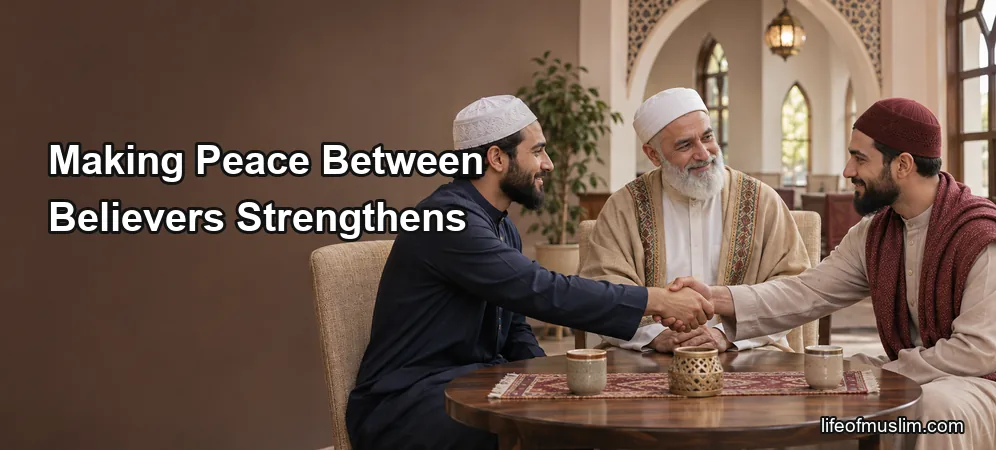
Differences can enter families, friendships, workplaces, and communities even when people share faith and good intentions. The Quran does not treat broken relationships as someone else’s problem. It calls believers to value their brotherhood and to help restore peace with mindfulness of Allah.
Brotherhood Creates a Duty to Make Peace
Allah says: “The believers are but one brotherhood, so make peace between your brothers. And be mindful of Allah so you may be shown mercy.” This verse joins identity, responsibility, and hope. Faith creates a bond, that bond calls for reconciliation, and reconciliation must be guided by awareness of Allah.
Making peace is not merely asking people to forget what happened. It means helping them move from resentment toward a fair, safe, and truthful way forward.
Begin by Listening Without Taking Sides Too Quickly
A peacemaker should understand before judging. Give each person an opportunity to explain what happened without interruption, ridicule, or public exposure. Ask careful questions and separate confirmed facts from assumptions.
Quickly choosing a favourite can deepen the wound. Family loyalty, friendship, status, or persuasive speech should not replace fairness. Listening calmly often lowers tension enough for the real issue to become clear.
Protect Truth While Seeking Reconciliation
Peace is not built by pressuring the hurt person to remain silent or by pretending every side acted equally. A useful reconciliation names wrong conduct carefully, protects rights, and seeks an appropriate repair.
That repair may include an apology, returning property, correcting a false statement, respecting a boundary, or agreeing on different conduct in the future. Mercy and accountability can work together.
Keep the Matter Private and Dignified
Many disagreements grow because private pain becomes public entertainment. A sincere mediator does not collect gossip, share screenshots, or use another person’s difficulty to appear important.
Choose a suitable time and a quiet setting. Speak only to those who can help. If serious harm, safety, legal rights, or specialist care is involved, seek qualified and lawful assistance rather than trying to manage everything informally.
Use Words That Open a Door
Accusatory language makes people defend themselves. Describe the concern clearly without insults, and remind both people of shared values and the benefit of a repaired relationship. Invite a specific next step instead of demanding instant emotional closeness.
Sometimes peace begins with a respectful message, a willingness to meet, or agreement to stop harmful speech. Trust may return gradually. Reconciliation should not be measured only by one dramatic conversation.
Be Mindful of Allah During the Process
The verse connects peacemaking with taqwa. A mediator must guard intention, avoid showing off, refuse manipulation, and remember that Allah knows what is hidden. The people involved should also examine where pride, anger, or fear is preventing a fair response.
Make dua for softened hearts, but also take responsible action. Mercy is sought through obedience, truthfulness, patience, and a sincere effort to repair what has been damaged.
Conclusion
Quranic brotherhood is active. It encourages believers to listen fairly, protect dignity, correct wrongs, and create a practical path back to peace. When reconciliation is pursued with truth and mindfulness of Allah, a strained relationship can become an opportunity for mercy and stronger community trust.
اہلِ ایمان کے درمیان صلح بھائی چارے کو مضبوط اور رحمت کو قریب کرتی ہے
اختلاف گھر، دوستی، کام کی جگہ اور معاشرے میں اس وقت بھی پیدا ہو سکتا ہے جب لوگ ایمان اور اچھی نیت رکھتے ہوں۔ قرآن ٹوٹے ہوئے تعلقات کو دوسروں کا مسئلہ قرار نہیں دیتا بلکہ اہلِ ایمان کو بھائی چارے کی قدر اور اللہ کی یاد کے ساتھ صلح کی کوشش کا حکم دیتا ہے۔
بھائی چارہ صلح کی ذمہ داری پیدا کرتا ہے
اللہ تعالیٰ فرماتا ہے کہ مومن آپس میں بھائی ہیں، لہٰذا اپنے بھائیوں کے درمیان صلح کراؤ اور اللہ سے ڈرتے رہو تاکہ تم پر رحم کیا جائے۔ اس آیت میں شناخت، ذمہ داری اور امید جمع ہیں۔ ایمان رشتہ قائم کرتا ہے، یہ رشتہ صلح کا تقاضا کرتا ہے، اور صلح اللہ کی نگرانی کے احساس کے ساتھ ہونی چاہیے۔
صلح کا مطلب صرف یہ کہنا نہیں کہ جو ہوا اسے بھول جاؤ۔ اس کا مطلب یہ ہے کہ ناراضی سے نکل کر منصفانہ، محفوظ اور سچے راستے کی طرف بڑھنے میں مدد دی جائے۔
جلدی کسی ایک طرف ہوئے بغیر سنیں
صلح کرانے والے کو فیصلہ کرنے سے پہلے معاملہ سمجھنا چاہیے۔ ہر شخص کو بغیر رکاوٹ، تمسخر یا عوامی رسوائی کے اپنی بات بیان کرنے کا موقع دیں۔ مناسب سوال کریں اور ثابت شدہ حقیقت کو گمان سے الگ رکھیں۔
جلدی کسی پسندیدہ شخص کا ساتھ دینا زخم کو بڑھا سکتا ہے۔ خاندانی تعلق، دوستی، مرتبہ یا پُراثر گفتگو انصاف کا بدل نہیں۔ پرسکون انداز سے سننا اکثر تناؤ کم کرکے اصل مسئلہ واضح کرتا ہے۔
صلح کے ساتھ سچائی کی حفاظت کریں
امن اس طرح قائم نہیں ہوتا کہ مظلوم یا زخمی شخص کو خاموش رہنے پر مجبور کیا جائے یا یہ ظاہر کیا جائے کہ ہر طرف کی غلطی برابر تھی۔ مفید صلح غلط رویے کو احتیاط سے واضح کرتی، حقوق کی حفاظت کرتی اور مناسب تلافی تلاش کرتی ہے۔
تلافی میں معافی، مال واپس کرنا، جھوٹی بات کی تصحیح، کسی حد کا احترام یا آئندہ مختلف رویے پر اتفاق شامل ہو سکتا ہے۔ رحمت اور جواب دہی ایک ساتھ چل سکتی ہیں۔
معاملے کو نجی اور باوقار رکھیں
بہت سے اختلاف اس وقت بڑھتے ہیں جب نجی تکلیف عوامی تماشہ بن جاتی ہے۔ مخلص ثالث غیبت جمع نہیں کرتا، نجی پیغامات پھیلاتا نہیں اور کسی کی مشکل سے اپنی اہمیت نہیں بڑھاتا۔
مناسب وقت اور پرسکون جگہ منتخب کریں اور صرف ان لوگوں سے بات کریں جو واقعی مدد کر سکتے ہیں۔ اگر معاملہ سنگین نقصان، حفاظت، قانونی حق یا ماہرانہ نگہداشت سے متعلق ہو تو سب کچھ غیر رسمی انداز میں سنبھالنے کے بجائے اہل اور قانونی مدد حاصل کریں۔
ایسے الفاظ استعمال کریں جو دروازہ کھولیں
الزامی زبان لوگوں کو دفاعی بنا دیتی ہے۔ توہین کے بغیر مسئلہ واضح کریں، مشترکہ اقدار یاد دلائیں اور تعلق کی اصلاح کا فائدہ بیان کریں۔ فوری جذباتی قربت کا مطالبہ کرنے کے بجائے اگلا واضح قدم تجویز کریں۔
بعض اوقات صلح ایک باادب پیغام، ملنے کی آمادگی یا نقصان دہ گفتگو روکنے کے معاہدے سے شروع ہوتی ہے۔ اعتماد بتدریج واپس آ سکتا ہے۔ صلح کو صرف ایک ڈرامائی گفتگو سے نہ ناپیں۔
اس عمل میں اللہ سے ڈرتے رہیں
آیت صلح کو تقویٰ سے جوڑتی ہے۔ ثالث اپنی نیت کی حفاظت کرے، دکھاوے اور چال سے بچے اور یاد رکھے کہ اللہ پوشیدہ باتوں کو جانتا ہے۔ متعلقہ افراد بھی دیکھیں کہ تکبر، غصہ یا خوف کہاں منصفانہ جواب میں رکاوٹ ہے۔
دلوں کی نرمی کے لیے دعا کریں، مگر ذمہ دارانہ عمل بھی کریں۔ رحمت اطاعت، سچائی، صبر اور نقصان کی مخلصانہ اصلاح کے ذریعے طلب کی جاتی ہے۔
نتیجہ
قرآنی بھائی چارہ فعال ہے۔ یہ منصفانہ سماعت، عزت کی حفاظت، غلطی کی اصلاح اور امن کی طرف عملی راستہ بنانے کی ترغیب دیتا ہے۔ جب صلح سچائی اور تقویٰ کے ساتھ کی جائے تو کشیدہ تعلق رحمت اور مضبوط اجتماعی اعتماد کا موقع بن سکتا ہے۔