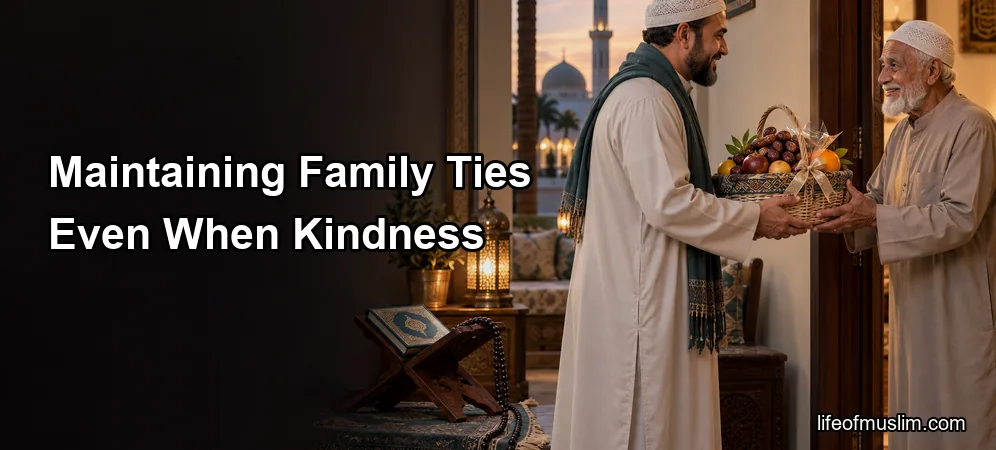
Family relationships are easier when care is returned with care. The real test often appears when calls are unanswered, visits are not repeated, or old disappointment creates distance. Islam teaches that maintaining kinship is more than exchanging equal favours.
True Connection Is More Than Reciprocity
Abdullah bin Amr reported that the Prophet Muhammad (peace and blessings be upon him) explained that the person who truly maintains kinship is not merely the one who repays relatives’ kindness, but the one who keeps relations when relatives cut the bond. This teaching is recorded in Sahih al-Bukhari 5991.
The hadith moves family care beyond a simple exchange. Good conduct is not valuable only when it produces an immediate response. A believer can choose a respectful connection for the sake of Allah while recognising that relationships may take time to heal.
Begin with Small, Sincere Contact
Reconnection does not always require a dramatic conversation. A calm greeting, brief message, appropriate visit, thoughtful gift, or offer of practical help can reopen a door. Choose an action that is sincere and suitable for the relationship.
Do not make every contact a test of whether the other person responds perfectly. Consistency is more realistic than demanding instant warmth. Keep communication respectful and avoid reminding relatives of everything you have done for them.
Address Problems Without Adding Harm
Maintaining ties does not require pretending that no problem exists. If a misunderstanding needs discussion, choose a calm time, describe the issue without insults, and listen to the other person’s account. Focus on a workable next step rather than reopening every old disagreement.
Do not recruit other relatives into gossip or pressure. Asking a wise, trustworthy family member to help can be useful, but spreading private details usually makes repair harder.
Keep Wise Boundaries Where Necessary
Kinship should be maintained with wisdom. If contact involves genuine abuse, danger, or serious harm, seek qualified religious and professional guidance. A person may need safer forms of communication or firmer boundaries. The hadith encourages connection; it does not require enabling wrongdoing.
Even with boundaries, avoid unnecessary cruelty. Where safe and appropriate, basic greetings, dua, occasional messages, or help during genuine need may preserve a form of connection without returning to a harmful pattern.
Protect Intention and Patience
Family repair can be slow. Renew the intention to please Allah, not to win praise or control the outcome. Continue what is reasonable, make dua, and review your own conduct honestly. Sometimes the first improvement is simply that hostility stops growing.
Conclusion
Maintaining family ties is strongest when it is guided by faith rather than equal exchange. Reach out sincerely, speak about difficulties with dignity, avoid gossip, and use wise boundaries when needed. A small, patient act of connection may become the beginning of lasting repair.
مہربانی واپس نہ ملنے پر بھی خاندانی تعلق قائم رکھنا
خاندانی تعلقات اس وقت آسان ہوتے ہیں جب خیال کا جواب خیال سے ملے۔ اصل امتحان اکثر اس وقت آتا ہے جب فون کا جواب نہ آئے، ملاقات کا بدلہ ملاقات سے نہ ملے یا پرانی مایوسی فاصلے پیدا کر دے۔ اسلام سکھاتا ہے کہ صلہ رحمی صرف برابر احسان کے تبادلے کا نام نہیں۔
حقیقی تعلق صرف بدلہ نہیں
حضرت عبداللہ بن عمرو رضی اللہ عنہما سے روایت ہے کہ نبی محمد صلی اللہ علیہ وسلم نے واضح فرمایا کہ رشتہ جوڑنے والا صرف وہ نہیں جو رشتہ داروں کے اچھے سلوک کا بدلہ دے، بلکہ وہ ہے جو ان کے تعلق توڑنے پر بھی تعلق قائم رکھے۔ یہ تعلیم صحیح البخاری 5991 میں درج ہے۔
یہ حدیث خاندانی نگہداشت کو سادہ لین دین سے آگے لے جاتی ہے۔ اچھا رویہ صرف اس وقت قیمتی نہیں جب فوری جواب ملے۔ مومن اللہ کی رضا کے لیے باعزت تعلق منتخب کر سکتا ہے اور سمجھ سکتا ہے کہ رشتوں کو ٹھیک ہونے میں وقت لگ سکتا ہے۔
چھوٹے اور مخلص رابطے سے آغاز کریں
دوبارہ تعلق کے لیے ہمیشہ بڑی گفتگو ضروری نہیں۔ پرسکون سلام، مختصر پیغام، مناسب ملاقات، سوچا سمجھا تحفہ یا عملی مدد کی پیشکش دروازہ دوبارہ کھول سکتی ہے۔ ایسا قدم چنیں جو مخلصانہ اور تعلق کے مطابق ہو۔
ہر رابطے کو اس بات کا امتحان نہ بنائیں کہ سامنے والا کامل جواب دیتا ہے یا نہیں۔ فوری گرم جوشی کے مطالبے سے زیادہ حقیقت پسندانہ چیز مستقل مزاجی ہے۔ گفتگو بااحترام رکھیں اور رشتہ داروں کو اپنے ہر احسان کی یاد نہ دلائیں۔
نیا نقصان پیدا کیے بغیر مسئلہ حل کریں
تعلق قائم رکھنے کا مطلب یہ نہیں کہ مسئلہ موجود ہی نہیں۔ اگر غلط فہمی پر گفتگو ضروری ہو تو پرسکون وقت چنیں، توہین کے بغیر مسئلہ بیان کریں اور دوسرے کا مؤقف سنیں۔ ہر پرانے اختلاف کو دوبارہ کھولنے کے بجائے قابل عمل اگلے قدم پر توجہ دیں۔
دوسرے رشتہ داروں کو غیبت یا دباؤ میں شامل نہ کریں۔ کسی سمجھ دار اور قابل اعتماد فرد کی مدد مفید ہو سکتی ہے، مگر نجی تفصیل پھیلانے سے اصلاح زیادہ مشکل ہو جاتی ہے۔
ضرورت پر دانشمندانہ حدود رکھیں
صلہ رحمی حکمت کے ساتھ ہونی چاہیے۔ اگر رابطے میں حقیقی زیادتی، خطرہ یا سنگین نقصان ہو تو مستند دینی اور پیشہ ورانہ رہنمائی حاصل کریں۔ محفوظ رابطہ یا مضبوط حدود ضروری ہو سکتی ہیں۔ حدیث تعلق کی ترغیب دیتی ہے، غلط کام جاری رکھنے کی اجازت نہیں۔
حدود کے باوجود غیر ضروری سختی سے بچیں۔ جہاں محفوظ اور مناسب ہو، بنیادی سلام، دعا، کبھی کبھار پیغام یا حقیقی ضرورت میں مدد نقصان دہ طریقے کی طرف واپس گئے بغیر تعلق کی ایک صورت محفوظ رکھ سکتی ہے۔
نیت اور صبر محفوظ رکھیں
خاندانی اصلاح آہستہ ہو سکتی ہے۔ تعریف حاصل کرنے یا نتیجہ قابو کرنے کے بجائے اللہ کی رضا کی نیت تازہ کریں۔ جو مناسب ہو جاری رکھیں، دعا کریں اور اپنے رویے کا ایماندار جائزہ لیں۔ کبھی پہلی بہتری صرف یہ ہوتی ہے کہ دشمنی بڑھنا بند ہو جائے۔
خلاصہ
خاندانی تعلق اس وقت زیادہ مضبوط ہوتا ہے جب اسے برابر بدلے کے بجائے ایمان رہنمائی دے۔ اخلاص سے رابطہ کریں، مشکل پر وقار سے بات کریں، غیبت سے بچیں اور ضرورت پر دانشمندانہ حدود رکھیں۔ تعلق کا ایک چھوٹا اور صبر والا قدم دیرپا اصلاح کا آغاز بن سکتا ہے۔
References
Sahih al-Bukhari — Good Manners and Form (Al-Adab) — Chapter: Al-Wasil Is Not the One Who Recompenses the Good Done to Him by His Relatives — Hadith 5991 — Book 78, Hadith 22