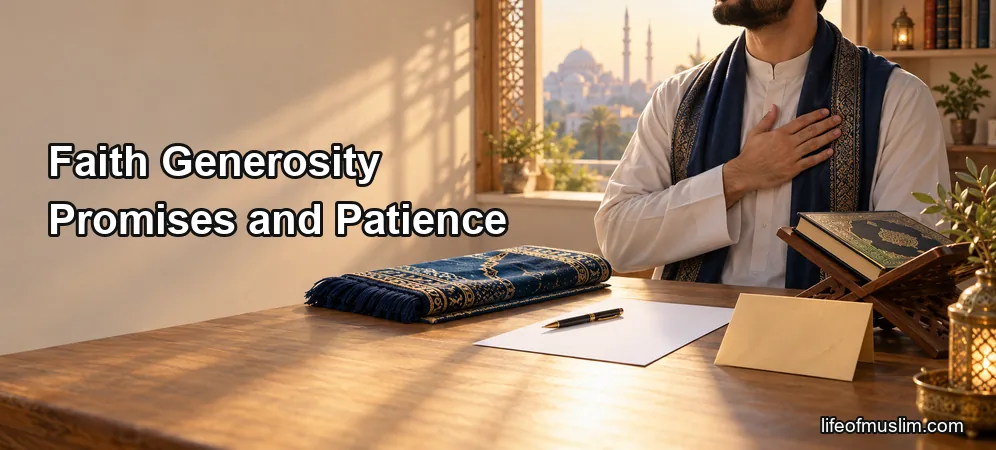
Righteousness is sometimes reduced to a visible habit, a public identity, or one generous moment. Quran 2:177 gives a fuller picture. It joins sound belief, worship, care for people, reliability, and patience into one coherent way of life.
Righteousness Is More Than Outward Direction
The verse begins, “Righteousness is not in turning your faces towards the east or the west.” This does not diminish correct worship. Instead, it corrects the idea that outward form by itself is enough. A person’s faith should shape what they believe, how they worship, how they use what they love, and how they behave when keeping a commitment becomes difficult.
Quran 2:177 mentions belief in Allah, the Last Day, the angels, the Books, and the prophets. It then moves into action: giving cherished wealth to relatives, orphans, people in need, travellers, those who ask, and for freeing captives; establishing prayer; giving zakat; fulfilling pledges; and remaining patient through hardship and adversity.
Faith and Worship Give the Heart Direction
Belief is not an ornament added to an otherwise unchanged life. Remembering Allah and the Last Day gives daily decisions moral weight. Prayer repeatedly returns the believer to that direction, while zakat makes responsibility toward others concrete rather than merely emotional.
A useful personal review can therefore ask two questions together: Am I guarding the acts of worship Allah has required, and are those acts helping me become more honest, generous, dependable, and patient?
Generosity Includes What We Value
The verse draws attention to giving from cherished wealth. This teaches us not to reserve only unwanted leftovers for others. Generosity may mean money, food, time, attention, transport, or useful skills, according to a person’s ability and the recipient’s genuine need.
Good giving should also protect dignity. Verify a need when appropriate, avoid humiliating questions, do not publicize a person’s hardship without consent, and never use assistance as a way to control them. Obligatory zakat should be handled according to its rules, while voluntary charity can widen a household’s habit of mercy.
Promises Reveal the Strength of Character
Keeping pledges appears beside prayer, charity, and patience. Reliability is therefore not a minor social preference. Before making a commitment, be realistic. After making it, record it, plan for it, and communicate early if a genuine obstacle arises. An apology is valuable, but it should be joined with repair wherever possible.
This applies to family responsibilities, employment, debts, appointments, volunteer work, and confidential information. Small promises train the same character that is needed for larger trusts.
Patience Keeps Goodness Steady Under Pressure
It is easy to appear principled while circumstances are comfortable. Patience becomes visible when there is financial strain, illness, disappointment, conflict, or fear. Patience is not passive neglect. It means continuing lawful and responsible action without surrendering to panic, cruelty, dishonesty, or despair.
When a hardship is serious, seek appropriate help. Consulting trustworthy family members, qualified scholars, medical professionals, counsellors, or legal experts can be part of patient and responsible action.
A Practical Weekly Righteousness Review
Choose one quiet time each week and review five areas: belief and intention, obligatory worship, generosity, promises, and conduct under pressure. Select one small repair for the coming week. It may be paying a delayed debt, keeping an appointment, giving privately, restoring a neglected prayer routine, or responding more calmly during a recurring difficulty.
Conclusion
Quran 2:177 presents righteousness as an integrated life. Belief directs the heart, worship disciplines the day, generosity serves people, promises protect trust, and patience preserves integrity during hardship. The goal is not a flawless public image, but truthful faith expressed through consistent responsibilities.
ایمان، سخاوت، وعدوں اور صبر کے ساتھ مکمل نیکی کی زندگی
بعض اوقات نیکی کو کسی ظاہری عادت، عوامی شناخت یا سخاوت کے ایک موقع تک محدود کر دیا جاتا ہے۔ قرآن 2:177 ایک زیادہ جامع تصویر پیش کرتا ہے۔ اس میں درست عقیدہ، عبادت، لوگوں کی دیکھ بھال، وعدوں کی پابندی اور صبر کو ایک مربوط طرزِ زندگی میں جمع کیا گیا ہے۔
نیکی صرف ظاہری سمت کا نام نہیں
آیت اس بات سے شروع ہوتی ہے کہ نیکی صرف مشرق یا مغرب کی طرف منہ کرنے میں نہیں۔ اس سے درست عبادت کی اہمیت کم نہیں ہوتی، بلکہ یہ خیال درست کیا جاتا ہے کہ صرف ظاہری شکل کافی ہے۔ ایمان کو انسان کے عقیدے، عبادت، پسندیدہ مال کے استعمال اور مشکل وقت میں وعدہ نبھانے کے طریقے پر اثر انداز ہونا چاہیے۔
قرآن 2:177 میں اللہ، یومِ آخرت، فرشتوں، کتابوں اور انبیاء پر ایمان کا ذکر ہے۔ پھر عمل بیان کیا گیا ہے: عزیز مال میں سے رشتہ داروں، یتیموں، محتاجوں، مسافروں، سوال کرنے والوں اور غلاموں کی آزادی کے لیے دینا، نماز قائم کرنا، زکات ادا کرنا، وعدے پورے کرنا اور تنگی و مصیبت میں صبر کرنا۔
ایمان اور عبادت دل کو سمت دیتے ہیں
ایمان ایسی آرائش نہیں جو زندگی بدلے بغیر شامل کر دی جائے۔ اللہ اور یومِ آخرت کی یاد روزمرہ فیصلوں کو اخلاقی وزن دیتی ہے۔ نماز بار بار مومن کو اسی سمت لوٹاتی ہے، جبکہ زکات دوسروں کے حقوق کو محض جذبات کے بجائے عملی ذمہ داری بناتی ہے۔
اپنے جائزے میں دو سوال ایک ساتھ رکھیں: کیا میں اللہ کی فرض کردہ عبادات کی حفاظت کر رہا ہوں، اور کیا یہ عبادات مجھے زیادہ سچا، سخی، قابلِ اعتماد اور صابر بنا رہی ہیں؟
سخاوت میں پسندیدہ چیز دینا بھی شامل ہے
آیت پسندیدہ مال میں سے دینے کی طرف توجہ دلاتی ہے۔ اس سے معلوم ہوتا ہے کہ دوسروں کے لیے صرف غیر ضروری بچا ہوا سامان مخصوص نہ کیا جائے۔ انسان اپنی استطاعت اور حقیقی ضرورت کے مطابق مال، کھانا، وقت، توجہ، سواری یا مفید مہارت دے سکتا ہے۔
اچھی مدد عزتِ نفس کی حفاظت بھی کرتی ہے۔ ضرورت کی مناسب تصدیق کریں، ذلت آمیز سوالات سے بچیں، اجازت کے بغیر کسی کی مشکل مشہور نہ کریں اور مدد کو کنٹرول کا ذریعہ نہ بنائیں۔ فرض زکات اس کے احکام کے مطابق ادا کی جائے، جبکہ نفلی صدقہ گھر میں رحمت کی عادت کو وسیع کر سکتا ہے۔
وعدے کردار کی مضبوطی ظاہر کرتے ہیں
وعدوں کی پابندی کا ذکر نماز، صدقہ اور صبر کے ساتھ آیا ہے۔ اس لیے قابلِ اعتماد ہونا معمولی سماجی خوبی نہیں۔ وعدہ کرنے سے پہلے حقیقت پسند بنیں۔ وعدہ کرنے کے بعد اسے لکھیں، منصوبہ بنائیں اور اگر واقعی رکاوٹ پیش آئے تو جلد اطلاع دیں۔ معذرت اہم ہے، مگر جہاں ممکن ہو اس کے ساتھ نقصان کی تلافی بھی ہونی چاہیے۔
یہ اصول گھریلو ذمہ داریوں، ملازمت، قرض، ملاقاتوں، رضاکارانہ خدمت اور رازدارانہ معلومات سب پر لاگو ہوتا ہے۔ چھوٹے وعدے بڑے امانت دار کردار کی تربیت کرتے ہیں۔
دباؤ میں صبر نیکی کو قائم رکھتا ہے
آرام کے حالات میں اصول پسند دکھائی دینا آسان ہے۔ مالی تنگی، بیماری، مایوسی، اختلاف یا خوف کے وقت صبر نمایاں ہوتا ہے۔ صبر غفلت یا بے عملی نہیں۔ اس کا مطلب ہے گھبراہٹ، ظلم، بے ایمانی یا ناامیدی کے آگے جھکے بغیر جائز اور ذمہ دار عمل جاری رکھنا۔
اگر مشکل سنگین ہو تو مناسب مدد حاصل کریں۔ قابلِ اعتماد اہلِ خانہ، مستند عالم، طبی ماہر، مشیر یا قانونی ماہر سے مشورہ کرنا بھی صبر اور ذمہ داری کا حصہ ہو سکتا ہے۔
نیکی کا عملی ہفتہ وار جائزہ
ہر ہفتے ایک پُرسکون وقت میں پانچ شعبوں کا جائزہ لیں: ایمان اور نیت، فرض عبادات، سخاوت، وعدے اور دباؤ کے وقت رویہ۔ اگلے ہفتے کے لیے ایک چھوٹی اصلاح منتخب کریں۔ یہ تاخیر سے قرض ادا کرنا، ملاقات پوری کرنا، خاموشی سے صدقہ کرنا، نماز کی غفلت درست کرنا یا بار بار آنے والی مشکل میں زیادہ سکون سے جواب دینا ہو سکتا ہے۔
نتیجہ
قرآن 2:177 نیکی کو مکمل زندگی کے طور پر پیش کرتا ہے۔ ایمان دل کی رہنمائی کرتا ہے، عبادت دن کو منظم کرتی ہے، سخاوت لوگوں کی خدمت کرتی ہے، وعدے اعتماد کی حفاظت کرتے ہیں اور صبر مشکل میں دیانت کو قائم رکھتا ہے۔ مقصد بے عیب عوامی تصویر نہیں، بلکہ مسلسل ذمہ داریوں کے ذریعے سچے ایمان کا اظہار ہے۔