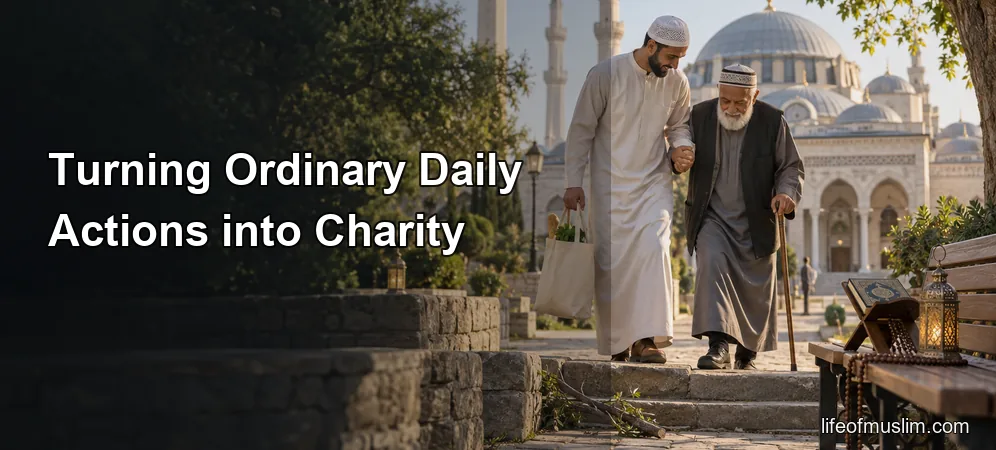
Charity is often imagined only as giving money, but the Prophet Muhammad ﷺ taught that many ordinary actions can also be sadaqah. This widens the door of goodness for every person, regardless of wealth.
Many Forms of Daily Charity
In Sahih Muslim, the Messenger of Allah ﷺ taught that charity is due on every joint each day. The hadith identifies several examples: acting justly between people, helping someone with transport or luggage, saying a good word, walking to prayer, and removing harm from the path.
These examples show that charity includes useful service, fair conduct, worship, and care for public spaces. A believer can begin giving from the moment the day begins.
Help with Practical Needs
Assisting another person with a load may look small, but it can remove real difficulty. Today this may include carrying groceries for an elder, helping a parent with a pushchair, holding a door, offering a suitable ride, or assisting someone who has limited mobility.
Offer help respectfully and accept the person’s answer. Genuine service protects dignity and does not turn assistance into a performance.
Use Good Words as Charity
A truthful encouragement, respectful greeting, useful direction, or gentle reassurance can bring relief. Good words should be sincere and appropriate, not empty praise or a promise we cannot keep.
Notice people whose efforts are often ignored. Thank a family member, encourage a learner, or speak calmly to someone who is worried. Words become valuable when they carry truth and benefit.
Make Steps Toward Prayer Count
The hadith includes every step taken toward prayer as charity. Preparing on time and going to the mosque when appropriate can turn ordinary movement into worship. Those praying at home can also approach prayer with preparation, calmness, and attention.
Protect the prayer from hurried distractions. A small routine—setting work aside, making wudu carefully, and arriving without disturbing others—helps the heart recognize the value of the journey.
Remove Harm from Shared Spaces
Removing something harmful from a pathway is also charity. Move an obstruction when it is safe, clean a spill, report a broken hazard, or keep entrances clear. Online, similar care can include refusing to spread harmful misinformation.
Public benefit does not always require recognition. Quietly correcting a small danger may protect someone you never meet.
Build a Daily Charity Habit
Choose several forms of non-financial charity that fit your routine. Look for one person to help, one good word to offer, one step toward worship, and one small harm to remove. Keep the intention sincere without counting favours against people.
Financial charity remains important, but limited income does not close the door of sadaqah. Every day brings new opportunities for useful goodness.
Conclusion
The hadith transforms ordinary life into a field of charity. Justice, practical help, good words, steps toward prayer, and care for shared paths are all meaningful. By paying attention to daily opportunities, every believer can give consistently and make life easier for others.
روزمرہ اعمال کو مستقل نیکی کے ذریعے صدقہ بنانا
صدقہ کو اکثر صرف مال دینے تک محدود سمجھا جاتا ہے، لیکن نبی کریم ﷺ نے سکھایا کہ بہت سے معمول کے اعمال بھی صدقہ بن سکتے ہیں۔ اس تعلیم سے ہر شخص کے لیے بھلائی کا دروازہ وسیع ہو جاتا ہے، چاہے اس کے پاس زیادہ مال نہ ہو۔
روزانہ صدقہ کی متعدد صورتیں
صحیح مسلم میں رسول اللہ ﷺ نے تعلیم دی کہ انسان کے ہر جوڑ پر ہر دن صدقہ ہے۔ حدیث میں لوگوں کے درمیان انصاف، کسی کو سواری یا سامان میں مدد، اچھی بات، نماز کی طرف ہر قدم اور راستے سے تکلیف دہ چیز ہٹانے کی مثالیں بیان ہوئی ہیں۔
یہ مثالیں دکھاتی ہیں کہ صدقہ میں فائدہ مند خدمت، منصفانہ رویہ، عبادت اور مشترکہ جگہوں کی نگہداشت شامل ہے۔ مومن دن کے آغاز ہی سے دینا شروع کر سکتا ہے۔
عملی ضرورت میں مدد کریں
کسی کا بوجھ اٹھانے میں مدد معمولی نظر آ سکتی ہے، مگر یہ حقیقی مشکل دور کر سکتی ہے۔ آج اس میں بزرگ کا سودا اٹھانا، بچے کی گاڑی کے ساتھ والدین کی مدد، دروازہ تھامنا، مناسب سواری پیش کرنا یا محدود حرکت والے شخص کی مدد شامل ہو سکتی ہے۔
احترام سے مدد پیش کریں اور دوسرے شخص کا جواب قبول کریں۔ حقیقی خدمت عزتِ نفس کی حفاظت کرتی ہے اور مدد کو نمائش نہیں بناتی۔
اچھے الفاظ کو صدقہ بنائیں
سچی حوصلہ افزائی، باادب سلام، فائدہ مند رہنمائی یا نرم تسلی راحت دے سکتی ہے۔ اچھی بات مخلص اور موقع کے مطابق ہونی چاہیے، خالی تعریف یا ایسا وعدہ نہیں جسے پورا نہ کیا جا سکے۔
ان لوگوں پر توجہ دیں جن کی کوشش اکثر نظر انداز ہوتی ہے۔ گھر کے فرد کا شکریہ ادا کریں، سیکھنے والے کی حوصلہ افزائی کریں یا پریشان شخص سے سکون کے ساتھ بات کریں۔ الفاظ سچائی اور فائدہ لے کر آئیں تو قیمتی بنتے ہیں۔
نماز کی طرف قدموں کو قیمتی بنائیں
حدیث نماز کی طرف اٹھنے والے ہر قدم کو صدقہ قرار دیتی ہے۔ وقت پر تیاری اور مناسب صورت میں مسجد جانا معمولی حرکت کو عبادت بنا سکتا ہے۔ گھر میں نماز پڑھنے والے بھی تیاری، سکون اور توجہ کے ساتھ نماز کی طرف بڑھ سکتے ہیں۔
نماز کو جلد بازی اور توجہ ہٹانے والی چیزوں سے بچائیں۔ کام ایک طرف رکھنا، احتیاط سے وضو اور دوسروں کو پریشان کیے بغیر پہنچنا دل کو اس سفر کی قدر پہچاننے میں مدد دیتا ہے۔
مشترکہ جگہ سے نقصان دور کریں
راستے سے تکلیف دہ چیز ہٹانا بھی صدقہ ہے۔ محفوظ ہو تو رکاوٹ دور کریں، گری ہوئی چیز صاف کریں، ٹوٹی ہوئی خطرناک جگہ کی اطلاع دیں یا داخلے کھلے رکھیں۔ آن لائن یہی خیال نقصان دہ غلط معلومات نہ پھیلانے میں ظاہر ہو سکتا ہے۔
عوامی فائدے کے لیے ہمیشہ پہچان ضروری نہیں۔ خاموشی سے ایک معمولی خطرہ درست کرنا ایسے شخص کو محفوظ رکھ سکتا ہے جس سے آپ کبھی نہ ملیں۔
روزانہ صدقہ کی عادت بنائیں
اپنے معمول کے مطابق غیر مالی صدقہ کی چند صورتیں منتخب کریں۔ ایک شخص کی مدد، ایک اچھی بات، عبادت کی طرف ایک قدم اور ایک چھوٹا نقصان دور کرنے کا موقع تلاش کریں۔ لوگوں پر احسان جتائے بغیر نیت مخلص رکھیں۔
مالی صدقہ اپنی اہمیت رکھتا ہے، لیکن محدود آمدنی صدقہ کا دروازہ بند نہیں کرتی۔ ہر دن فائدہ مند نیکی کے نئے مواقع لاتا ہے۔
خلاصہ
یہ حدیث معمول کی زندگی کو صدقہ کا میدان بنا دیتی ہے۔ انصاف، عملی مدد، اچھی بات، نماز کی طرف قدم اور مشترکہ راستوں کی نگہداشت سب معنی رکھتے ہیں۔ روزانہ کے مواقع پر توجہ دے کر ہر مومن مستقل نیکی کر سکتا اور دوسروں کے لیے زندگی آسان بنا سکتا ہے۔
References
Sahih Muslim — The Book of Zakat — Chapter: The Word Charity May Apply to All Good Deeds — Hadith 1009 — Book 12, Hadith 72